Ronald O’Hanley once worried that his career had peaked before graduation. For two undergraduate summers he had driven a beer truck, a job with free evenings, free weekends and a particularly congenial employee benefit. His dorm room began the academic year well supplied. Looking ahead, he wondered: “Is this it? I haven’t even graduated yet, and I’ve already peaked?”
It is an excellent opening for a bank chief executive. There is a vehicle, a cargo and a young person with a rather immediate understanding of liquidity. O’Hanley told the story to Bentley’s graduating class in 2019, by which point he had become chief executive of State Street. The delivery route had taken an unexpected turn.
The joke also supplies a useful warning about reading his résumé backwards. McKinsey. Mellon. Fidelity. State Street. Arranged on a page, those names suggest a carefully plotted ascent. His own recollections contain much more uncertainty. Opportunities appeared before he felt prepared for them. Sometimes he needed to reconsider an answer he had already given.
The offer he nearly left behind
At Syracuse University, O’Hanley studied political science, graduating in 1980. He has recalled considering law or diplomacy. Harvard Business School followed, with an MBA in 1986. Consulting offered an appealing way to keep learning before settling on a destination. At McKinsey, a job that might have been a short educational detour lasted eleven years.
He became a partner in 1992, founded the firm’s Investment Management practice and helped establish its North American Personal Financial Services practice. His assignments took him through Boston, New York and Stockholm. The subject was finance; the work involved learning how different institutions operated, and persuading the people inside them to change.
Then Mellon offered the consultant a chance to take responsibility for the business itself. Advising someone how to run an institution and agreeing to run it are quite different promises. O’Hanley initially declined. He later reconsidered and joined Mellon in 1997. The adviser would now have to live with the operational consequences of the advice.
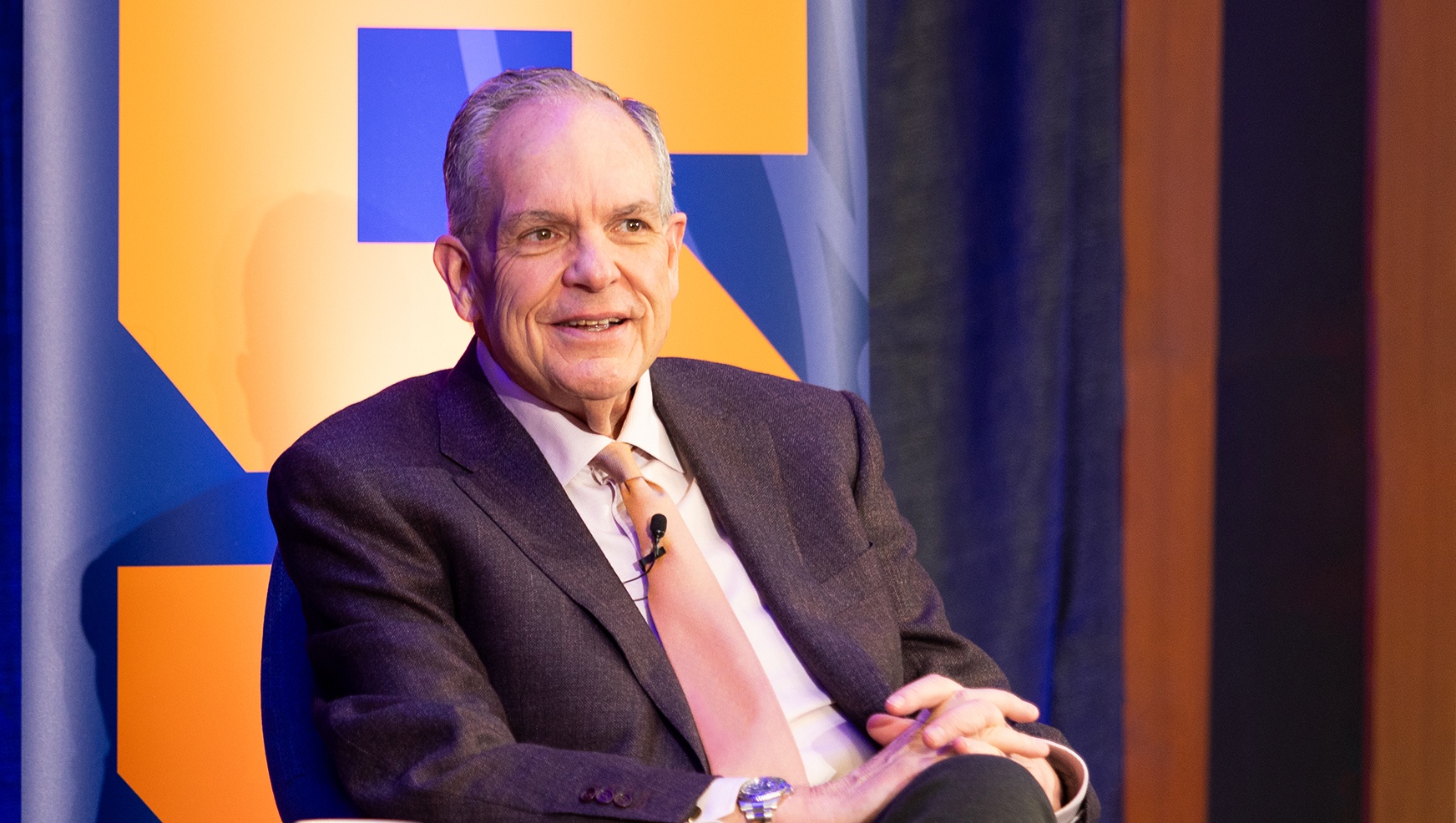
His progression there included leadership of Mellon Asset Management. After the 2007 merger of Mellon and Bank of New York, he became president and chief executive of BNY Mellon Asset Management. He also held responsibility for the combined bank’s activities in Asia. The international experience mattered: the investments, clients and operations were distributed across places whose working days did not conveniently begin together.
When the plumbing becomes the story
The 2008 financial crisis arrived while O’Hanley was running BNY Mellon’s asset management business. In his later accounts, the memory that persists is of colleagues working to protect clients even when their own employment was uncertain. The work involved keeping access to investments functioning as markets seized up. The language of plumbing becomes unusually literal when the system stops flowing.
Finance makes its most visible promises in the language of returns. Its operating promises are easier to overlook: records must agree, money must move, and a client must be able to establish what belongs to them. A custody bank works close to those obligations. For its leaders, confidence has an administrative dimension as well as an emotional one.
O’Hanley moved to Fidelity in 2010 as president of Asset Management & Corporate Services. His responsibilities included investment organizations, corporate functions and enterprise technology. He stayed until 2014. The remit put investment decisions beside the systems and people needed to support them, a combination that would become central to his next job.
State Street recruited him in 2015 to lead its investment management arm, then called State Street Global Advisors. He became vice chairman in January 2017 and president and chief operating officer that November. On January 1, 2019, he became CEO. A year later, he added the chairmanship, succeeding Jay Hooley in that role.
A large institution, a very short instruction
There is a particular management problem hidden inside a long acquisition history. Each business can arrive with its own systems, procedures and sensible explanations for doing things differently. The combined institution inherits all of them. At some point, the accumulated exceptions begin to make ordinary work expensive.
Returning to Syracuse in 2026, O’Hanley described State Street’s cost challenge as a problem of complexity and insufficient integration. His account emphasized simplification. A black-and-white poster in the office reduced the instruction to a single word: simplify. The proposition was that better coordination could make the institution work better for clients.
A poster is considerably cheaper than a systems overhaul, of course. Its value depends on the decisions made underneath it. Simplification in a financial institution has to preserve the controls and services clients rely on while reducing the friction between them. The word is short because the task is long.
and/or administration
management
Different responsibilities, different measures. These figures are company-wide client-asset measures, not O’Hanley’s wealth, and should not be added together.
The scale makes the distinction important. Assets under management describe an investment responsibility; assets under custody or administration describe servicing responsibilities. Both place State Street in the daily business of other institutions. Neither turns the assets into the bank’s own money, however impressive the number looks in large type.
The shareholder who stays for the meeting
O’Hanley’s investment background also helps explain his interest in corporate governance. In a discussion with FCLTGlobal, he described the practical position of an index manager: “As long as a company is in the index, we are invested.” A long relationship changes what the shareholder needs from the board.
“As long as a company is in the index, we are invested.”
Ronald O’Hanley · on index investing
He argued for engagement with directors and management over the company’s longer-term plans. An investor whose obligations run for decades has reasons to ask questions beyond the next earnings announcement. The holding may be described as passive; maintaining a useful conversation with the company still requires people to turn up.
In 2017, while he led State Street Global Advisors, that governance argument acquired a conspicuous public image: Fearless Girl. The firm sponsored Kristen Visbal’s sculpture as part of a campaign for more women on corporate boards. It was a remarkably compact way to bring a boardroom subject onto a pavement.
O’Hanley later explained that a colleague proposed the statue as the firm was incorporating board diversity into its stewardship guidelines. His explanation stressed the role of boards in making the change happen. The sculpture could draw attention; directors would still have to make appointments. Bronze has certain advantages as a spokesperson, though it cannot chair a nominations committee.
Before choosing a fund, getting through the door
His public advocacy has also addressed a question that comes before investment selection: whether a worker can participate in a workplace retirement plan. In a 2016 proposal, O’Hanley called for a national framework to expand access. The argument connected an institutional investment business to households that might otherwise remain outside its reach.
He presented broader coverage as something policymakers could build using existing approaches with bipartisan support. The proposal was an argument for action, rather than a claim that the savings problem had already been solved. That distinction matters in a field where projected benefits can easily begin to sound like accomplished results.
There is a consistent time horizon across these interests. Retirement obligations extend well beyond a market cycle. So can an index fund’s relationship with a company. The practical question is how an organization behaves when its responsibility continues after the current meeting, the current manager or the current fashion has passed.

Boston, with an offshore interlude
O’Hanley’s public affiliations extend into Boston’s civic and educational institutions. The Boston Foundation lists him as a director emeritus. His company biography also includes Syracuse University, WBUR, the Ireland Funds and IYRS School of Technology and Trades among his board affiliations. The institutions differ in purpose, but they give his public life a geography beyond the quarterly call.
At Maxwell, the O’Hanley Endowed Fund supports faculty scholarship. He has also returned to speak with students about the value of a broad education. The political science graduate’s route into finance gives that advice a personal basis: the undergraduate subject and the eventual executive title need not match neatly.
There is also offshore sailboat racing, an interest recorded in his Boston Foundation biography. It is a pleasing detail alongside a career devoted to financial operations. A race has an intended destination and plenty of conditions that refuse to cooperate. The resemblance is tempting; the documented fact is simply that he likes racing offshore.
The next system still has to work
In his January 2026 conversation with Tim Graf, O’Hanley discussed digital-asset infrastructure in terms of what clients could do with it. Tokenized assets, collateral and faster movement of securities featured in the discussion. His framing placed State Street among the infrastructure providers an investment manager might approach to make a new product function.
By October, the ordinary measurements of the business remained prominent. State Street reported third-quarter revenue of $4.004 billion and a pre-tax margin of 34.6 percent. Its October 14 release described a first Wealth Services mandate building on an existing Charles River relationship. The new ambitions were being pursued through the established work of serving clients.
That is where O’Hanley’s story now sits: between an institution’s accumulated obligations and the next set of tools it intends to use. The beer truck had a clear route. His subsequent career has required more revisions. He has spent much of it accepting responsibilities he once needed time to imagine himself taking on.