Breaking
Partner at Thoma Bravo • ~$50B in deals across 22 investments Led $1B SPAC as CEO → $11.1B merger with IronSource GrowthCap Top 25 Software Investors of 2021 Harvard economics grad • 19+ years at one firm AppOmni, ServiceTitan, Illumio, Starburst, Pendo - a portfolio that reads like a syllabus "Sometimes better to be lucky than good." - Tre Sayle Partner at Thoma Bravo • ~$50B in deals across 22 investments Led $1B SPAC as CEO → $11.1B merger with IronSource GrowthCap Top 25 Software Investors of 2021 Harvard economics grad • 19+ years at one firm AppOmni, ServiceTitan, Illumio, Starburst, Pendo - a portfolio that reads like a syllabus "Sometimes better to be lucky than good." - Tre Sayle
Tre Sayle - Partner at Thoma Bravo
Profile

Tre
Sayle

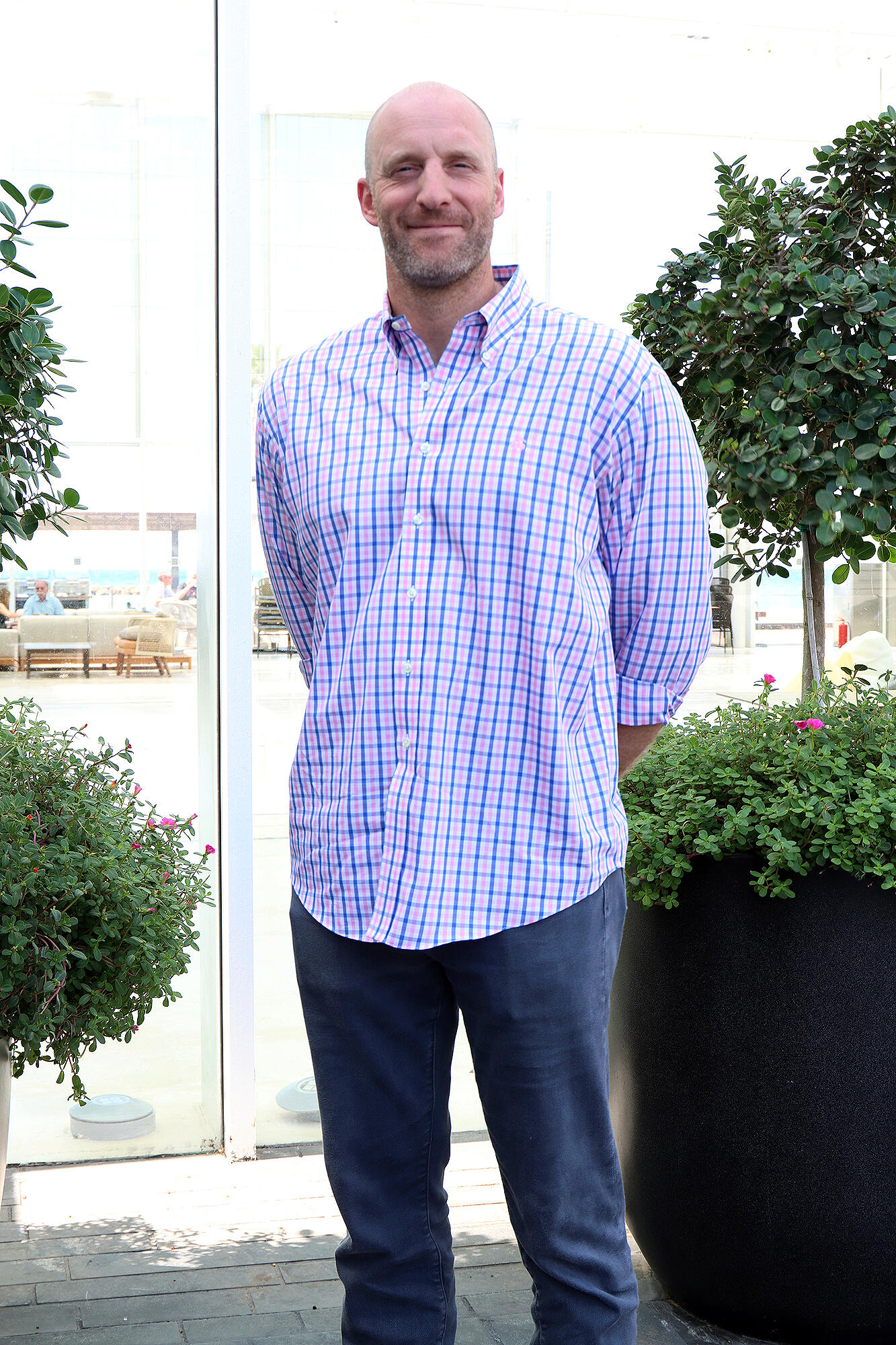
The 6'5" Giant Who Plays the Long Game - Thoma Bravo's Growth Architect

He met the CEO over a beer. Then wrote the check. Then the company protected 78 million people. That's how Tre Sayle does deals.

Partner, Thoma Bravo Growth Equity Software Investor San Francisco
~$50B Transaction Value
22 Deals Led
19+ Years at One Firm
$1B SPAC raised (CEO)
$11.1B IronSource merger
$90M AppOmni Series C
78M+ Users protected (AppOmni)
#25 Top Software Investors 2021

The Architect of $50 Billion

Tre Sayle has been at Thoma Bravo since 2005. That sentence alone tells you something. In private equity, a decade of loyalty is a geological epoch. Nearly two decades is a statement of faith - in the firm, in the strategy, in the long game that nobody else wants to play.

He joined as an Associate when George W. Bush was in his second term, when YouTube didn't exist, when the iPhone was two years from existence. He became Partner in 2014. He built Thoma Bravo's Growth platform - the minority equity investing arm - from a concept into a machine that has now processed roughly 22 deals representing around $50 billion in total transaction value. He did this while staying at one address.

That's the anomaly worth noting. Silicon Valley runs on the mythology of the move - the pivot, the rebrand, the next thing. Sayle is a counternarrative. He found a firm, found a thesis, and compounded. While the rest of the industry plays musical chairs with logos on their LinkedIn profiles, he has been at the same firm across four U.S. presidents, two financial crises, a pandemic, and the rise and fall of the SPAC era.

The Growth platform he built is specifically designed to take minority stakes in software companies that have found product-market fit but haven't yet crossed the chasm from "this works" to "this scales." Sayle's job is to see who is about to cross that chasm - and hand them the capital to sprint.

His portfolio reads like a required reading list for modern enterprise software: Illumio (cybersecurity), ServiceTitan (field service management), AppOmni (SaaS security), Pendo (product analytics), Starburst (data analytics), Project44 (supply chain), Figment (Web3 infrastructure). These are not household names in the way consumer apps are. But they power the companies behind the names you know.

Before Thoma Bravo, Sayle worked in technology investment banking - first at Hambrecht & Quist in San Francisco, then in JPMorgan's Technology, Media & Telecom group in New York. He studied economics at Harvard with a concentration in psychology. That combination - the quantitative rigor of economics and the human insight of psychology - shows up in how he evaluates founders. Numbers tell you where a company is. Founders tell you where it's going.

In 2021, he stepped into an unusual role: CEO of Thoma Bravo Advantage, a $1 billion special purpose acquisition company. It's a strange detour for someone who has spent his career behind a deal desk rather than at the head of a company. But Sayle navigated the SPAC through a complex cross-border transaction, merging it with IronSource - an Israeli adtech and mobile platform - at an $11.1 billion valuation. He did the job, then went back to doing what he does.

His philosophy on meeting founders is almost aggressively simple. Before writing a check into AppOmni, Sayle met CEO Brendan O'Connor at a bar in Union Square. Lunch. A beer. No term sheets on the table. No slide decks. Just two people talking. "It was good to just do something informal and not talk about business," Sayle said. The formal conversation came later. The investment followed. AppOmni now protects over 78 million users across Fortune 2000 companies. Not bad for a bar meeting.

He has been active in Israel's cybersecurity ecosystem - publicly committing to investments in six Israeli companies in 2022 despite broader market hesitation. "Tel Aviv is the second largest center in the field after San Francisco," he said. "These are the smartest people in the world." He doesn't just say it. He backs it with capital.

What Sayle is not is a headline chaser. He doesn't post thought leadership. He doesn't keynote conferences with predictions about the future of AI. He doesn't have a Twitter account. He has a portfolio. He has a track record. He has, by his own admission, retreated half an inch from his peak height of 6'6" - something he disclosed with the self-deprecation of a man who's comfortable enough in his own skin to joke about his own physical decline at a medical exam.

The best characterization of his investing philosophy comes from a Buyouts Magazine interview: "Slow and steady still wins for growth equity." In a business where everyone is rushing to claim they've found the next category king, Sayle's patience is itself the edge. He's not looking for the fastest-growing company in the room. He's looking for the one that will still be standing - and dominant - in a decade. The distinction is everything.

Nineteen years. One firm. Twenty-two deals. Fifty billion dollars. A beer with a founder before the term sheet. That's the whole story. Most things in Silicon Valley are more complicated. This one, somehow, is not.
"It's incredibly dynamic. Every new deal, you meet a different management team, a bunch of different personalities, a new opportunity, quite frankly, to make lifelong friendships."
- Tre Sayle, Partner, Thoma Bravo

Two Decades, One Direction

~1999 - 2001
Analyst at Hambrecht & Quist in San Francisco - one of the premier tech boutiques of the dot-com era. Got a front-row seat to the boom and the bust.
~2001 - 2005
Joined JPMorgan's Technology, Media & Telecom investment banking group in New York. Moved from the boutique West Coast world into the institutional machinery of Wall Street.
2005
Joined Thoma Bravo as an Associate. The decision to join a Chicago-rooted software PE firm in 2005 - when software buyouts were still a niche strategy - would define the next two decades.
2005 - 2014
Worked as Associate then Principal across Thoma Bravo's buyout portfolio - SonicWALL, LANDesk, Entrust, Tripwire, Embarcadero, and more. Built technical depth in software M&A.
Feb 2014
Promoted to Partner. Orlando Bravo announced the promotion, noting Sayle's "nine years proving to be a strong part of our successful investment team." Nine years to make Partner - a signal about his firm's standards, and his patience.
2014 - 2020
Built Thoma Bravo's Growth platform - a minority equity investing arm targeting high-growth software companies - from the ground up. Different thesis, different team, same firm.
Jan 2021
Served as CEO of Thoma Bravo Advantage, a $1 billion SPAC. The IPO raised $1B in January 2021 at the height of the SPAC boom.
2021
Completed merger of Thoma Bravo Advantage with IronSource (Israeli mobile and adtech platform) at an $11.1 billion valuation. One of the largest cross-border SPAC transactions of the era.
Nov 2021
Named one of GrowthCap's Top 25 Software Investors of 2021. Thoma Bravo tweeted congratulations.
Jun 2022
Led $90M Series C in AppOmni - the SaaS security platform now protecting 78M+ users across Fortune 2000 companies. The deal that started with a beer at a Union Square bar.
Nov 2022
Visited Israel, announced plans to invest in 6 Israeli cybersecurity companies. "Tel Aviv is the second largest center in the field after San Francisco."
2023 - Present
Continues leading Thoma Bravo's Growth platform. Approximately 22 career deals totaling ~$50 billion in aggregate transaction value. Still at the same firm.

Software That Runs the World

AppOmni
SaaS security protecting 78M+ users across Fortune 2000. Tre led the $90M Series C in 2022.
Cybersecurity
ServiceTitan
Vertical SaaS for the trades - plumbing, HVAC, electrical. A category defining investment in field service.
Vertical SaaS
Illumio
Zero-trust segmentation for hybrid clouds. Became one of the most-referenced names in enterprise security.
Cybersecurity
Starburst
Query engine letting companies analyze data wherever it lives - the "SQL anywhere" bet.
Data Analytics
Pendo
Product analytics and user guidance platform - what software companies use to understand how people use their software.
Product Analytics
Project44
Supply chain visibility network. The pandemic made P44's category impossible to ignore.
Supply Chain
Figment
Web3 staking infrastructure. Thoma Bravo led the $110M Series C in the firm's crypto bet.
Web3 / Crypto
Paradox
AI recruiting assistant Olivia - automating the top-of-funnel hiring process at scale.
HR Tech
IronSource
Israeli mobile platform and adtech. Merged via Thoma Bravo Advantage SPAC at $11.1B valuation.
AdTech / Mobile
Anchorage
Institutional-grade crypto custody and staking platform.
Crypto / Fintech
Conga
Revenue lifecycle management and contract intelligence software.
Enterprise SaaS
Personetics
AI-powered personalization for financial services. Data-driven banking made human.
Fintech AI

Patience as a Strategy

The Growth platform Sayle built operates in the space between early-stage venture and large-cap buyout. Series C and beyond. Minority stakes. $25M to $150M per check. Companies that have already proved the product works - and need capital to prove the business can scale.

Sayle's edge isn't pattern-matching at scale. It's the willingness to be patient in a business where impatience is expensive. He explicitly rejects quick-flip investing. When he backs a company, the conversation is about where it's going in five years - not how fast it can IPO.

The criteria are twin pillars: profitable business model and the ability to grow profitably. Not growth at all costs. Not profits at the expense of growth. Both, simultaneously. In 2021, when every growth fund was ignoring margin and every value fund was ignoring growth, that combination was contrarian. In 2023, it looked like a roadmap.

Pillar 01 - The Model
Profitable business model - not just a path to profitability, but demonstrated unit economics that hold up under scrutiny.
Pillar 02 - The Growth
Ability to grow profitably - scale without destroying the economics that made the model work in the first place.
Pillar 03 - The Founder
Founder passion and conviction - the kind of "incredible ire" that signals someone who will outwork every obstacle. Numbers tell where you are. Founders tell where you're going.
Pillar 04 - The Patience
No quick IPO philosophy - invest in companies building for the long term, with capital that matches that ambition. Slow and steady as competitive edge.
Pillar 05 - The Relationship
Bar before boardroom - first meetings should be human, not transactional. Build the relationship before you discuss the term sheet. The AppOmni playbook.

Direct Lines

"What gets a lot more challenging is carrying the company - making that tango to 100. That actually takes repeatable consistent business practice."

On Scaling Companies

"We are very patient and our philosophy is not based on a quick IPO."

On Investment Horizon

"Tel Aviv is the second largest center in the field after San Francisco, so we want to invest as much of the fund as possible here."

On Israeli Cybersecurity

"We will mostly invest in the C round and beyond, between $25 million and $150 million."

On Deployment Strategy

"Sometimes better to be lucky than good."

On Market Timing

"Israel is so unique on this level - these are the smartest people in the world."

On Global Tech Talent
"We met at some bar in Union Square and had lunch and a beer - it was good to just do something informal and not talk about business."
- Tre Sayle, on how the AppOmni deal really started

Stories Worth Telling

01
Before leading a $90M Series C in AppOmni, Tre Sayle met the CEO Brendan O'Connor for the first time at a bar in Union Square. Lunch. A beer. No term sheet. No deck. Just conversation. Sayle later described O'Connor's conviction about the company as "incredible ire" - the phrase he uses to describe founders who are so invested in what they're building that you can feel it in a casual setting. The formal investment conversation came after. The check came after that. AppOmni now protects 78 million users across Fortune 2000 companies. Most deals don't start at a bar. Maybe they should.
02
In 2021, at the peak of the SPAC frenzy, Sayle stepped into a role he'd never held before: CEO. Thoma Bravo Advantage was a blank-check company that raised $1 billion in its January 2021 IPO. The task was to find a target, negotiate a merger, and navigate the regulatory and cross-border complexity of combining a U.S. vehicle with an Israeli company. The result was IronSource, at an $11.1 billion valuation - one of the largest cross-border SPAC mergers of the era. Sayle did the job, then went back to being a partner. No title inflation. No identity shift. Just execution when needed.
03
In a podcast interview, Sayle mentioned almost in passing that he used to be 6'6" - but at his most recent physical, he'd slipped to 6'5.5". "I think I'm retreating now," he said. It's the kind of self-deprecating aside that only someone without an ego can make in a professional context. For a man whose entire career has been about growth - finding it, funding it, sustaining it - the idea that he himself is literally retreating in size landed as a small, perfect joke. He didn't belabor it. He moved on.
04
In November 2022, with markets in retreat and most U.S. investors pulling back from international deals, Sayle flew to Israel and publicly announced plans to invest in six Israeli cybersecurity companies simultaneously. This was not a private meeting. He said it on the record, in an interview with Calcalist Tech. "The investment market is very active now despite the talk of a slowdown." He was using consensus fear as a contrarian signal - the most classically private equity thing you can do. Whether all six materialized is less important than the posture: run toward the thing others are running from.

What Makes Him Different

Pathological Patience
19+ years at one firm. Investments held for long-term builds, not quick flips. In an industry where impatience is expensive, patience is his edge.
🍺
Bar Over Boardroom
First meetings happen over a beer, not a slide deck. Relationship first. Term sheet later. The AppOmni playbook is really just how he operates.
🌎
Globally Curious
Flew to Tel Aviv when others were pulling back. Sees Israeli cybersecurity as a co-equal hub to San Francisco. Acts on the conviction with real capital.
👤
Founder-Obsessed
Evaluates companies through founders. The "incredible ire" test - if the founder isn't obsessively invested, the metrics don't matter.
😂
Self-Deprecating Wit
Jokes about shrinking half an inch. Delivers lines like "sometimes better to be lucky than good" without irony. Refreshing in a business full of curated gravitas.
🔎
Thorough by Default
Known for preparation. Does not wing meetings. The informal beer precedes, not replaces, deep diligence on the business.

The Foundation

H
Harvard University
Bachelor of Arts in Economics - concentration in Psychology - late 1990s. The combination that explains everything: quantitative rigor for evaluating businesses, human insight for evaluating founders.

Before Thoma Bravo, Sayle cycled through two formative stops: Hambrecht & Quist in San Francisco - one of the premier tech boutiques that helped take companies like Apple public - and JPMorgan's Technology, Media & Telecom investment banking group in New York. The trajectory from boutique SF tech banking to Wall Street institutional to SF software PE is almost a template. But most people who follow that template don't stay at one firm for two decades.

Things Worth Knowing

01 Goes by "Tre" - his given first name is Robert. Nobody in his professional world calls him Robert.
02 Was 6'6". Now 6'5.5" and "retreating." Self-reported with visible amusement during a podcast interview.
03 Spent 19+ years at a single firm - Thoma Bravo. In private equity, this is the equivalent of a geological event.
04 Invested in FTX before its collapse. Alongside investments in AppOmni, ServiceTitan, and Illumio - the full range of software investing outcomes.
05 Harvard economist who ended up making most of his career bets on software and cybersecurity, not financial markets. Psychology concentration in action.
06 No Twitter. No public persona. Just a LinkedIn and a portfolio. The loudest investors aren't always the best ones.