At five on a Monday morning, the first members began checking in. Travis LaBazzo was still finishing the men’s locker room. The gym had closed on Friday for a rebrand; the deadline had now acquired shoes and was walking through the entrance.
In his account of that early Daytona project, LaBazzo recalled a 48-hour push with Anthony and Allie: painting, replacing carpet with vinyl planks, shifting equipment, bringing employees aboard and changing software. He and Anthony finished, went back to their short-term rental, slept for three hours and returned for the nine o’clock grand opening. Hospitality, in this instance, had involved very little sleeping.
He retold the episode while celebrating Amped Fitness’s eighteenth location in Daytona in 2024. Returning to the area gave him a way to measure the distance traveled. The detail that lingers is the flooring. Before the portals and themed environments, his work included making a worn room ready for its next customer.
A phone call out of Orlando
LaBazzo’s route into the business began in another trade. He was working as a loan officer in Orlando when a friend called about an opportunity in the greater Cincinnati area. The job was assistant training director at Urban Active. He moved for the possibility of advancement, despite having no industry experience beyond being an athlete himself.
That is a useful beginning for an operator: entering at a level where the work is close to the customer. His account describes an immediate sense of belonging. It also makes the move sound more practical than mystical. There was an opening, a possible future and a decision to relocate.
Before the Daytona takeover, he recalled running a personal-training business while living in St. Petersburg. He sold that business and moved when the struggling 10,000-square-foot gym became available. Amped’s published company history places the downtown St. Petersburg opening by LaBazzo and fellow founder Stephen Thomas in 2016. The early story contains several moves, each requiring him to get closer to running the whole place.
Blue light, ordinary arithmetic
By July 2022, Amped was pursuing a Plantation location alongside an existing portfolio described as eleven clubs. It had opened in Altamonte Springs, Doral and Fort Myers earlier that year. Memberships in the Plantation announcement started at $9.99 a month. The offer combined a low entry price with a substantial list of things to do inside.
LaBazzo was already talking about the feeling of the visit. His pitch for Plantation emphasized that people should experience the place themselves. The distinction matters in a business whose basic equipment is visible and comparable. A customer can count machines. Describing the atmosphere requires a different vocabulary.
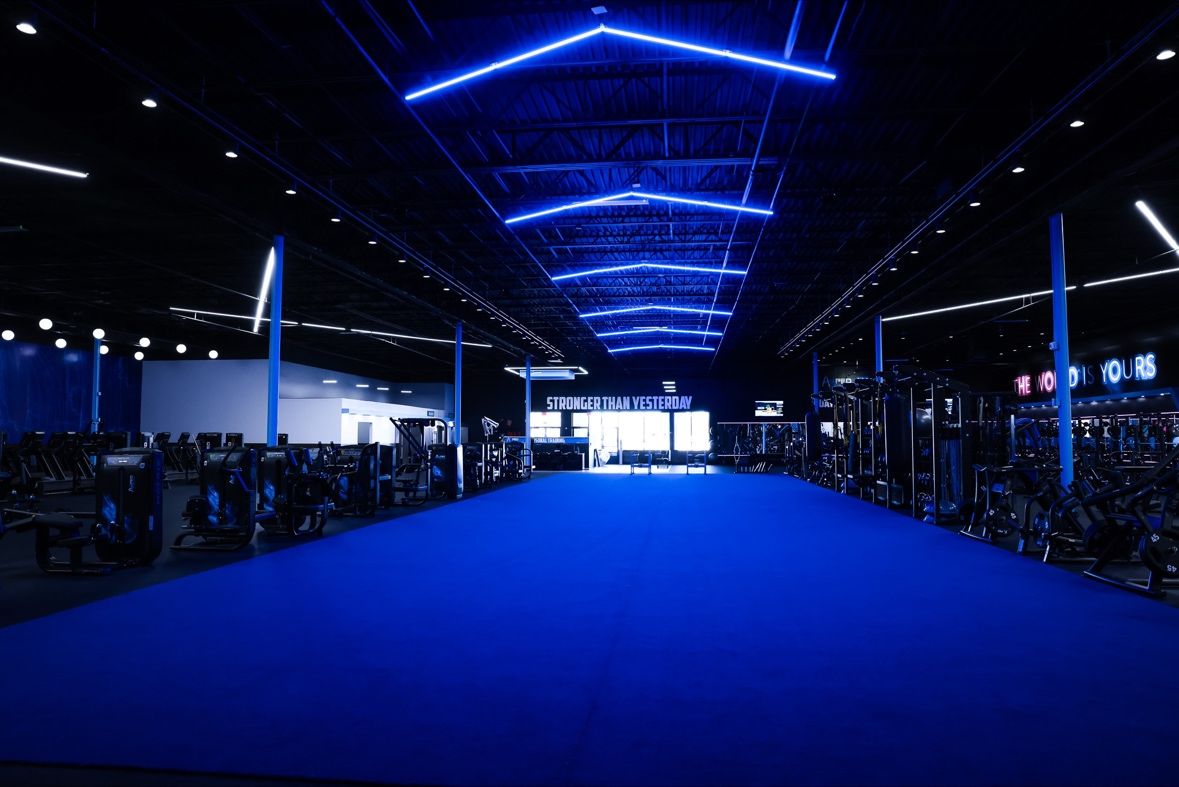
Amped supplied one in blue light, dark finishes and a deliberately energetic presentation. Those choices gave the rooms a recognizable appearance. They also gave LaBazzo a recurring business problem: how to spend on the experience while keeping the membership accessible. The electricity bill, presumably, has never accepted atmosphere as payment.
Making the opening repeatable
The decision to franchise arrived in 2023. LaBazzo and Thomas brought in Matt Smith, whose background included franchise business development at F45, to help build that part of the company. Amped was continuing to pursue corporate locations at the same time.
For a founder accustomed to taking direct responsibility for a room, franchising changes the question. A personal standard has to become something another operator can understand, finance and deliver. The challenge is visible in Amped’s proposition: lighting can be specified, equipment can be ordered, but a welcoming visit involves decisions by people who were nowhere near the original renovation.
Thomas, identified as chief financial officer in the company’s 2024 account, emphasized a consistent, inclusive club atmosphere. His role also gives the story a second founder with a distinct responsibility. LaBazzo is the public voice of many openings; the business has been built with a partner. An expansion map is the visible result of that shared work, rather than a sufficient explanation of it.
THREE CHANGES IN SCALE
- 2016Downtown St. Petersburg opening in Amped’s company history
- 2023The company begins developing its franchise business
- 2026Princeton Equity Group investment announced in January
The people in the photograph
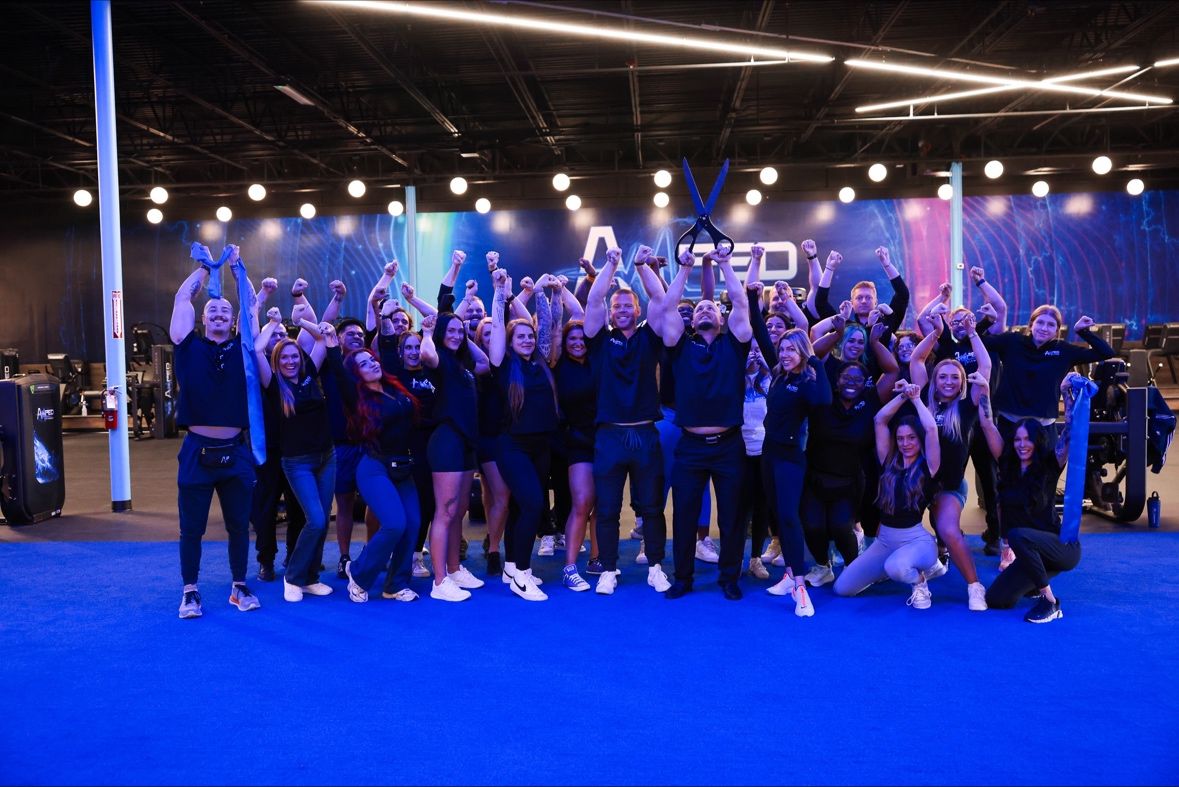
LaBazzo’s opening posts are full of raised hands, exclamation marks and gratitude to colleagues. His public register is closer to the celebration on the gym floor than to a carefully neutral corporate announcement. He writes about the last-hour push with the team and the pleasure of doing it with people he enjoys.
In a post marking Houston’s twenty-sixth opening, he singled out those final-hour rallies. The appeal of the work, as he described it, included being present for the moment when a group got the doors open together. The opening supplied both a business milestone and a shared memory.
That emphasis extends to development inside the organization. His emphasis on developing people inside the organization is a compact statement of a substantial requirement. More clubs need more people capable of running them. The founder can attend an opening; local teams must make the next Tuesday work.
“Our greatest strength is our ability to grow from within.”TRAVIS LABAZZO
The money changes in 2026
At the 2024 Daytona milestone, LaBazzo celebrated reaching eighteen locations without private equity or outside investment. That was part of what made the return meaningful to him. It was also a statement attached to a particular stage of the business.
On January 13, 2026, Amped announced a strategic investment from Princeton Equity Group. The announcement described 35 locations across Alabama, Arizona, Florida, Georgia, Tennessee and Texas, serving more than 180,000 members. It placed company headquarters in Pompano Beach and set out an ambition to enter more U.S. markets.
The partnership added a specialist in franchisor and multi-location businesses. For LaBazzo, the story had moved from financing and finishing individual opportunities to expanding a network with an institutional partner. The earlier achievement still belongs to the record. The new chapter has different resources and a larger operating task.
Company figures at the January 13, 2026 investment announcement.
A different room for a different mood
The design ambition became particularly explicit in the June 2026 announcement of Amped’s Sugar Land opening, scheduled for July 1. The concept grouped eight destinations inside one club. Strength training, cinema-style cardio and private multipurpose rooms were given identities of their own.
The premise allowed for a customer who wanted different things on different visits. Someone could arrive ready for a crowded, energetic floor or prefer a room with more separation. Architecture and presentation would help distinguish those experiences. The membership connected them.
By the October 15 announcement of a planned West Mesa location, LaBazzo was using amusement parks to explain the approach. “We think fitness should have a sense of discovery,” he said. The planned environments included a Roman-colosseum-inspired Arena and a Brooklyn Bridge entrance to the women-only Babe Cave. The geography was becoming wonderfully unconcerned with geography.
For LaBazzo, the purpose remained functional: make the setting support what the visitor came to do. The rooms were an attempt to give different activities distinct surroundings, with an element of exploration between them.
FROM EQUIPMENT FLOOR TO DESTINATIONS
Four of the eight destinations described for the planned West Mesa club in October 2026. Diagram, not a floor plan.
What earns the floor space
A themed room is easy to announce. The sharper question is whether customers make a habit of using it. In his September 2026 conversation with Greg Kihlström, LaBazzo described looking at utilization, repeat engagement, feedback and a space’s influence on attracting and retaining members.
That gives the design language an operating consequence. A room occupies square footage whether or not it becomes part of anyone’s routine. LaBazzo said concepts could be reconsidered or replaced. In a business filled with heavy equipment, the willingness to move an idea out may matter as much as the ability to move one in.
The interview also made his position on pricing clearer: affordability remains part of the proposition, while the experience supplies additional reasons to choose it. A low price is quick to communicate. A distinctive place takes more work to explain and more work to run. LaBazzo has chosen to keep working on both sides of that equation.
Back to the doorway
His expansion plans now include Ohio, bringing the company toward the region where he first learned gym operations. The planned entries were announced in 2026. The business route has acquired a loop, linking the market he learned in with the company he now leads.
There is a neat temptation to measure this career entirely by location counts. LaBazzo’s own stories suggest another unit: the opening, with its remaining jobs, gathered colleagues and first arrivals. It is where a broad idea becomes a place somebody can enter.
That makes the Monday morning memory useful well beyond its underdog charm. The customers arrived while the work was still being finished. They had somewhere to go and expected the business to meet them there. Years later, behind the blue lights and the increasingly elaborate entrances, LaBazzo is still arranging the room around that encounter.