The creature had been working all night. By morning it managed a few steps, then fell over. In an Oxford zoology lab, Torsten Reil had set a simulated nervous system the task of learning to walk. The small collapse was, in its way, a breakthrough. A digital body had begun to respond to its surroundings without an animator drawing each pose. Reil was meant to be studying complex systems. Instead, he had found the beginning of a company.
That company, NaturalMotion, would put responsive movement into films and video games. Two decades after its founding, Reil is known for a different venture: Helsing, the European defense technology company he started with Gundbert Scherf and Niklas Köhler in 2021. The leap from a clumsy virtual animal to military software is startling until one follows his underlying question. How can a machine perceive a changing world and act within it?
The answers have changed with the stakes. A game character falling convincingly is entertainment. Autonomous systems in an aircraft sit inside procurement, policy and public accountability. Reil’s career traces that change in scale, and perhaps also in his own sense of what a founder needs to learn.
The useful fall
The route to Oxford began in an unlikely reading spot: the German army. While serving there, Reil read Richard Dawkins’s The Selfish Gene, which drew him toward the university. His eventual subject made sense of that early fascination. Biology offered rules for how complex behavior can emerge; computing offered a way to watch those rules unfold. Later, the same habit of following a question across disciplinary borders would become the most recognizable feature of his career.
Reil studied biological sciences at Oxford and evolutionary and adaptive systems at Sussex before pursuing doctoral research at Oxford. He has said he expected to stay in science, working on software and simulation in biology. The walking experiment disrupted that plan. Watching the creature stumble, he saw a possible answer to a problem in games: characters looked scripted because, largely, they were. A character driven by a simulated body and nervous system could react to an unexpected shove or obstacle.
He founded NaturalMotion while trying to finish his doctorate. After three months of doing both, he made a choice. “I chose NaturalMotion and never regretted it,” he recalled in an interview years later. The timing helped: the dot-com era made starting a technology company feel imaginable. Oxford’s University Challenge Seed Fund supplied £23,500 for early programming, and the university’s commercialisation office introduced angel investors. A grant is not a business model, but it can buy the first stretch of runway.
“We saw fully interactive characters on the screen for the first time in the morning after an 8 hour overnight simulation was completed.”Reil, recalling the NaturalMotion prototype
The first product, Endorphin, found work in film production, including Troy and Poseidon. Reil later acknowledged that the team underestimated both the time required to reach market and the trouble of fitting a new tool into real production. He also said the breakthrough sale came from Rockstar Games, maker of Grand Theft Auto IV. Film supplied spectacle; games offered a place where a character had to respond in real time, every time a player did something awkward.
The idea was unusual enough to put Reil on a TED stage in 2003. His talk, later posted online, explained animation through evolution: give a simulated body rules, let it try, and keep what works. The appeal was partly economic. Handcrafting a large stock of movements takes time, while a system that reacts can produce variations on demand. Reil was also learning a less elegant lesson in parallel. A tool can be technically compelling and still meet resistance when artists and studios must change a working pipeline to use it. NaturalMotion had to sell both the motion on screen and the practical means of getting it there.
A studio built around motion
NaturalMotion’s tools gave digital characters more than a library of prerecorded gestures. Its technology appeared in titles including Grand Theft Auto IV and Red Dead Redemption. The company also made its own games. The animated martial-arts student in Clumsy Ninja was a remarkably on-brand creation for a business born from a falling creature: a comic character whose appeal depended on believable, imperfect motion. Reil had once named Elite, Chequered Flag and Gunship on the ZX Spectrum among his early game favorites. The path from player to founder had taken a detour through zoology.
Zynga bought NaturalMotion in 2014 for $527 million. By then it employed about 260 people across Oxford, London, Brighton and San Francisco, at the time of the sale. That scale is easy to forget when retelling the origin as a single eureka moment. A prototype can attract attention; it takes years of product work, commercial deals and hiring to turn that attention into a company.
Reil left NaturalMotion and Zynga with less appetite for another company than one might expect. Reil later said he had spent about 15 years building and did not initially think he would found again. After time away, energy returned. He invested in other companies and reconsidered choices he had made at NaturalMotion. His own list was unvarnished: performance management, the seriousness of engineering hires, and how to build a leadership team as an organization grows. A founder can be pleased with an exit and still study the decisions that made the journey harder.
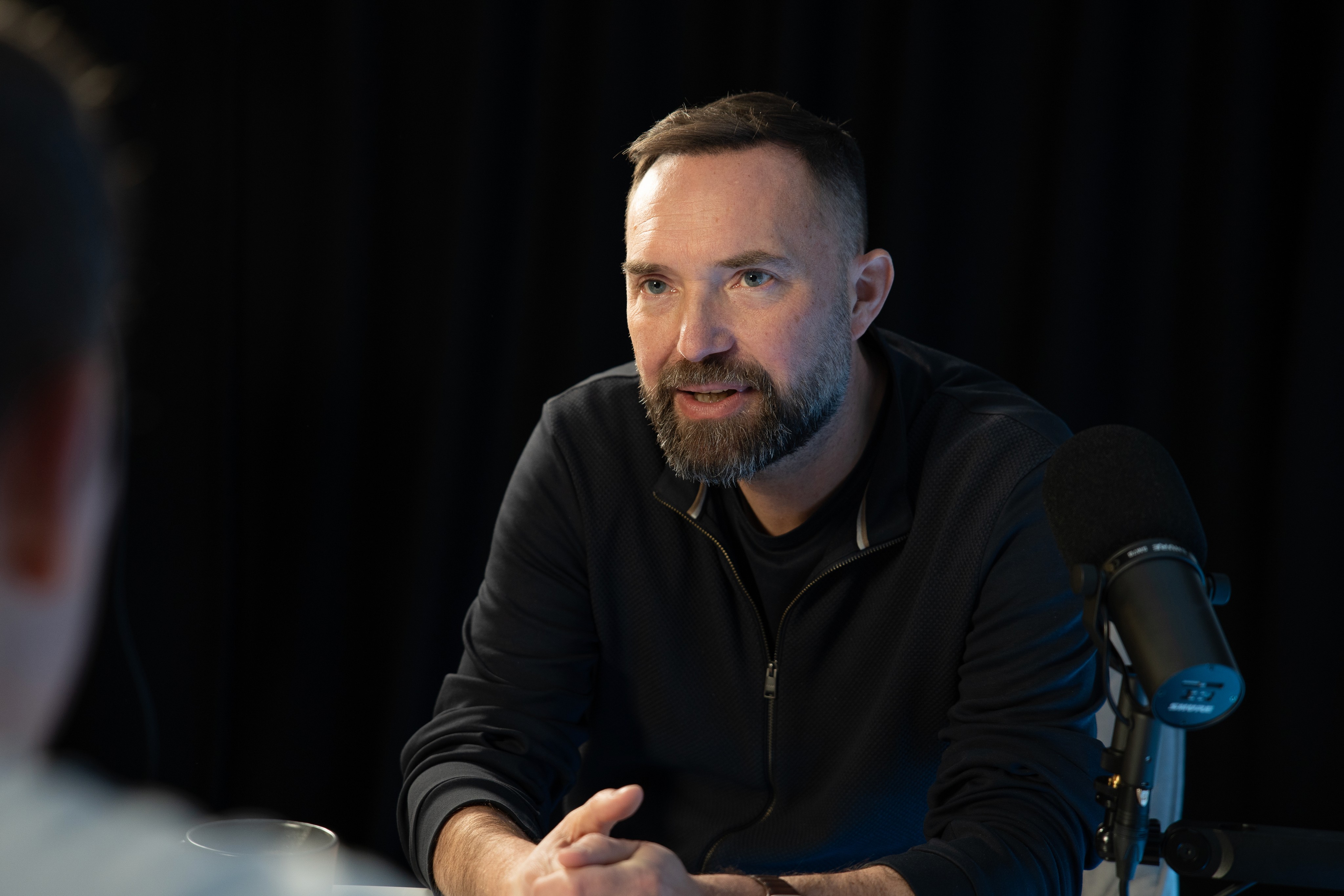
The career also brought recognition outside the games business. Reil was included in MIT Technology Review’s TR100 innovators, and the University of Sussex awarded him an honorary Doctor of Science in 2016 for his contribution to the UK technology sector. Those honors sit beside a more revealing detail from his later interviews: he remembers specific hiring decisions he wishes he had handled differently. The public record has a successful exit; his own account includes a private ledger of things to improve. That ledger mattered when the next company arrived.
A café, then a company
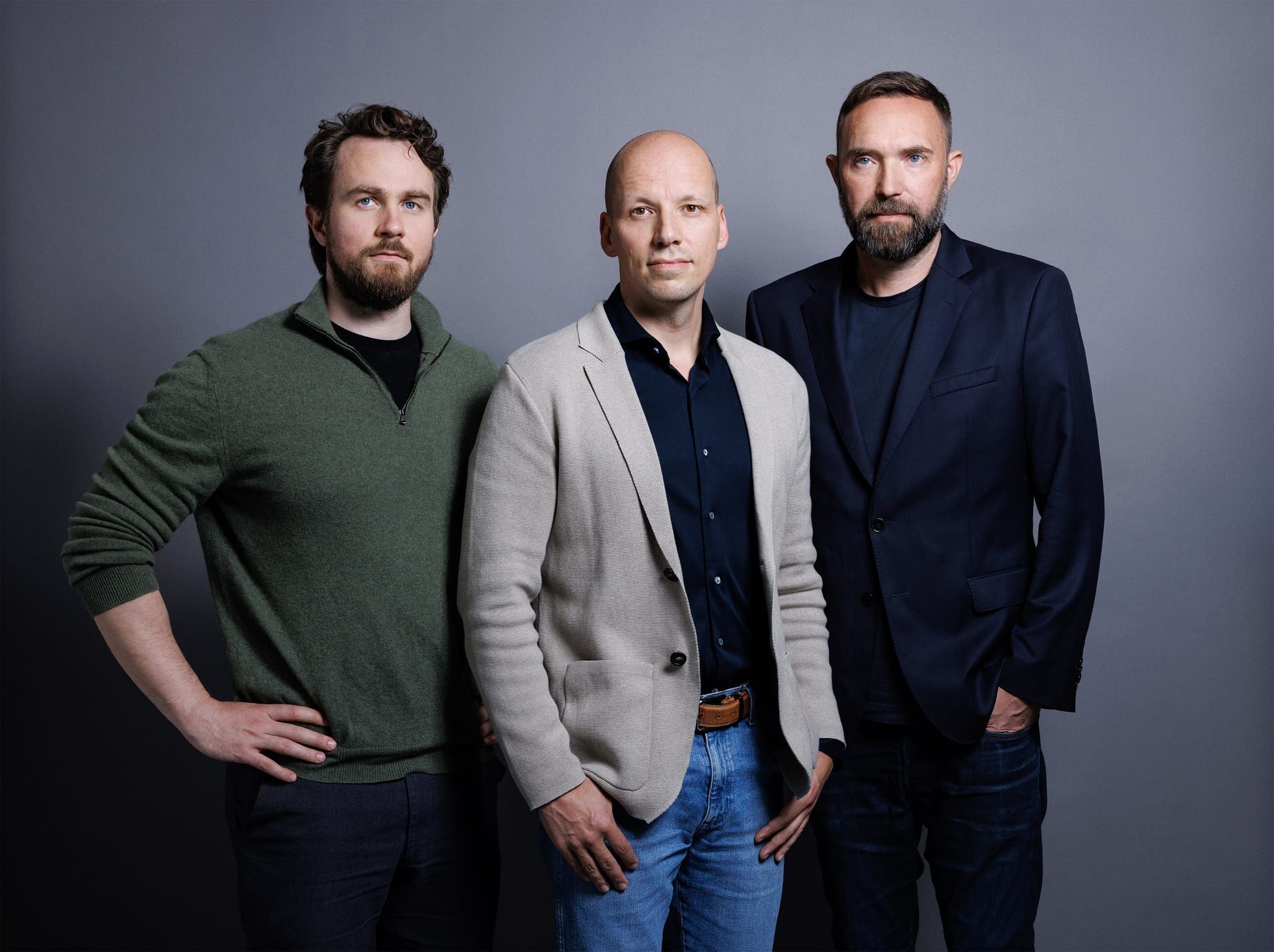
The second founding story begins at a Berlin café. Reil had invested in a Munich company run by Niklas Köhler and wanted to learn more about defense. Someone suggested he speak to Gundbert Scherf, whose experience included government defense work and consulting. Reil has said he and Scherf clicked within half an hour. They went to Köhler, who shared their view, and within days the three decided to start Helsing. The company was founded in Munich in March 2021.
The speed was unusual; the mix of founders was deliberate. Reil understood research becoming software and a company. Köhler brought machine learning expertise. Scherf knew the institutions and markets that defense firms must navigate. Reil has described the field as too complex for a lone founder: technology, politics and export law arrive together, whether or not the product is ready. He also says the three had independently concluded Europe needed a new kind of defense company.
Helsing began with AI software intended to help defense systems interpret information. It has since moved into hardware as well: the HX-2 strike drone, underwater systems and aircraft autonomy. Its collaborators and customers span several European countries. The company says its aim is to give democratic states greater technological independence. That ambition has political force, and it brings questions about how autonomous functions are controlled. In its description of HX-2, Helsing says a human operator remains involved in critical actions.
When the simulation leaves the screen
The clearest demonstration of Helsing’s aircraft work came in 2025. During tests over the Baltic Sea on May 28 and June 3, a Saab Gripen E pilot delegated control to Helsing’s Centaur AI for simulated beyond-visual-range air-combat scenarios. A safety pilot remained aboard and could take control; a second Gripen, flown by a human, served as the opposing aircraft. The work took Saab and Helsing less than six months from scenario design to flight test. It was a test, not a deployed air force.
The technical connection to Reil’s old work is tempting: train software through simulation, then watch how it handles a live environment. The social connection is less tidy. A digital stuntman can be judged by whether a scene looks right. Defense systems require judgments about reliability, rules and human authority as well as performance. Helsing’s products are being built inside those constraints, and Reil has become an advocate for European firms getting the government orders needed to prove themselves. He has argued that procurement, more than indiscriminate investment, is the lever governments can pull.
Helsing’s financing shows the appetite for the field. It announced a €600 million Series D in June 2025 and a $1.8 billion Series E in July 2026, the latter valuing the company at $18 billion. Funding can buy engineering and manufacturing capacity; it does not settle the difficult decisions a defense company faces. Reil himself has warned that Europe’s surge of defense startups will not leave every company standing. His own firm is moving quickly from software to aircraft: in 2025 it unveiled the CA-1 Europa autonomous jet program, and in February 2026 it announced a sensor and systems partnership with HENSOLDT.
“Europe cannot afford to fall behind in this category or become dependent on third parties.”Reil on the CA-1 Europa program
There is an odd symmetry in the two halves of Reil’s career. NaturalMotion began by making an artificial creature look less wooden. Helsing is trying to make software useful where the consequences are measured differently. He has not treated the first company as a rehearsal with a perfect script. He talks about what he got wrong, how much a team matters, and how fast a group of founders can move when they agree on the problem. The Oxford creature took a few steps and fell. Its maker kept walking into harder rooms.