At the end of 2020, a meeting in a Berlin café brought together two people with an idea that sounded easier to dismiss than to finance. Torsten Reil had spent years building software that made digital characters move convincingly. Gundbert Scherf understood how European defense institutions worked. They talked, Reil later recalled, for about half an hour before deciding they should start a company together. Then they went to see Niklas Köhler in Munich. Köhler, already running a machine learning venture, had reached much the same conclusion. Within days, the three had chosen to build Helsing.
The decision came before Russia’s full-scale invasion of Ukraine, before defense technology became a crowded theme in European venture capital, and before Helsing became a familiar name in the industry. In March 2021, the proposition was awkward. Reil has described how difficult it was to raise money for defense work and how unpopular the sector was in the founders’ social circles. Köhler’s own view had not always been friendly to it. The company began with conviction, but conviction here did not mean an absence of questions.
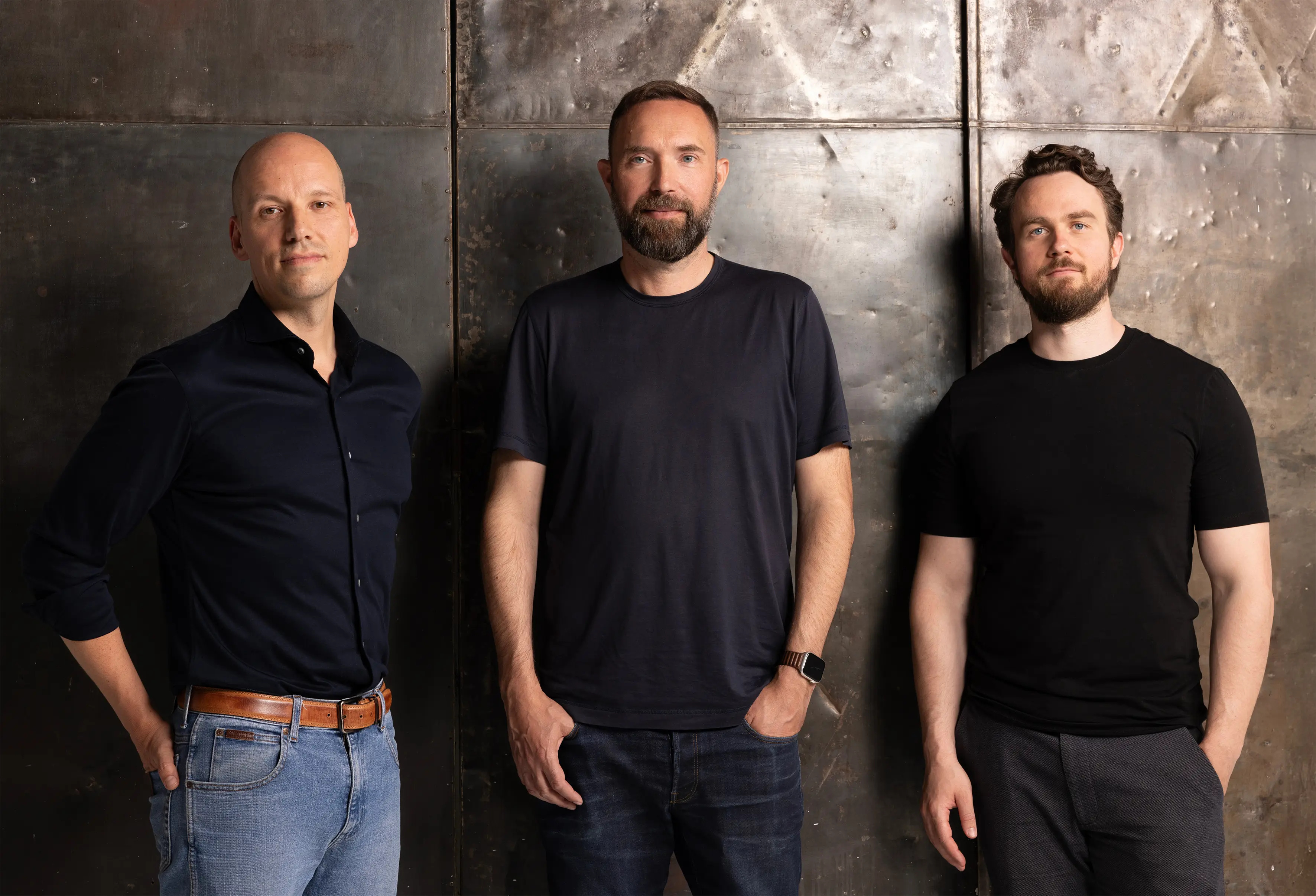
The third founder in Munich
Köhler was the youngest of Helsing’s three founders when they were interviewed together in 2023. His background was in physics and machine learning, and before Helsing he had built Hellsicht, a Munich venture applying that discipline to difficult streams of information. Reil had invested in Köhler’s company. That prior connection explains why the physicist was the next stop after the Berlin café conversation: the pair knew each other through work, and Köhler was already close to the kind of problem the new company wanted to solve.
It is tempting to tell the story as three résumés snapping neatly into place. Reality was less tidy and more interesting. Reil had spent time in gaming technology and cared about the interface a user would actually see. Scherf brought experience from defense policy and institutions. Köhler knew the behavior and limitations of machine learning systems. Reil has said that each had independently begun to worry about a gap in European defense capability. Their meeting turned three concerns into a company, while leaving them the hard task of deciding what that company should make.
The name Helsing has a faint echo of Hellsicht, Köhler’s earlier venture, though a neat name story explains little about what followed. Hellsicht represented experience in making algorithms extract useful signals from complex inputs. Helsing had to fit that experience to a field where the quality of a decision could depend on how quickly a person understood several imperfect inputs at once. That moved the focus from a model in isolation to the entire route between a sensor, a screen and a human judgment.
A problem hidden inside too much information
Köhler offered a plain account of that route in a 2023 interview. Military coordination, he said, still involved phone calls, reading reports and drawing on maps. Modern systems could produce enormous quantities of data, but the people using them still had to work out which signals mattered, what each system was doing and what its intent might be. He called that an AI problem. The phrase sounds simple until one considers how many sensors can disagree, how incomplete a picture can be, and how little time may be available to resolve it.
“Now, all of this is done manually: phone calls, reading things, drawing stuff on maps.”Niklas Köhler, 2023
Helsing’s early ambition was to help turn those streams into a view that a military user could interpret. A journalist who saw a demonstration described a visual display assembled from information gathered by sensors and weapons systems. The company said its software could make that information available to people in different positions, from a control center to a frontline device. Those are the company’s claims about its system, rather than proof that every use would work as promised. Still, the design question is clear: an answer that arrives too late, or in a form no one can read, is barely an answer.
That is where Köhler’s role as product leader becomes more than a title. Helsing’s September 2025 fact sheet named him chief product officer, while Reil and Scherf were listed as co-CEOs. A product officer in this setting has to connect the promise of a model with the routines of an institution that buys, trains for and operates equipment under severe constraints. Reil’s interest in usable interfaces and Scherf’s knowledge of procurement are part of the same design problem. The three founders’ backgrounds overlap at the point where a capability must become something a person can use.
A difficult answer at the interview table
A defense company cannot recruit on technical interest alone. Köhler described hiring conversations that became debates about what the industry was for. Many candidates, he said, were biased against the sector, especially before the invasion of Ukraine. He understood the reaction. He told the same interviewer that he had once been skeptical himself, and he connected the German discomfort with defense to the country’s history. This was a founder explaining the work to people who had reasons to resist it, not simply advertising an engineering challenge.
That detail complicates the usual startup portrait. A founder who admits earlier skepticism has to make an argument for the change, and the argument must survive more than one friendly room. Helsing’s stated mission is to serve democracies, a phrase the company uses to describe both whom it hopes to help and the standards it says should guide deployment. Such a statement does not settle every question about use, oversight or customers. It does, however, show why those questions appeared in recruitment conversations instead of being left outside the office door.
Reil’s account of the company’s beginning adds a second difficulty. At the time of the founding, he says, banks and investors were wary of defense businesses. The founders raised an early round, and later in 2021 Prima Materia, the investment firm associated with Spotify co-founder Daniel Ek, led a €100 million investment. The money changed Helsing’s capacity to hire and build. It did not change when the founders had made their original decision. That timing matters because it separates an early wager on European capability from the much louder market that emerged after February 2022.
What grew from the early software idea
Helsing’s portfolio broadened as the company grew. Its 2025 fact sheet described software for combining reconnaissance and strike information, electronic warfare and aircraft autonomy, alongside autonomous systems on and under the water. It also listed operations across several European cities and in Ukraine. Those details belong to the company, not to Köhler alone. They nevertheless show the scale of the product setting in which he works: the original question about understanding complex information now sits inside a business spanning many domains.
The expansion also gives the founders’ portrait a different meaning. In the image, Köhler stands beside Reil and Scherf against a metal wall, hands relaxed, with no diagram or product in sight. The public documents place him at the head of product work; his own recorded comments return repeatedly to the problem of turning messy inputs into a usable picture. A polished photograph can make a founding team look inevitable. Their actual sequence was more contingent: an investment in a Munich AI company, a conversation in Berlin, a visit to Köhler, then a decision within days.
There is a useful restraint in that sequence. It does not require a childhood prophecy or a solitary inventor’s epiphany. Köhler had a company and a skill; two prospective partners brought different skills and a shared concern. He was not arriving in a settled industry with an obvious career ladder. He was helping create a business in a field he had once questioned. The practical work then became figuring out how software could serve people trying to interpret uncertain events, under conditions in which a clean demo is rarely the whole story.
The bet, still in motion
The turning point in Europe’s defense conversation came after Helsing’s founding. That is why Köhler’s story is best understood from the smaller moment before it: a physicist in Munich, an investor who knew his work, a defense specialist and a short series of conversations that made a new company possible. The later growth is significant, but the origin explains its particular shape. Helsing did not begin with one discipline trying to absorb all the others. Its founders combined distinct ways of seeing a problem.
Köhler’s contribution is most visible in the question he put into ordinary language: how many systems are there, what are they doing, and what is their intent? The answer may involve algorithms, but it also involves a product that people can read, an institution willing to adopt it and a public willing to interrogate its purpose. His career at Helsing sits at that intersection. The wager made in 2021 has become much larger. The task of making information intelligible remains recognizable.