Tony Scott was camping on Black Mountain when the view began to bother him. Below lay Vancouver, with the ocean and islands stretching away towards Howe Sound. He had been admiring a cloud above downtown. Then he realised there were no clouds that day. The thing catching the evening light was smog.
It is an awkward discovery for someone who has gone into the mountains to enjoy the scenery. Scott came back with a question about his own contribution to it. The founder of a property-restoration business could hardly reorganise a city. He could, however, reconsider the vehicles his company drove, the materials it bought and the debris it carted away.
That is a useful place to begin with Scott: a person looking at something familiar, realising he has misread it, and deciding to change his part in the picture. A restoration contractor spends a working life deciding what damage means. Sometimes the thing that needs attention is the contractor’s own way of doing business.
A childhood among damaged buildings
Scott’s introduction to the trade came through his stepfather, who worked in restoration. The jobs he remembers from that period were substantial fire repairs. In his telling, the business resembled a branch of construction: a building suffered serious damage, and people arrived to rebuild it.
Later, working elsewhere, he encountered a different scale of work, with smaller claims, insurance adjusters and the growing use of drying equipment. Those changes mattered. They widened the possibilities of the job. A damaged property could be examined for what might be preserved, with equipment doing work that demolition and replacement would otherwise demand.
The young Scott also had opinions about customer service. He thought his employer was too focused on money, and he wanted to try a different approach. In 1991, aged 26, he founded Pro-Claim Restoration. Starting a business is one way to discover how many opinions require a payroll before they can be tested.
His business grew in the Vancouver area. PC Flooring followed in 1997, bringing a recurring part of restoration work inside the operation. The appeal was practical: fewer outside handoffs, more control over repairs and a chance to offer different material choices. The early motto had the earnest confidence of a young enterprise: making the world better, one floor at a time.
Pro-Claim
opens
become PPCR
fleet transition
The boss has to work here, too
A founding story can make a company sound like a personality enlarged to fill a warehouse. Scott’s own welcome to prospective customers contains a more modest explanation. He wanted people to feel proud and happy at work. He would be working there himself, after all. There is a certain economy in making your own working day less miserable.
Yet a growing company needs more than its founder’s preferences. PPCR’s history marks 2008 as a management turning point. Scott had concluded that conventional approaches were failing the business. The question he adopted was short enough to remember during an inconvenient decision.
“What’s best for the employee?”Tony Scott
That question makes management personal. It asks a supervisor to consider the person who must carry out an instruction, learn a skill or handle a customer. It also puts pressure on the supervisor’s judgement. An employee’s interests may require development, a different responsibility or a difficult conversation. A pleasant slogan can sit quietly on a wall; a question keeps interrupting.
Scott has made the company’s intention explicit: he wanted a workplace people were pleased to belong to. The interesting test comes when that ambition meets the demands of restoration. The customer needs progress. The team needs to know what is expected. The business needs to keep working tomorrow. Managing those obligations takes more patience than simply announcing that people matter.
The workplace gained recognition beyond the company. PPCR received the Richmond Chamber of Commerce’s Outstanding Workplace award in 2019. Scott accepted it on the business’s behalf. An award cannot describe every working day, but it gives this part of his story a public marker alongside the equipment purchases and business combinations.
The floor that stays put
By 2019, Scott was describing techniques for drying hardwood and drywall in place, where the circumstances allowed it. The distinction sounds technical until you imagine the sequence that removal sets off: take a material out, carry it away, obtain its replacement, install it and finish the surrounding work.
Preserving something usable can shorten that sequence. It can also avoid a journey to the landfill. Scott’s account of restoration connects the material decision to the customer’s wait. Keeping a floor has consequences beyond the floor. Rooms become available sooner; fewer trades need to pass through them; the repair involves fewer moving parts.
He also described a business beside a fire-damaged sushi restaurant reopening after three days once the necessary approvals were obtained. The story carries the sort of result a customer can understand without a construction vocabulary: the doors opened again. A contractor’s achievement is often measured in the return of somebody else’s ordinary day.
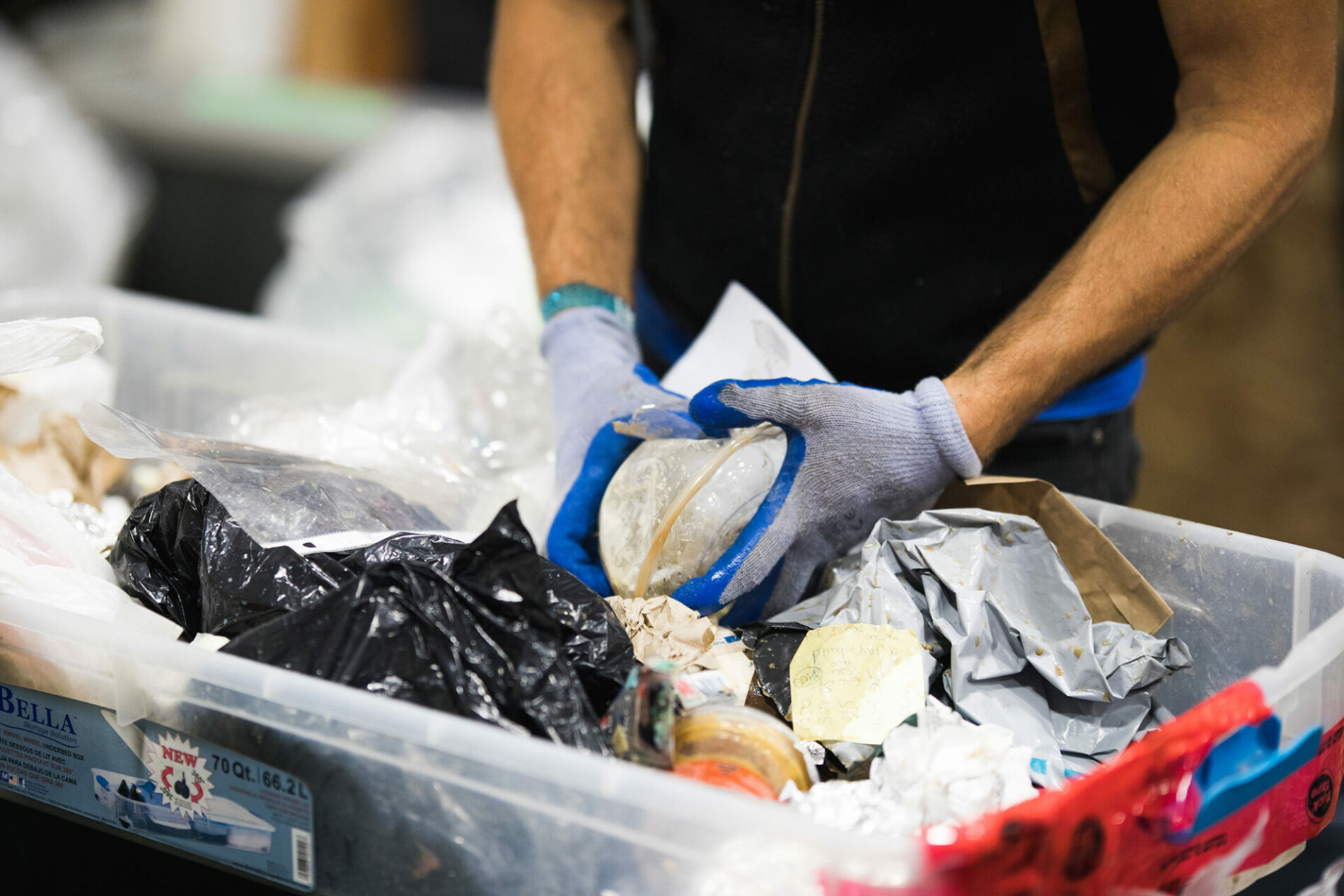
The same 2019 account described a full-time garbologist and staff working on the company’s carbon footprint. It is a splendidly unglamorous title. It also assigns a person to a problem that can otherwise disappear as soon as the rubbish truck leaves. The contents of the bin remain somebody’s responsibility.
A vehicle is a business decision with wheels
The fleet provided another place to act. PPCR began its electrification journey in 2016, starting with available passenger vehicles before moving towards larger commercial models. The transition was gradual. Getting suitable vehicles required persistence with suppliers and a leasing partner.
An energy assessment had identified transport as 65 percent of the company’s emissions. For a business that moves people, equipment and materials between properties, that finding gave the environmental effort a clear direction. The biggest slice of the problem was already parked outside.
A Clean Energy Canada case study published in 2024 recorded roughly 25 battery-electric or plug-in hybrid vehicles in a fleet of 88. It also reported an average daily distance of about 62 kilometres. Those figures describe the company at that point in its transition. They help explain why local routes were a place to begin testing electric alternatives.
Battery-electric or plug-in hybrid
About 25 of 88 vehicles
Scott’s enthusiasm for plugs has a briskness that fits a contractor. But the operational lesson is patient: understand the routes, acquire what works, learn from use, then tackle the next vehicle category. A fleet changes through purchasing decisions made over years. The photograph of a new truck is the easy part.
Let the idea travel
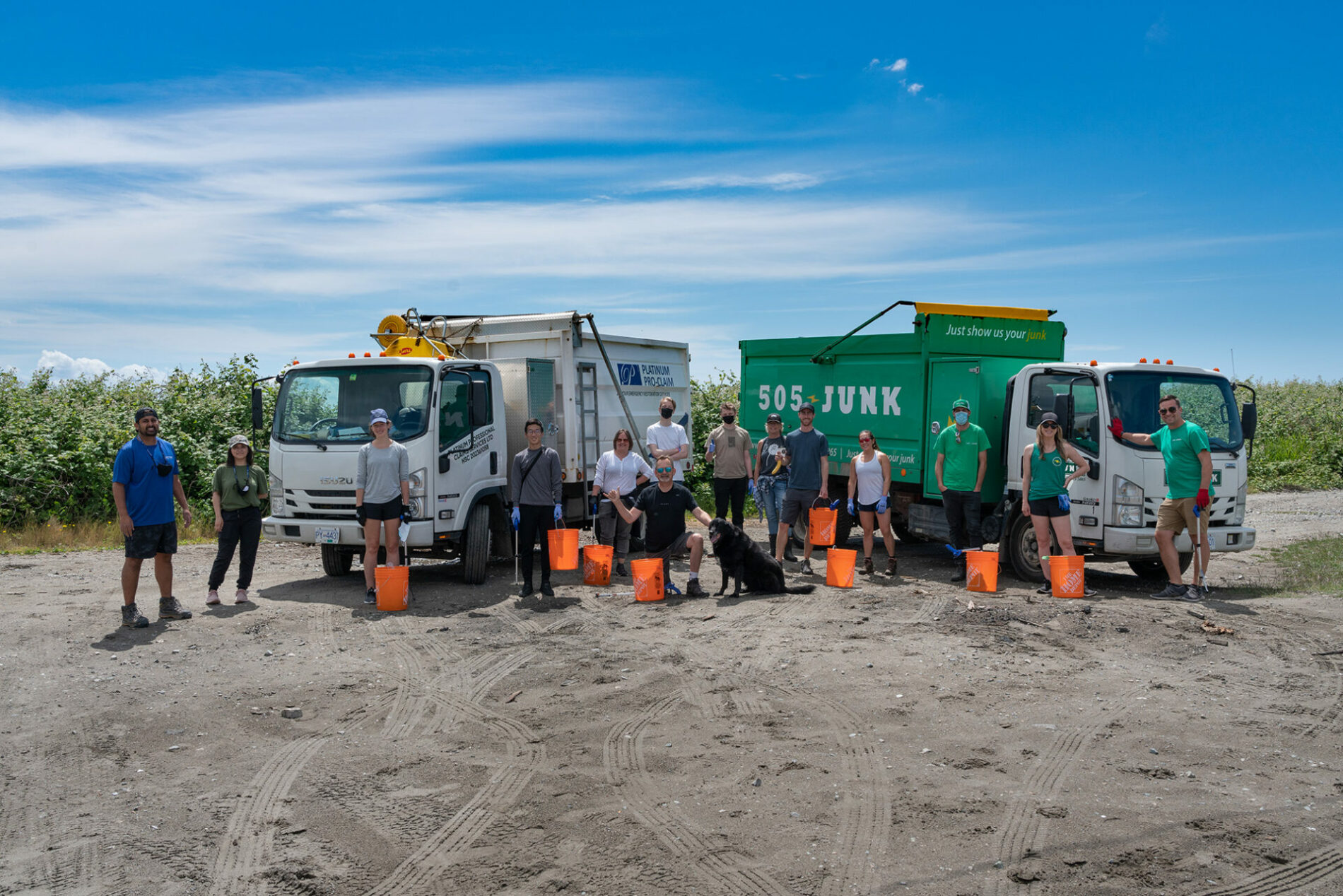
PPCR’s present sustainability operation includes an employee-led Green Committee, on-site sorting and 18 charging stations offered for public use. These are different kinds of participation. Staff can propose changes inside the business; drivers outside it can use a piece of its infrastructure.
Its 2026 climate plan gives the ambition dates. The company describes a 44 percent absolute emissions reduction by 2030 against a 2016 baseline, with a net-zero goal for 2035. It also sets out a half-electric fleet by 2028 and a move from gas heating to electric heat pumps by 2029. Those are targets, with work still attached.
The timetable matters because environmental language can float comfortably above an operation. A year and a baseline pull it down to earth. Future performance can be compared with a commitment. Scott’s mountaintop concern has acquired the distinctly less picturesque company of equipment schedules and emissions accounting.
Growing beyond the founder’s postcode
Scott’s business also grew through other people’s companies. In 2013, Pro-Claim combined with Platinum Pacific Restoration, founded by Geoff Shand. The resulting Platinum Pro-Claim name preserves both businesses in plain sight. It is a short corporate history printed on the side of a vehicle.
The wider Pro-Claim Group developed through partnerships and acquisitions. Downs Construction in Victoria joined the group in 2019; expansion into Calgary and Canmore followed. In a 2020 statement about Downs, Scott pointed to its care for employees and community involvement as reasons the partnership made sense.
That choice of explanation is revealing. Expansion is usually narrated in territories and capacity. Scott talked about how the people already there behaved. A group built from established local businesses has to find common ground among teams with histories of their own. An acquisition gives an owner authority; shared habits take longer.
Pro-Claim Group now describes a Canadian network stretching from Victoria to Truro. That wider geography adds a question to Scott’s original ambition: how can the ideas survive the distance? The founder cannot be in every room where somebody chooses a supplier, handles a complaint or decides what can be saved.
Finding words after doing the work
In September 2026, Scott was listed with Jessy Savage and Tessa Vanderkop for a chamber session about uncovering a business’s social purpose. His explanation was that the process gave his company language for what it had already been doing. The phrasing has the advantage of putting the work first.
His story leaves plenty of room for practical judgement. A company must decide what to preserve, what to replace and what to try next. A founder must decide which instincts deserve to become habits other people can use. Scott began with damaged buildings and an interest in helping their occupants. The circle of responsibility gradually widened.
Back on Black Mountain, the view had looked better before he understood it. Once he did, he had something to act on. Down in the city, the work continues in less scenic places: beside a parked van, inside a cabinet shop, at the edge of a sorting bin. There is usually something worth a closer look.