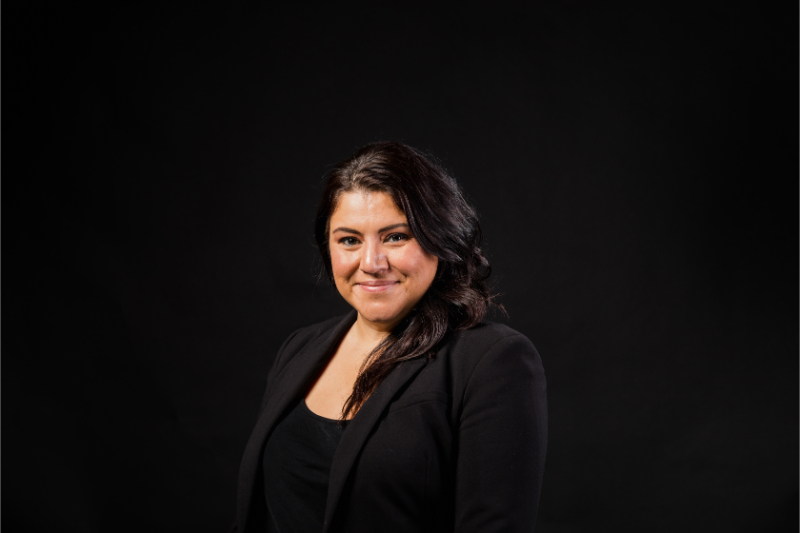
A restoration job begins in the wrong order. First comes the damage. Then the plan. A pipe gives way, smoke settles into a room, or a material that should not be there has to come out. The people calling for help are not shopping in the ordinary sense. They are asking a company to bring sequence back to a day that suddenly lost it. Elaine Dimakos works in that gap between disruption and order. She is Director of Client Services at Platinum Pro-Claim Restoration in Richmond, British Columbia, and she also appears in the head-office roster of its parent, the Pro-Claim Group.
The title sounds calm. The setting rarely is. PPCR handles fire restoration, flood restoration and environmental remediation, work in which a timetable is tied to a home, workplace or public space that someone needs back. Technical skill matters immediately. So does the quality of each update. A client has to understand what happens next, who owns which decision and why an apparently simple repair can contain a long chain of inspections, materials, trades and approvals.
Dimakos’s role places her on the human side of that chain. Her career record at PPCR also includes a previous title: Chief Marketing Officer. An official portrait uploaded in 2019 carried the CMO label. A second company portrait in 2023 described her as Chief Marketing Officer of both PPCR and the Pro-Claim Group. The current team directory presents a different remit, closer to the lived experience behind the message.
A public role arc
01 · The promise and the proof
A brand becomes real in the handoff
Marketing and client services can look like opposite ends of a business. One shapes expectations before an engagement. The other meets those expectations after the work begins. In restoration, the distance between them is short. A claim about responsiveness gets tested on the next phone call. A promise of care becomes visible in the next explanation. The brand does not live only on a truck, a website or a proposal. It accumulates in handoffs.
That makes Dimakos’s progression more interesting than a conventional promotion ladder. The two public titles describe a continuous problem from different directions: how should a restoration company be understood, and how should it feel to work with one? The first question belongs to marketing. The second belongs to client services. Both depend on operations keeping its word.
The second thing a restoration company rebuilds is certainty.
There is another detail beside her name on LinkedIn: CRM. The designation stands for Certified Risk Manager and is listed as a credential from the Global Risk Management Institute. Risk management gives structure to uncertainty. Client service has to translate that structure into language a person can use. The credential does not tell us how Dimakos handles any individual file, but it does locate her professional vocabulary in a field where consequences, controls and clear decisions matter.
02 · Restoration has a clock
Every update carries weight
Ordinary construction usually points forward: a drawing, a schedule, a finished thing that does not yet exist. Restoration points backward first. The immediate reference is the room, building or routine that existed before the loss. That difference gives communication a peculiar pressure. Progress can be real even when the place does not yet look repaired. Drying, removal, testing, estimating and ordering all move the job, but much of that movement can be invisible to the person waiting.
Client services is where invisible progress has to become legible. The job is part interpreter, part coordinator and part keeper of expectations. It cannot replace the technical work. It can make the technical work easier to follow. That distinction helps explain why a restoration company would place a former marketing leader in a senior client role. The same instinct required to make a complicated business clear before a loss can serve the people navigating it afterward.
Certified Risk Manager
Dimakos lists the CRM designation from the Global Risk Management Institute. It is the one public professional credential attached to her name.
The company’s own history reinforces the operating context. Founded in 1991, PPCR later combined with Platinum Pacific Restoration in 2013. It moved into a 43,000-square-foot facility in 2014, added in-house cabinetry in 2015 and became part of the Pro-Claim Group structure in 2019. Each expansion introduced another capability and another possible handoff. The group model now connects restoration businesses across Western Canada, while PPCR also participates in the national GUS contractor network.
Scale is useful during a disaster because resources matter. It also raises the cost of ambiguity. The bigger the system, the more deliberately a client needs to be carried through it. Dimakos appears in both the operating company’s senior-management list and the group’s head-office list. That double placement says something concrete about scope: client service is represented at the branch and group levels.
03 · The greener repair
A client experience includes what gets thrown away
PPCR’s public identity now connects restoration with climate action. The company says it began measuring and reducing carbon emissions against a 2016 baseline. Its current plan sets targets for waste diversion, fleet electrification, emissions reduction and net-zero operations. The Richmond facility includes an on-site sorting operation, and the company describes an employee dedicated to separating reusable and recyclable material from waste.
Those commitments are operational before they are promotional. Debris has to be sorted. Vehicles have to be charged and dispatched. Cabinet materials have to meet a specification. PPCR says its in-house shop uses formaldehyde-free sheet goods and water-borne stains, while the main site describes zero-VOC waterborne paints. The company is also EcoClaim certified, tying its restoration work to reuse and construction-waste diversion.
Targets on the operating calendar
For client services, sustainability cannot remain a separate campaign. Choices about materials, disposal and transport eventually touch cost, sequencing or explanation. They become part of what the customer experiences. Dimakos’s earlier marketing role and current client remit sit close to that translation point. The company can publish a target. The operation has to make it routine. The client team has to make it understandable.
04 · A local operating system
Richmond is more than the address line
Dimakos is based in Richmond, as is PPCR’s Mayfield Place operation. The company has worked on local public property, including the restoration of King George Park after fire damage for the City of Richmond. Its community program extends beyond repair work into breakfast initiatives and youth board sports. PPCR also reports removing more than 20,000 pounds of illegally dumped material from British Columbia shorelines.
These details matter because restoration companies trade in proximity. They need crews, equipment and decision-makers close enough to respond. They also encounter a city through its most disrupted rooms and sites. The business knows where water travels, what smoke leaves behind and how much material a repair can send toward landfill. Community and climate programs turn that knowledge outward, from a single claim toward the place where the company operates.
A Gore Mutual contractor-network document names Dimakos as the main contact for the Richmond operation. That small administrative entry adds another view of her work. In an insurer-contractor network, a contact is an interface between systems. The name on the line is where a broad promise of coverage and response becomes a specific call, file and next step.
“People are the heart of our company.” PPCR’s published vision
05 · The useful kind of quiet
The career is visible in the seams
Some executive careers are narrated through speeches and launches. Dimakos’s is documented through roles, a credential and the operating records around the company. Read together, they form a coherent line. Chief Marketing Officer placed her near the promise. Certified Risk Manager placed a framework around uncertainty. Director of Client Services places her near the proof.
That line is especially relevant in restoration, where the product is partly an outcome and partly a passage through uncertainty. A repaired building is the visible result. The experience of reaching it is made from smaller things: a call returned, a schedule explained, a handoff that does not require the client to start the story again. None of these replaces craftsmanship. Together, they determine whether craftsmanship feels dependable.
PPCR says its purpose is to restore lives, the planet and communities. The phrase is broad, but the company attaches numbers and practices to parts of it: an EV fleet, public chargers, a waste-diversion target, emissions goals, material standards and shoreline cleanup totals. On the client side, the corresponding metric is harder to compress. Confidence returns one interaction at a time.
Elaine Dimakos’s career sits inside that slower count. Her titles show an executive moving closer to the moment when institutional claims become personal experience. After the alarm, there is debris, paperwork and a long list of decisions. There is also a person waiting for ordinary life to resume. The quiet work is to make the route back clear.