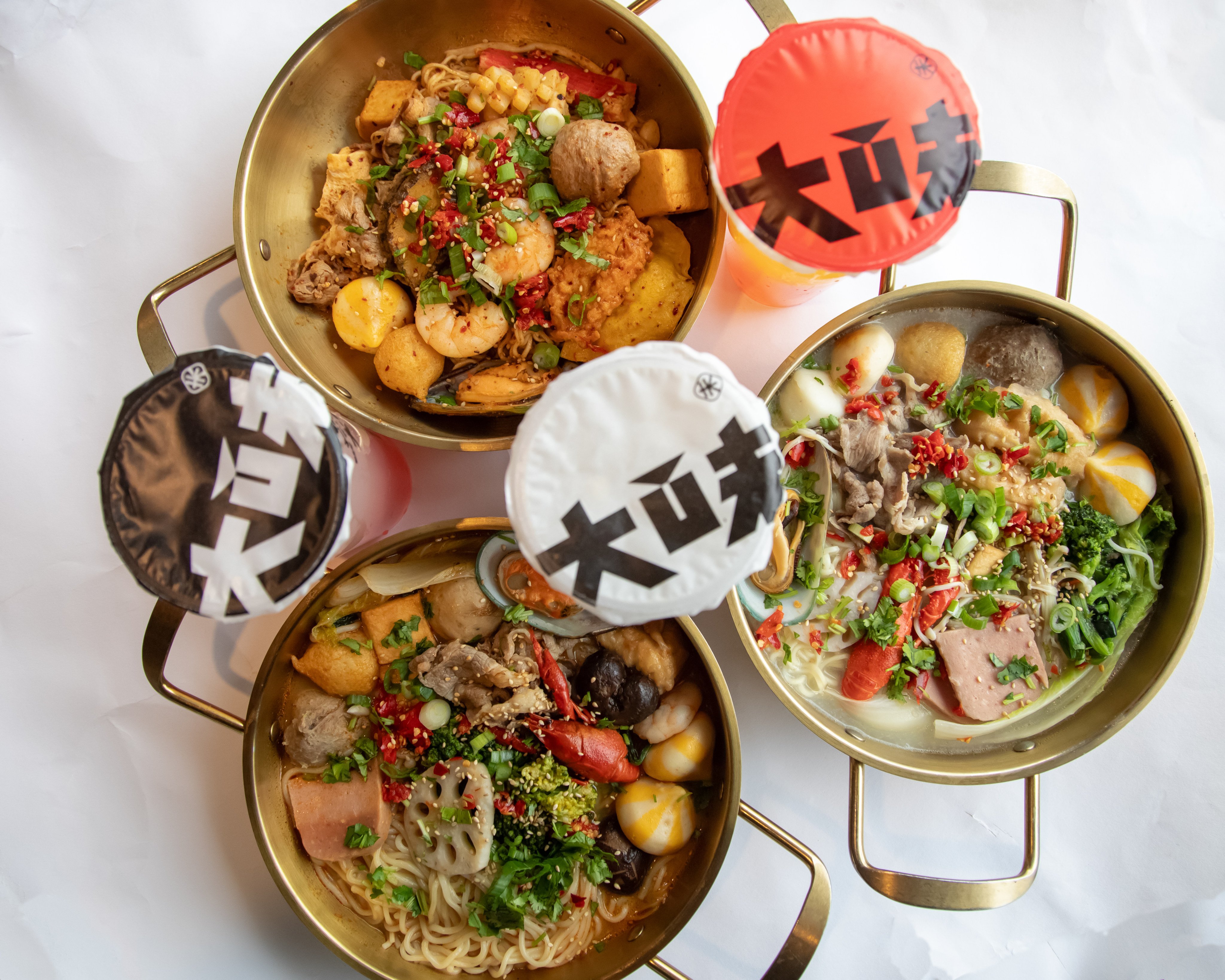
Sharing dinner is an agreeable idea until somebody orders for everyone. The table becomes a small parliament. Preferences acquire advocates. Compromise arrives in a pot. At Big Way Hot Pot, Jack Yao and his co-founder, Christiana Luo, give each guest a way out of the negotiations: an individual bowl, filled with ingredients of their choosing. Friends can sit together and eat quite different dinners. Peace, at last, with extra mushrooms.
It is a modest adjustment to a familiar pleasure. Yet building a restaurant around that adjustment has taken Yao from earlier hospitality work in Australia and Canada to running a company with restaurants on both sides of the Canada-US border. The customer gets to improvise. His organization has to make all that improvisation repeatable.
Yao’s story makes more sense at the counter than on a pedestal. Before he was Big Way’s founder and CEO, there was coffee to sell in Melbourne, a move to Vancouver and work inside other hot pot restaurants. Before the company partnership, there was a much longer partnership with Luo.
A partnership before the pot
Yao and Luo came from Jiaxing, in China’s Zhejiang province. They were high-school sweethearts and married in 2009. Both had studied business. Their subsequent route suggests a couple willing to keep moving: they operated a Gloria Jean’s Coffees franchise in Melbourne, then moved to Vancouver in 2017.
A coffee franchise offers an unusually practical setting for two people learning to work together. There is a format already in place and a customer who expects it to work today, regardless of what happened yesterday. At the very least, their Australian chapter put Yao and Luo on the operating side of a hospitality business before they attempted a format of their own.
In Canada, Yao worked at The Dolar Shop and Boiling Point. Luo worked in restaurant marketing. Those roles placed them in different parts of the business they would eventually build together: service and operations on one side, communicating an experience on the other. The partnership had a personal history, but it also had relevant work behind it.
There is another useful detail in that route: Yao and Luo had operated within someone else’s brand before putting their own over the door. A franchise comes with an identity customers already recognize. Building Big Way meant giving customers a new name, then making its meaning clear through a meal. Their work together had shifted from running an established format to taking responsibility for the format itself.
Their path resists the convenient founder anecdote in which an idea appears, fully dressed, over dinner. There were other counters first. Other menus. Other businesses whose customers still needed serving.
Dinner without a committee
Big Way dates its founding to 2021; the first Burnaby restaurant opened in 2022. The format puts a sequence of simple decisions in the guest’s hands. Take a bowl. Choose vegetables, proteins and noodles. Have the contents weighed. Pick a soup base. The kitchen cooks the selection and delivers the finished meal to the table.
Cooking moves away from the shared tabletop pot. Choosing moves closer to the individual. The distinction matters to a group with several appetites: one person’s enthusiasm for a particular ingredient need no longer become everybody else’s assignment. A restaurant can preserve the occasion of eating together while giving each diner control over the food.
- 01Pick your
ingredients - 02Weigh
your bowl - 03Choose
your flavor - 04Kitchen cooks.
You eat.
By July 2024, the company was describing a selection of more than 100 ingredients and ten broths. It also offered a free ice cream cone after the meal. The combination has a certain generosity of spirit: considerable freedom at the beginning, a small treat at the end, and someone else responsible for cooking what you assembled in between.
“We want them to be able to create and enjoy their own hotpot their own way.”
Jack Yao · July 2024
That was Yao’s stated intention as the company prepared more openings. It is usefully specific. A guest should be able to make something personal inside a restaurant that serves many people. Every addition to the menu has to fit that arrangement.
The scale has a sense of humor
A menu usually keeps the arithmetic discreet. Big Way gives it a station in the dining room. Once ingredients are priced by weight, appetite becomes something you can measure. You can choose the contents of your dinner, but the scale reserves the final word on how much dinner you have chosen.
Some customers turned that pause into a game. They tried guessing the price before weighing their bowls, or keeping the meal below C$10 by steering clear of heavier additions such as tofu, crab and corn. An ingredient can be perfectly innocent until it starts affecting the budget. Corn has seldom faced such close financial scrutiny.
The joke also explains the product. The same system lets diners vary their portions, compare their choices and return for a different combination. Its rules are visible. A guest learns them by moving through the room, rather than by studying a long explanation. For Yao, that clarity is part of what has to survive as the number of dining rooms increases.
The distance between an announcement and a door
In July 2024, Yao announced plans for more Metro Vancouver restaurants and Big Way’s entry into Los Angeles. The company then had five British Columbia locations. Expansion announcements are written in the future tense. A restaurant opening is a more stubborn kind of sentence: it requires a room, staff and guests.
Scarborough opened on February 18, 2025. Big Way’s first Greater Toronto Area location contained 135 seats in 3,650 square feet, with communal tables as well as other dining areas. There is something apt about those communal tables. Separate bowls had never required separate company.
The company’s first American restaurant, in Rowland Heights, celebrated its grand opening on July 20, 2025. Big Way marked the occasion with a month of Labubu blind-box giveaways. A restaurant format built around choosing had acquired another small suspense: dinner, followed by the possibility of a collectible toy.
The Ontario footprint continued to develop. By April 2026, the chain had added North York and Markham, and was seeking further Greater Toronto Area sites. The search specified 2,500 to 4,000 square feet in busy retail settings. Growth had become a matter of suitable spaces as well as suitable appetites.
- 2022
- First restaurant
Burnaby - Feb ’25
- Ontario entry
Scarborough - Jul ’25
- US grand opening
Rowland Heights
Forty-three million, with work still to do
Investment followed the restaurants. Jiumaojiu, the Chinese restaurant group, made an initial US$4 million investment for roughly 10 percent in July 2025. A further US$43 million transaction in February 2026 combined US$28 million for new preferred shares with US$15 million for shares purchased from existing holders.
The arrangement took Jiumaojiu’s economic interest to about 49 percent, with approximately 10.8 percent of voting rights. Big Way would remain outside its consolidated accounts. The ownership structure is a reminder that backing a company and directing it are separate questions.
$43m total transaction
By May 2026, Big Way had 22 locations and about 1,400 employees across British Columbia, Ontario and California. Yao described a deliberate effort to reach diners beyond the local Chinese community, including flavors and individual portions suited to a wider audience. He also described a familiar operating tension: customers appreciate more choice, while more choice makes the restaurant harder to manage.
That tension sits inside the bowl. Every additional ingredient gives a guest another possibility and the organization another responsibility. The CEO must make room for both. Money can support that work. It cannot make the choices disappear.
A chair on the stage, a question on the screen
In 2026, EY named Yao and Luo Pacific finalists in its Entrepreneur Of The Year Canada awards, in the Brand-Led Growth category. For a couple whose earlier venture involved operating a coffee franchise, the recognition marked a different position: their own brand was now the subject.
In August, Yao sat on a stage in Arcadia, California, beside fellow restaurant executive Neil Zhao and HR executive Stephanie Zhao. The Taste of Asia summit panel concerned the people and organization needed for restaurant growth. Behind the speakers, the screen asked whether a profitable first restaurant should lead to another.
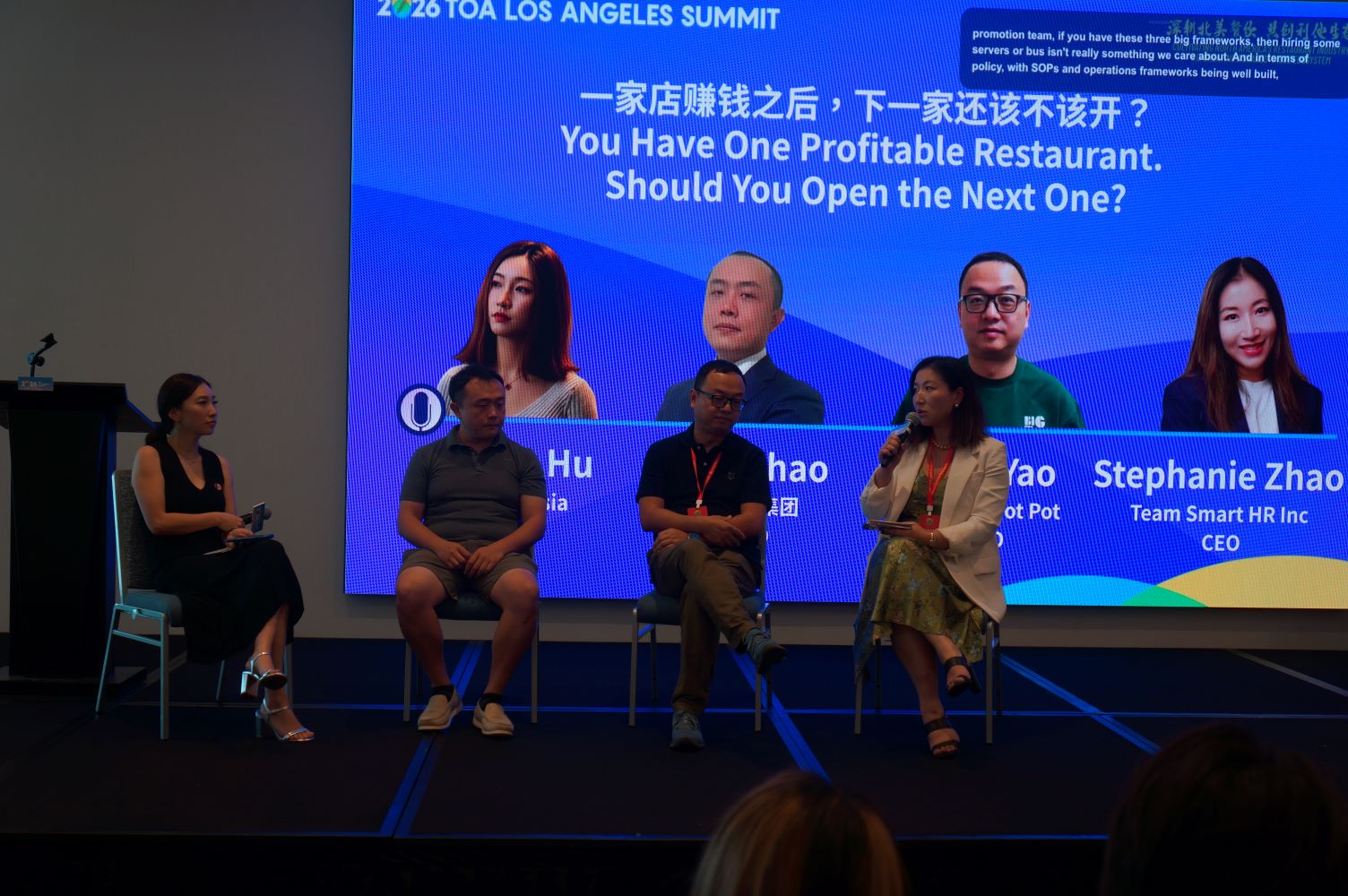
The setting supplied a neat change of perspective. In the restaurant, the guest considers what to put in a bowl. On the stage, the operator considers what an organization can take on. Both decisions look easier before something has been added.
By September, Big Way was announcing grand-opening celebrations for Queen Street in Toronto and White Rock in British Columbia. Yao also appeared among participants at a Chinese-cuisine globalization conference in New York. The company’s geography kept widening. The questions had become ones of teams, places and repeatable service.
The New York gathering took place at the Rainbow Room in Rockefeller Center. Its participants included restaurateurs and people from finance, technology and industry services. Yao’s name appeared alongside the founders of Da Dong and Huang Ji Huang. It placed the Canadian operator inside a broader conversation about how Chinese dining businesses travel. His own business had already made a particular version of that journey: from British Columbia into other North American markets, one individual meal at a time.
Back at the ingredient wall, a diner can still make the next decision with a pair of tongs. Yao’s task is to keep that decision easy. His route there has involved a longtime partner, a coffee franchise, other people’s kitchens and a growing collection of his own. The pleasure promised to the guest remains pleasantly small: choose dinner, sit with your friends, let someone else mind the pot.
Further reading & a look inside
Big Way’s website · EY finalist profile · The May 2026 interview · The Arcadia panel
Follow Big Way Hot Pot
Instagram · LinkedIn · Facebook · TikTok · Company news