A packet of chocolate chip cookies gave Tony Olson the sort of satisfaction most executives reserve for an acquisition. Browsing a Foxtrot store, he spotted Partake Foods, bought the cookies and checked their sales performance. Within minutes, the product in his hand had a second identity: a set of numbers inside the business he had spent years building. Shopping had become a demonstration of his own work.
He described the pleasure in a LinkedIn post: seeing something on a shelf, tasting it, then discovering how it was doing. Partake founder Denise Woodard replied to thank him. There is something endearingly specific about this exchange. A long career in retail intelligence, with all its transactions and management decisions, could still come down to a cookie and a conversation with the person behind it.
Olson spent more than two decades running SPINS, helping brands and retailers understand what people bought. Today, as founder of Webster Capital and chairman of SPINS, he is putting his own capital behind businesses that include jewelry, fashion and retail analytics. The range has widened. The recurring question remains recognizable: what makes somebody choose this product, and then come back?
The juice business came first
Olson’s early career ran through Just Squeezed Juices and Odwalla. At Odwalla, industry pioneer Greg Steltenpohl’s business gave him a view of how sales information and store placement could work together. A product needed somewhere to go. Its maker needed to know what happened after it arrived. Data could connect the two.
He joined SPINS in 1999, when the business was still small. His company biography traces his beginnings to Racine, Wisconsin, and describes an operating career that preceded his investing career. That sequence matters. He learned consumer businesses while working inside them, before arriving at the point where he could evaluate them from the other side of a funding conversation.
Ownership followed management. In September 2004, Olson and board member Jeffrey Ubben purchased a majority of SPINS’ shares from existing shareholders. Founder and chairman Paddy Spence departed. Olson continued as CEO and became chairman. It was a concrete transfer of responsibility: the executive running the business was also taking a larger ownership position in its future.
The distinction helps place his long SPINS tenure in focus. The central achievement was sustained construction. He stayed with the company through changes of ownership, location and scale, working on the information that other businesses would use to make their decisions.
A shelf needs a vocabulary
Retail data can sound dry until a young brand has to explain why it deserves space. A buyer needs a way to compare products. A founder needs a way to describe demand. A distributor needs a way to understand which products belong together. Without agreed categories, even an ordinary sales conversation can become a dispute about definitions.
SPINS worked on that underlying vocabulary, organizing product attributes and retail channels so participants could discuss the same market with comparable terms. Olson has described the team’s contribution to a shared industry language as his proudest accomplishment. It is a revealing choice. He points toward the infrastructure that let other people conduct business together.
By 2021, the company’s Product Intelligence combined human expertise with machine learning to categorize products through hundreds of attributes. Its practical uses included helping retailers choose what to emphasize and helping brands understand sales velocity and construct a case for buyers. A package could carry a story; the data gave that story something measurable to stand on.
That work required investment inside SPINS, too. In November 2021, the company added Gotham Majumdar as chief product and technology officer and Dan Buckstaff as chief marketing officer. The expansion paired technical development with the job of explaining and selling those capabilities. A data business has customers of its own, however much time it spends studying everyone else’s.
Chicago became part of the business
In 2015, SPINS moved its headquarters into Chicago. Mayor Rahm Emanuel attended the opening. The move brought 150 employees into the city, with another 100 jobs planned over the following year. Those planned positions were an ambition at the time, rather than a completed hiring total.
Olson’s explanation centered on access to talent. The new headquarters occupied 22,000 square feet of brick-and-timber office space, giving a company concerned with digital information a suitably physical base. Chicago offered a meeting point for food businesses, technology and people who knew how retail worked.
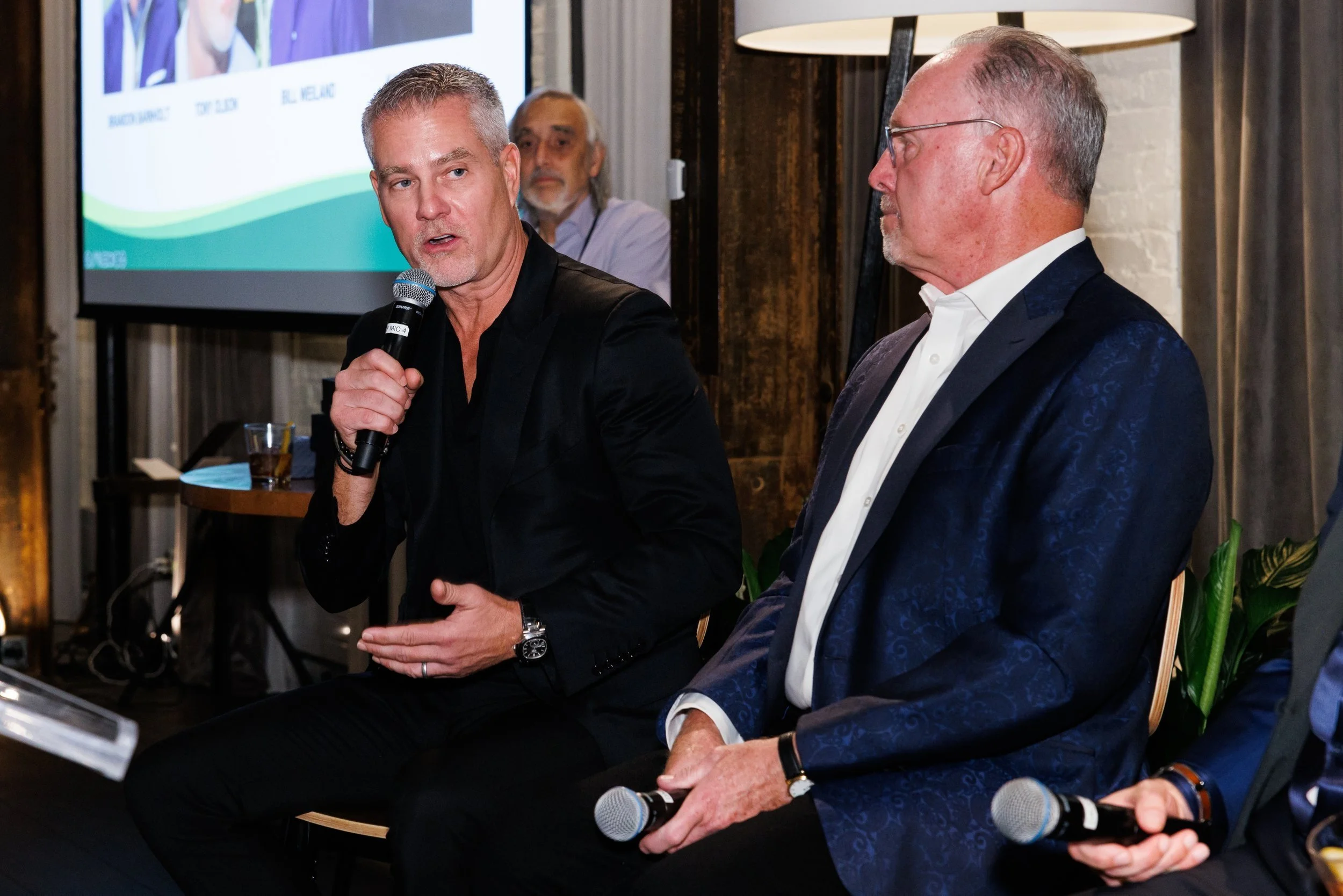
The location also put him near Jim Slama, then leading FamilyFarmed. In 2019, Olson joined Slama, KeHE’s Brandon Barnholt and Presence Marketing’s Bill Weiland in co-founding Naturally Chicago. Distribution, brokerage, data and an existing community organization met in one association. Each brought a different part of the route from an entrepreneur’s idea to a customer’s basket.
The early program included Friday networking breakfasts at LYFE Kitchen in River North. It is a pleasingly practical detail. An industry association can begin with an expansive mission; its members still need somewhere to sit down together. Regular breakfasts gave a diffuse business community a recurring appointment.
The useful number is movement
At Naturally Chicago’s October 2024 Founders’ Gala, Olson offered a useful warning to entrepreneurs: broad distribution needs sales velocity behind it. Starting with a smaller footprint lets a brand learn about customers, prices and promotions before carrying those lessons into more stores. A long list of stockists can look splendid on a slide. The products still have to leave the shelves.
His relationships with the other honorees had considerable history. Weiland recalled that he and Olson had once been roommates. When the conversation turned to advice, Olson spoke about loyalty and trust between friends who had worked together for years. His conclusion was compact: “That’s what business is, building relationships.”
“That’s what business is, building relationships.”
Tony Olson, Naturally Chicago Founders’ Gala, 2024
Outside capital, then a different chair
January 19, 2021 brought a significant growth investment in SPINS from Warburg Pincus, General Atlantic and Georgian. The transaction’s terms were undisclosed. The announced uses were specific: expand sales and marketing, develop products, increase value for retail partners and enter additional verticals.
For Olson, it meant bringing investors experienced in information businesses into a company built around specialized retail knowledge. The investment connected that operating base with resources for expansion. It also placed SPINS within a wider conversation about the value of distinctive business data.
On July 17, 2023, Jay Margolis became CEO. Olson moved to chairman and remained the company’s largest individual investor at the transition. A succession announcement can be treated as punctuation at the end of a career. Here, the continuing chairmanship and investment made it a change in the way he participated.
Margolis took responsibility for leading the business. Olson retained a board role and a financial interest while giving more attention to his own investment platform. The arrangement preserved his connection to the company without requiring him to keep the same executive job indefinitely.
From the grocery aisle to the jewelry counter
Webster Capital’s investment in Ring Concierge was announced in May 2025. Founded by Nicole Wegman in 2013, the jeweler built a business around bridal and fine jewelry, serving customers through digital channels and stores. Olson arrived with an unusually direct reference point: he had been a customer and admirer for roughly a decade.
That detail brings his consumer interests into the investment decision. He had experienced the service before becoming a backer. The announced partnership emphasized listening to customers and responding to them, a concern that runs naturally alongside his earlier work measuring purchases.
His public writing had long shown a shopper’s enthusiasm. Years before Webster’s launch, he published LinkedIn pieces about bagels, watermelon drinks and tortilla chips. The titles were lively and product-specific. For someone working in measurement, he seemed quite willing to make an appreciative fuss about the thing being measured.
Experience, memory, emotion
By November 2025, Olson was discussing investments in Willy Chavarria and Paramour alongside his interest in beauty and jewelry. He described an approach built around experience, memory and emotion, abbreviated EME. The idea connects the encounter a customer has with a brand to the feeling that might bring that customer back.
His wife, Izabel Olson, participated in the Chavarria investment conversation, emphasizing her connection to the designer’s cultural perspective. Olson himself acknowledged that fashion and apparel were comparatively new territory for him. Sarah Stennett, an early Chavarria investor, described him as approachable and open-minded. The picture is of an experienced operator willing to enter a business where he still has things to learn.
Webster’s present portfolio extends that range further, listing Scanntech in Latin American retail analytics and FAE Music in London alongside its consumer holdings. Meanwhile, its stated investment process calls for research, diligence and governance before intuition. Personal interest supplies a reason to look; the business still has to withstand examination.
There is an appealing continuity between the cookie buyer and the investor. Olson likes the encounter with a product, the person who made it and the evidence of how customers respond. Across a shelf, a jewelry counter or a fashion business, he keeps returning to that sequence. First comes the choice. Then comes the work of understanding it.