A company name can tell you what its founder wants people to think. At 25, Tom Shen wanted bankers to take him seriously. Software Dynamics Incorporated had the requisite syllables. You could almost hear the conference table being polished. Decades later, when he started another banking technology business, he chose Malauzai, a name drawn from his father’s nickname for him: little monkey. The need to sound important had apparently become less pressing.
Between those two names sits a career spent helping financial institutions meet their customers. First, that meant software used inside branches. Later, it meant the screen in a customer’s hand. Shen’s work has followed the movement of banking itself, but his more interesting habit is personal: he makes room for other people to correct him. A founder who can laugh at his own certainty is a useful person to have near a product roadmap.
Malauzai offers a particularly good example. Shen believed the phone would become the centre of digital banking. He also believed desktop banking would cease to matter. Customers liked the mobile experience and wanted something similar for their desktop users. The company obliged. Predicting a new habit had been useful; listening to an existing one proved useful too. The bank customer, inconveniently, had retained a computer.
Before the phone, a place at the counter
Shen was born in Taiwan and moved to the United States at 14. His education took him to Harrison-Chilhowee Academy in Tennessee, now The King’s Academy, where he belongs to the class of 1973. His father, Jin Tai Shen, was a British-educated petrochemical engineer. His mother was Methodist. His story crosses countries, schools and professions before it ever reaches a banking app.
In 1982, he founded Software Dynamics. Its products served tellers, banking platforms, call centres and customer relationship management. The business reached more than 1,200 financial institutions worldwide, ranging from community banks to multinational organisations. These were tools for people doing the practical work of banking: handling a transaction, retrieving information, helping someone across a desk or over the telephone.
He sold Software Dynamics to S1 Corporation in 2001. Later came an executive role at Digital Insight and board service at Q2. The sequence matters because it gives his mobile banking years a longer prehistory. He had already worked on the systems behind customer service before proposing a different place for that service to happen. The address changed. Customers still needed to get something done.
- 1982Software Dynamics founded
- 2001Software Dynamics sold to S1
- 2010Malauzai incorporated
- 2018Malauzai acquired by Finastra
A smaller bank deserves a useful app
Malauzai was incorporated in 2010, with Shen, product co-founder Robb Gaynor and technology co-founder Danny Piangerelli among its founders. Its chosen customers were community banks and credit unions. For these institutions, a banking app carried an awkward responsibility: it had to compete for attention on the same phone as the services offered by much larger financial companies.
A local institution could know its customers well and still give them an irritating digital experience. Malauzai’s proposition was to supply mobile and internet banking software that those institutions could make their own. The bank retained its name and customer relationship. The software company supplied the means to carry that relationship into everyday digital use. Shen’s stated ambition was to help community institutions compete with larger banks.
The design philosophy became MOX, the Mobile Only Experience. Despite the name, the idea travelled across devices. A 2016 description of Malauzai’s Retail+ offering emphasised simplicity, usefulness and a consistent experience on phones, tablets and desktops. Institutions could customise the appearance to match their brands. Personal and business accounts could be accessed through one login, with permissions determining what a user could do.
There was substantial plumbing behind that tidy front end. By the same account, Malauzai had established integrations with nearly 30 core providers serving community institutions. A friendly interface needs access to the right information and a reliable way to execute instructions. The unglamorous connections are part of the product. Balances, transfers and payment instructions have to pass between the visible service and the systems keeping the accounts. That gives the design work a practical constraint: the attractive screen must remain connected to the institution’s actual operations. Customers rarely applaud an integration. They are quite capable of noticing its absence.
The numbers acquire a daily routine
A snapshot from FinovateSpring 2015 shows the company in motion: 280 live customers, 330 signed customers, more than 500,000 end users and over five million logins a month. The presentation listed more than 60 employees. Gaynor and Piangerelli demonstrated the Virtual Banking Experience. Those figures locate Malauzai at a particular stage, with a signed pipeline extending beyond the institutions already using it.
The logins are especially revealing. A banking product can collect an impressive introduction and then wait untouched. Repeated use gives it a place in somebody’s routine. Five million monthly logins does not tell us whether every interaction was pleasant or every feature successful. It does tell us that these apps had become a recurring route to people’s accounts. Shen’s proposed digital meeting place was receiving visitors.
Finastra announced its acquisition of Malauzai on June 18, 2018. The transaction had closed three days earlier. At that point, the business served more than 350 US community institutions and had more than one million monthly active users. An accompanying acquisition presentation counted 1.6 million registered users. Registration and monthly activity describe different populations; keeping the distinction makes the scale more meaningful.
The buyer already knew the business. A partnership dating to 2015 had produced more than 130 joint customers, using Malauzai alongside Finastra’s Fusion Phoenix core banking system. Horicon Bank was one named example. The acquisition brought together companies that had already connected their products and shared customers. The sale price was undisclosed. Shen’s career had reached another sale, after years spent making the technology work.
Breakfast belongs on the leadership chart
The most persuasive account of Shen’s management is small enough to fit around a breakfast table. Aidan Garza, who worked as a junior web developer at Malauzai, recalled meeting Shen for breakfast one morning each month to learn about leadership. In Garza’s telling, the CEO made time to teach someone early in his career. An executive calendar has limited space. Giving a junior colleague a recurring place in it is a fairly legible priority.
Shen describes his approach as servant leadership. His explanation begins with a simple line: “The best leaders are servants at heart.” Customers, colleagues and shareholders all make claims on a leader’s attention. Listening is a practical part of that work. The breakfast recollection puts a specific action beside the philosophy, which is helpful in a field where leadership vocabulary can arrive considerably faster than leadership behaviour.
He has carried that interest into boardrooms. CSI currently lists him as a director, as does ZSuite Technologies. Cornerstone’s profile also records his work with Tyfone, Shastic and Axiom Bank, his investment in Larky, and his role as a limited partner at Information Venture Partners. The companies differ, but the pattern is recognisable: experience gathered while running businesses becomes something to share with the people running the next ones.
Shastic announced his board appointment in April 2022, pointing to his experience across products, engineering and operations. Its banking automation work extended his interests beyond the visible app into the processes underneath. A customer’s experience depends on what happens behind the screen as well as what appears on it. Board work gives Shen another way to influence those decisions without holding the chief executive’s job himself.
“The best leaders are servants at heart.”
Tom Shen
The lesson travels back to Tennessee
His relationship with his school has continued too. The King’s Academy credits Shen with endowing a scholarship for Asian students in honour of a food services worker known as “Mama” Cates. The JT Shen Science Wing honours his father and recognises his generosity. A scholarship named for someone who offered kindness is a rather precise way to remember what mattered about an education.
Shen also earned a bachelor’s degree in Christian Ministries at The Master’s University, graduating summa cum laude. His education and philanthropy sit beside the commercial career without needing to become another business lesson. They show where some of his attention goes: back to a school, towards students, and into the memory of people whose influence lasted beyond their formal roles.
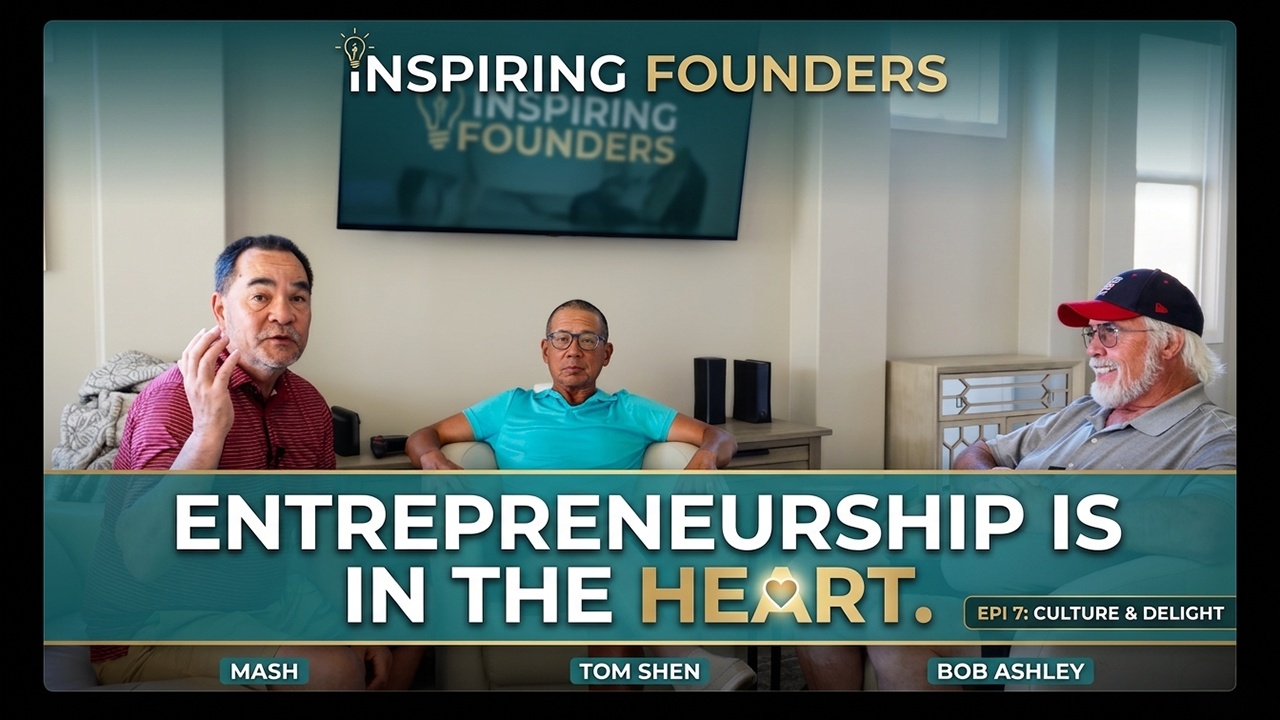
In April 2026, he appeared with Bob Ashley on Inspiring Founders, hosted by Michael Ashley. The conversation addressed humility, emotional intelligence and a working partnership spanning 23 years. After the company formations and acquisitions, he was still discussing how people work together. The subject fits the monthly breakfasts. A business relationship that lasts for decades gives the abstract virtues a demanding examination.
Malauzai’s own story has continued under different ownership. In June 2026, CORA Group acquired Finastra’s US Mid-Market banking business, including MalauzAi Digital Banking and Phoenix. The familiar description “a Finastra company” now marks an earlier chapter. Shen remains its co-founder and former CEO, with a later career built around investment, governance and mentoring.
There is a pleasing distance between Software Dynamics Incorporated and the little monkey. The first name asked for credibility. The second allowed a family joke into a bank technology company. In between, Shen built enough experience to know that authority need not occupy every inch of the room. Leave some room for a customer with a desktop, a developer over breakfast, or a colleague who has a better answer. They may have something useful to say.