The refrigerator would not stop leaking. Tom Gerace cleaned the drip pan. He adjusted the tilt. He watched repair videos. The puddle survived his attention, which is a discouraging quality in a household appliance. Eventually he changed the question. Instead of asking how to fix the refrigerator, he searched for a new one.
Shopping guides from GE and Lowe’s helped him decide. He described the episode in an article in 2012, when he was running Skyword. It supplied a modest, unusually domestic demonstration of his business argument. A customer with a wet kitchen floor had a reason to read. A company with useful information could enter that decision without first demanding that he stop doing something else.
Gerace had already spent years working out how businesses could reach people online. He had helped build an affiliate marketing company, founded a social network and started a content marketing business. Across those ventures, the customer acquired more ways to ignore a sales pitch. His answer increasingly depended on understanding what that person wanted before deciding what the company should say.
Two brothers and fifteen technical minds
Gerace graduated from Harvard in 1993 with a degree in Social Studies, magna cum laude. He worked as a senior business analyst at Harvard Business School. His education sounds some distance from the pipes and switches of internet advertising. His subsequent career would repeatedly bring questions about people into businesses built with software.
In 1996, he started Be Free with his brother Sam, using money from friends and family. Affiliate marketing connected publishers and merchants around measurable activity. It gave an early web business a way to associate promotion with results, rather than treating the appearance of an advertisement as the whole transaction.
By 1998, the company had fifteen technically capable employees. It also had a hole at the top. Gerace explained that Be Free needed senior managers, including a chief executive and finance leader, to prepare for a public offering. Seven venture firms offered investment. The company chose three; Matrix Partners and Charles River Ventures were among the investors that began finding executives before the deal closed.
That detail makes the startup story more interesting than a cheque followed by a celebration. The founders needed people who could do jobs the existing team could not. Be Free went public in November 1999. ValueClick acquired it in 2002. Along the way, Gerace received two US patents concerned with profiling users and targeting advertising.
A dinner party with a points system
Gather, founded in 2005, approached participation from another direction. It was a social network aimed at adults, organized around subjects people wanted to discuss: politics, books, music, cooking. Members contributed writing and responses. They could earn points redeemable for gift cards at retailers including Starbucks, Target and Amazon. Conversation had acquired a small shopping budget.
The demographic was distinctive. In early 2007, Gather reported 191,000 members and a median age of 43. Its partnership with Publishers Weekly offered access to publishing expertise and conversations about books. Gerace’s observation was that the social component mattered as much as the media. A collection of articles alone could not supply everything that members came for.
There was also a wonderfully literal connection to storytelling. Gather and Touchstone created the First Chapters writing competition. Geoffrey Edwards, an entrant with a historical novel called Fire Bell in the Night, said 300 literary agents had turned him down. Gather’s members were already sharing poems and stories for comment; the contest gave aspiring writers another route toward publication.
It is an episode that adds texture to a career usually described in marketing terms. Gerace was building places where other people’s words could circulate. Some participants wanted company. Others wanted readers. One had accumulated enough rejection letters to make an agent’s inbox seem like a particularly expensive wastepaper basket.
The advertiser learns to wait
Skyword, founded in 2010, gave brands a system for making and managing content. The company combined technology with services and access to writers. Gerace’s early description included forecasting demand for information, recruiting people with subject expertise, editing their work, placing it on a brand’s site and tracking what happened afterward.
He was thinking about the question before the page. What were customers searching for? Which topics within that field were gaining interest? What did people need explained? Search offered evidence of intention. Someone asking a question had already supplied a clue about what might be welcome.
By 2015, he was putting the argument directly to a room of 300 marketers at Skyword’s Content Rising Summit. People could avoid commercials and disregard display advertising. Brands needed to reconsider where they put their money and effort. “Story is core to our nature,” he told them. The practical ambition was to build a habit of storytelling across languages, countries and channels.
His position carried a productive tension. A founder associated with advertising patents was now asking companies to reconsider interruption. There was continuity in the attention to results, but the work demanded a different relationship with the audience. A useful article has to survive the reader’s judgment sentence by sentence. Buying its placement cannot do all the persuading.
“We need to be in a process of continuous education, both formal and informal.”
Tom Gerace, Helping Sells
Enter the screenwriting teacher
Robert McKee arrived with expertise from another room. He taught storytelling to writers and had begun working with businesses. Explaining the craft repeatedly to corporate clients revealed a need for a seminar designed around their problems. He needed someone who understood how companies would put those lessons to use. He chose Gerace.
The pair announced their partnership in June 2016. Their plans included seminars in the United States and Europe, workshops for individual companies and online teaching. Two years later, Storynomics appeared, published on March 20, 2018. The subtitle made its commercial purpose plain: Story-Driven Marketing in the Post-Advertising World.
There is a temptation, when businesspeople discover narrative, to call everything a story. McKee and Gerace asked for more discipline. A chronology of company milestones does not automatically supply drama. Neither does a promise that a product will make everything pleasant. The reader needs stakes, resistance and choices that matter.
The authors had a term for marketers’ reluctance to admit difficulty: negaphobia. It is an apt problem for organizations whose public histories can sound suspiciously free of bad decisions. Remove all the trouble and you may also remove the reason to keep reading.
Turning the seminars into a book had an ordinary practical explanation. Busy marketing leaders could not always attend a full day of teaching. The ideas needed a form they could take away. Gerace’s partnership with McKee joined narrative technique to a business question: how could an audience relationship support revenue, margins and loyalty?
- Be FreeConnect promotion to measurable action.
- GatherGive people reasons to contribute and converse.
- SkywordHelp brands publish work an audience will seek out.
The spreadsheet returns
Gerace’s interest in stories never made the operating machinery disappear. Skyword360, introduced in 2018, was meant to connect strategy with production. He described a familiar office ritual: someone makes a strategy presentation, emails it around and hopes it gets implemented. Software could connect the plan to the work instead of leaving the connection to optimism.
In October that year, Skyword merged with TrackMaven. Gerace led the combined company. TrackMaven founder Allen Gannett became chief strategy officer and executive vice president of corporate development. The combination brought marketing insights closer to content creation.
The gap was specific. Skyword could compare a customer’s content with its earlier results. It had less ability to explain that performance against competitors. TrackMaven could identify opportunities, but its customers still needed to turn recommendations into finished work. Combining the businesses aimed to put diagnosis and execution in the same system.
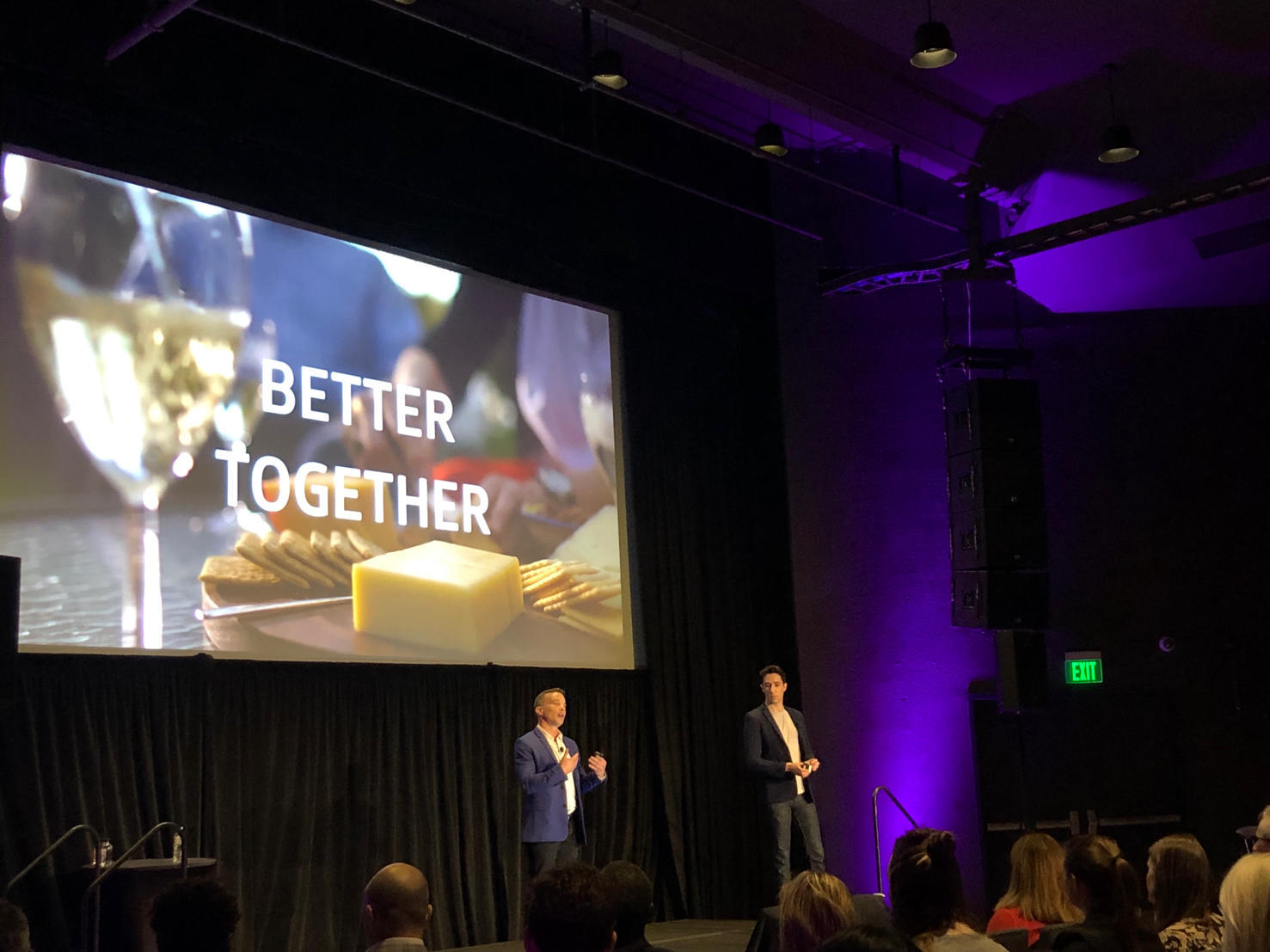
By the following June, Gerace and Gannett were sharing the opening keynote at Forward 2019 in Boston. Their appearance put the merger’s two sides on the same stage. The questions had become practical ones about quality, volume and connecting creative work with the information needed to improve it.
A reason to come back
Gerace’s account of entrepreneurship contains less glamour than a conference stage might suggest. In 2013, he described the repeated process of building something, discovering mistakes and adjusting it. “Building a successful company is 100% an endurance game,” he said. His description included thinking about the business at three in the morning and resisting the temptation to abandon it for summer drinks on the Cape.
Skyword has since changed leadership. By November 2020, Andrew Wheeler was its new CEO. Today Gerace is listed on the company’s board as its founder. The distinction matters: the career continues beyond the years when every company description put his name beside the chief executive title.
His projects leave an interesting set of questions behind them. What makes participation worthwhile? How does a company know whether its communication works? What earns a second visit? The refrigerator supplies the least ceremonial answer. Gerace had a problem, went looking and found something worth reading. For a marketer, being useful at that moment is a respectable ambition.
Keep reading, keep listening
- Skyword · Tom Gerace on LinkedIn · X / Twitter
- Gerace’s writing at Skyword · His Social Media Today articles
- Marketing Smarts: content and entrepreneurship
- Helping Sells: storytelling and audience relationships
- The First Chapters writing competition
- A conversation about Storynomics · Forward 2019 in pictures and ideas