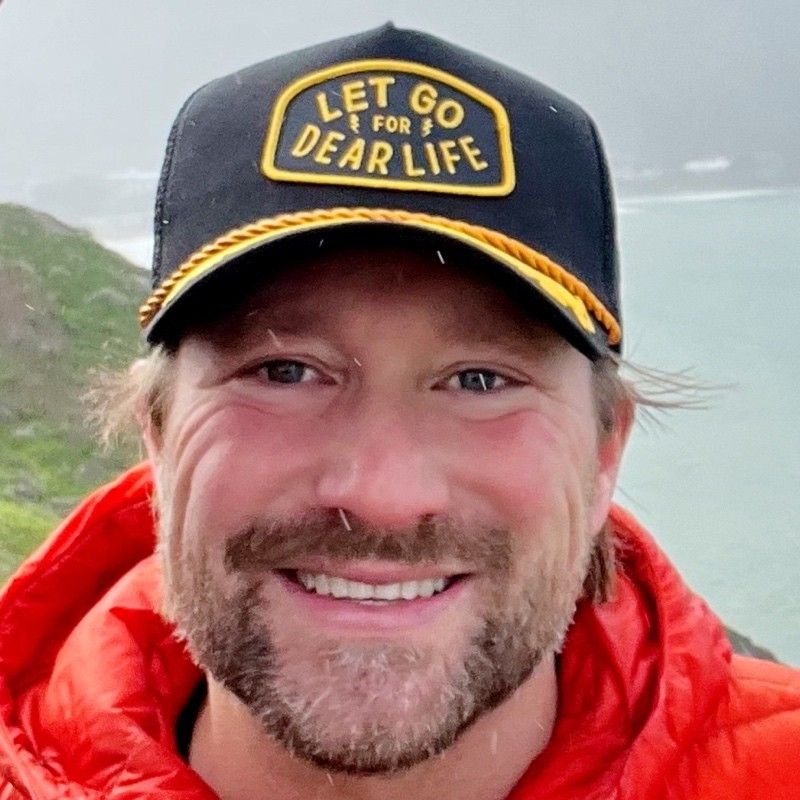
There is a sentence Tim Regnier likes to repeat, borrowed from Frank Blake, the former chairman of The Home Depot: "All truth is found on the floor of the store." For most executives it lands as a nice line. For Regnier it became a company.
Regnier is the CEO and co-founder of Smart Access, a software company that has spent roughly a decade on a problem most of the technology industry stepped over: the person actually doing the work. Not the planner, not the analyst, not the executive reading a dashboard three time zones away - the worker on the warehouse aisle, the manufacturing line, the store floor. Smart Access exists to make that worker visible, coachable, and heard.
The company started in Edmonton, Alberta in 2015, co-founded with John White, and now carries a San Francisco address on Mission Street. Along the way it raised about $13.3 million in total, including a $12 million Series A in 2026, and crossed more than two million frontline observations logged inside its platform. But the numbers are downstream of a conviction that predates the funding rounds.
Truth on the floor
Regnier's core complaint is with the standard operating procedure - the SOP - the document that is supposed to define how work gets done. In his telling, standards get written, filed, and forgotten. "Standards get written," he says, "and then they become dead documents the moment you press save."
His favorite illustration is a small, concrete one. A worker reads a checklist aloud and hits a line that says to wear Kevlar gloves. "I don't have Kevlar gloves," the worker says. "Where are they?" That gap - between the standard on paper and the reality on the floor - is the whole business. Smart Access is built to surface exactly that kind of discrepancy, letting workers flag missing equipment or broken steps in real time rather than silently working around them.
The platform turns static procedures into living documents. It layers in AI-driven observations and automated skill-building, and integrates performance, attendance, HR, and training data so managers can finally see what is happening rather than guess. The newest piece, an intelligence layer called Ops Navigator, entered beta in 2025 as the observation count crossed two million.
The results customers report
The pitch would be easy to dismiss as another workforce dashboard if the outcomes were not so specific. Smart Access says its customers see meaningful movement on the metrics operations leaders actually lose sleep over.
Reported customer outcomes
Figures as reported by Smart Access. Bar lengths are illustrative.
An unlikely road
Regnier did not arrive here from a computer science program or a management consultancy. His degree, from Taylor College and Seminary, is in religious studies and philosophy. His first career was in youth ministry - he served as an Area Director at Young Life from 2003 to 2007. It is not the resume of a stereotypical SaaS founder, and that may be the point. The habit of showing up, watching people closely, and taking the human in front of you seriously runs straight through the work he does now.
In 2007 he founded QUICKflick and ran it as founder and CEO until 2015, cutting his teeth in retail technology. By the time he started Smart Access he had, in the company's own framing, spent about 15 years innovating in and around retail. The frontline performance problem was not a hunch. It was the pattern he kept running into.
That line captures a genuine design philosophy. Regnier does not want to hand a manager a spreadsheet and call it help. He wants the software to do the analysis so the humans can do the coaching. The technology fades into the background; the relationship on the floor moves forward.
Observe everyone
One of his more contrarian positions is about who gets watched. Most performance systems zero in on the strugglers. Regnier disagrees. "We think everyone should be observed," he says. "We don't think you should just observe your low performers." The logic is simple: you cannot learn what "great" looks like on your own floor if you only ever study failure. And you cannot improve a system you refuse to look at.
That belief - that dignity and improvement both start with attention - is why Regnier talks about frontline work the way he does. He frames the mission around unlocking labor supply, activating worker productivity, and providing decent work for all. It is a big claim for a company that started in a Canadian winter. But it is consistent with a founder who has been saying the same thing for a decade.
Where it goes next
With fresh Series A capital and an AI layer in beta, Smart Access is trying to become the intelligence system for the frontline - the place where performance, scheduling, training, and human feedback all meet. The bet is that the largest retail and logistics organizations, the ones running thousands of people across hundreds of sites, will pay to finally see the floor clearly.
Regnier's story is a reminder that the most durable software companies often come from founders who are stubborn about an unglamorous truth. His truth is that the answer was never in the boardroom. It was on the floor the whole time - and he built the tool to go look.