A founder can explain a company for years. Eventually, somebody else has to be able to explain it without him. For Tim Pannell, that moment arrived publicly on July 28, 2021, when Financial Marketing Solutions announced four new owners. The agency he had cofounded with Laurie Pannell would continue under people who already worked there. After a career spent asking banks what their names stood for, he was helping decide what his own business could stand for after he moved on.
There is a pleasing complication here. Pannell’s profession rewards memorable announcements: a new name, a new identity, a campaign people notice. Yet the work behind a durable transition is often quiet. People need preparation. Customers need continuity. Someone has to know which promises must survive when the person making them changes.
His career has repeatedly returned to that practical question. A business can buy attention. Earning a place in somebody’s routine takes considerably more work. The bank sign has the easy job: it merely has to stay attached to the building.
Banking, before the branding
Before FMS, Pannell was vice president and executive director of the financial-services division at a Nashville marketing communications agency. He helped develop the department that preceded his own firm. His specialization was already in place before he became a founder: understanding how a bank’s marketing connected with the business it was trying to build.
His explanation for attending the School of Bank Marketing and Management is wonderfully economical. He wanted to understand the bank’s broader strategic goals, and how his work could help accomplish them. Good looks alone would leave too much of the job unfinished. The interest was in learning to think inside the institution, rather than arriving with a design and hoping the institution would fit.
Tim and Laurie founded FMS in 2004. Their partnership had begun as a friendship during their careers in bank marketing; they married in 2008. Business came first in the chronology, with marriage following four years later. Their shared professional history gave the venture a particular foundation: two people who already knew the industry, and one another, choosing to work together.
By its tenth anniversary in 2014, FMS had grown from three people into a larger team. Its services had expanded with the industry, including a social-media offering. Pannell’s account of those ten years included changing technology, regulation and social channels. The task kept acquiring new tools. The firm kept its attention on banks.
His favorite bank lesson came from Amazon
Ask a bank marketer for a favorite brand and you might expect an answer involving a well-turned slogan. In 2016, Pannell chose Amazon. What interested him was the sequence: start with the customer experience, then work back toward the balance sheet. He pointed to ease of use, purchasing convenience and recommendations informed by previous behavior.
That preference makes his approach easier to understand. He was studying the experience around the transaction. The screen, the sequence of steps and the usefulness of the next suggestion all contributed to whether a person would return. In that view, a brand could be judged while someone was doing something quite ordinary.
A few years later, he was warning that American banking had been designed around baby boomers. Branches, products and service expectations reflected that customer. As younger generations became more important, institutions would have to reconsider the arrangements they had inherited. He urged a mobile-first approach. The underlying question was who the bank was now being designed to serve.
There is a certain professional discipline in looking outside your own market. A specialist can spend so long comparing banks with banks that the comparison becomes flattering by default. Pannell’s Amazon answer moved the reference point. Customers have other experiences before they arrive at the bank. They bring their expectations with them.
A bank people thought they couldn’t join
Consider the problem behind Kaiser Federal Bank’s change to Simplicity Bank in late 2012. The institution had converted from a credit union to a savings bank in 1999. More than a decade later, potential customers still associated it with a restricted membership. An old understanding of the name was standing between the bank and people it could serve.
Pannell used the case to emphasize the commitment required from management and the board. Employees needed to understand and carry the identity. Leadership had to reinforce it. A promise of simplicity had consequences for the way banking actually worked, including the technology and channels customers used.
“When you think about rebranding, you must always think about long-term vision and goals, not short term.”
Tim Pannell, 2014
He also resisted treating every acquisition as an automatic invitation to rename. In 2019, he described a straightforward possibility: a small bank acquiring another in a neighboring state might simply extend its existing identity. Other combinations required a shared identity that employees and customers could accept. The decision depended on the situation. A consultant willing to discuss continuity is useful company when everybody else is choosing new stationery.
His advice on selecting an agency was similarly practical: ask for its client list and investigate the experience behind the portfolio. Attractive work starts the conversation. The people who have lived through the process can tell you more about the relationship.
His public conversations have also brought him together with working bank marketers. In 2019, he joined BayCoast Bank’s Nicole Almeida for a discussion of rebranding. The pairing put an agency perspective beside a bank executive’s experience. It was an appropriate setting for questions whose answers have to survive contact with daily operations: what customers understand, what employees can deliver, and how a promise becomes useful to the business.
Betty the teller has a distribution network
When discussing bank mergers in 2023, Pannell offered a hypothetical pair: Betty the teller and Bob the loan officer. Unhappy employees would talk to people at church, at the grocery store and at Little League. Their disappointment could travel through the same community the bank was paying to reach.
The example is funny because the distribution plan is already complete. No media purchase required. It also explains his attention to employee onboarding during a merger. People absorbing a change need opportunities to listen, ask questions and understand what the new organization intends. A polished customer announcement cannot do all that work.
His recommendations included personal communication with key customers and a flow chart for coordinating messages through the transition. It is detailed, unglamorous work. It makes room for the human questions that sit underneath the corporate announcement: who will help me, what will change, and when will I hear about it?
Four names on the next chapter
At FMS, the incoming owners were Sean Hockenbery, Amber Farley, Clark Hook and Zach Pannell. Hockenbery became president and CEO. Pannell said the group had worked with the founders for eighteen months to prepare for their leadership responsibilities. The handover had a rehearsal period.
He and Laurie moved toward FMS Consulting, concentrating on brand consultancy and strategic planning alongside the agency. A conference biography dates the consulting venture to 2020; the ownership announcement followed in 2021. That overlap matters. The next activity was taking shape while the agency’s transition was being prepared.
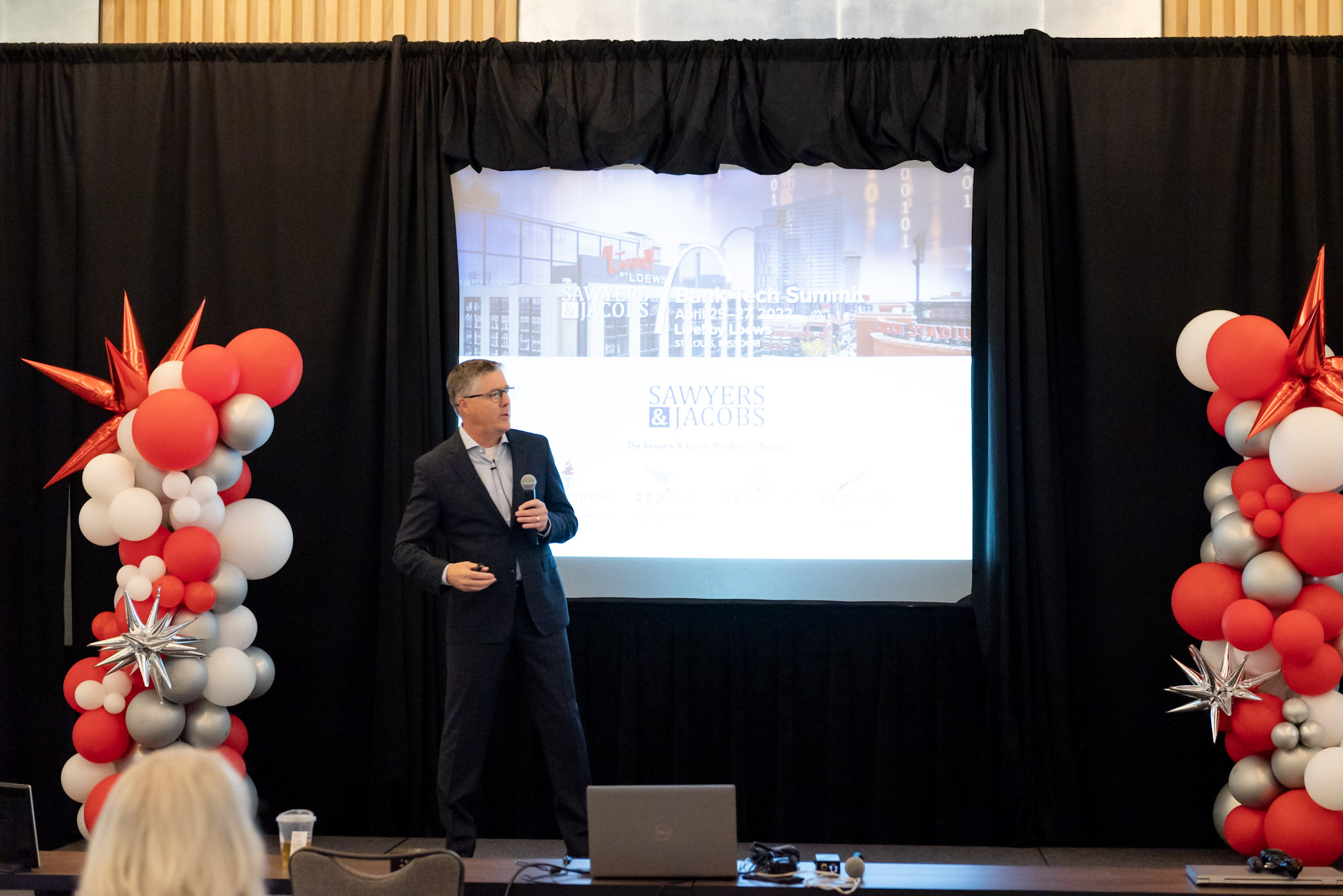
Teaching remained another outlet. Pannell has taught at banking schools including Stonier, Wisconsin, LSU and Virginia. In 2022, his Bank Tech Summit session carried the title Why Leaders Need to Be Readers. In 2024, the program brought him back to a recurring subject: Always Advance the Brand. His classroom subjects linked leadership with the everyday work of running an institution.
The same industry, a different chair
In January 2025, his appointment as vice president of the Partner Network in the American Bankers Association’s Office of Member Engagement was announced. He had moved from serving banks through an outside business to working within their trade association. The role centered on partner relationships and engagement, drawing on more than thirty years in the industry.
His 2025 Michigan banking conference topic was Vendor Selection and Relationship Management. It is an apt subject for someone who had spent years on the other side of that relationship. Choosing an outside partner involves more than admiring what it sells. The organization has to work with the people behind it, explain its own needs and decide whether the relationship can support the work ahead.
The subjects around him have continued to change. In September 2026, he appeared with Circit’s Dennis Moore in an ABA podcast about digital banking and audit confirmations. Other ABA conversations have paired him with specialists in intelligent banking operations and digital banking growth. The work brings technology providers and banking questions into the same discussion.
These appearances offer a useful present-tense ending to a founder’s story. Pannell is still working around banks, still helping connect expertise with the people who need it. The company he cofounded has its own leadership. His working life has found another setting.
The interesting part of leaving a business is what happens to all the knowledge that once seemed attached to one desk. At FMS, there were four names ready for the next chapter. Pannell’s career continued elsewhere. A business built around helping institutions explain themselves had managed a fairly consequential explanation of its own.
Read, listen, connect
- Tim Pannell on LinkedIn
- FMS agency
- The FMS ownership announcement
- Pannell and Nicole Almeida: a conversation about rebranding
- Is Your Bank Really Digital - ABA podcast
- The Future of Banking Is Intelligent and Integrated - ABA podcast
- The Simplicity Bank rebrand
- Always Advance the Brand - an essay by Tim Pannell