In eighth grade, Thomas Sanchez sold corn to pay for his first trip to Washington, D.C. It is the sort of detail that appears to have been planted by a biographer: a boy from a farm in northwest Missouri financing a glimpse of the city where he would eventually build a company. But corn is not a metaphor when you have to grow it, price it and keep the books. Before Sanchez led a digital agency, he had already learned the sober mechanics beneath optimism.
The farm produced corn and soybeans. FFA produced a young bookkeeper. His supervised agricultural project required balance sheets and profit-and-loss statements, while chapter activities asked him to speak in public, compete and work with other people. Those jobs gave hope a ledger. A field might thrive or disappoint; either way, somebody still had to record what happened and decide what to change next season.
“Farming teaches you optimism. Every season, you plant with the belief that something good will grow.”
Thomas Sanchez on his Missouri upbringing
Sanchez has carried that sentence into a profession that prefers the vocabulary of speed. Digital marketing chases the next platform; technology celebrates the new. His instincts are more agricultural. Take a risk. Watch carefully. Improve the process. Let people share ownership of the result. The glamorous word is innovation. The useful word may be cultivation.
The programmer in the cornfield
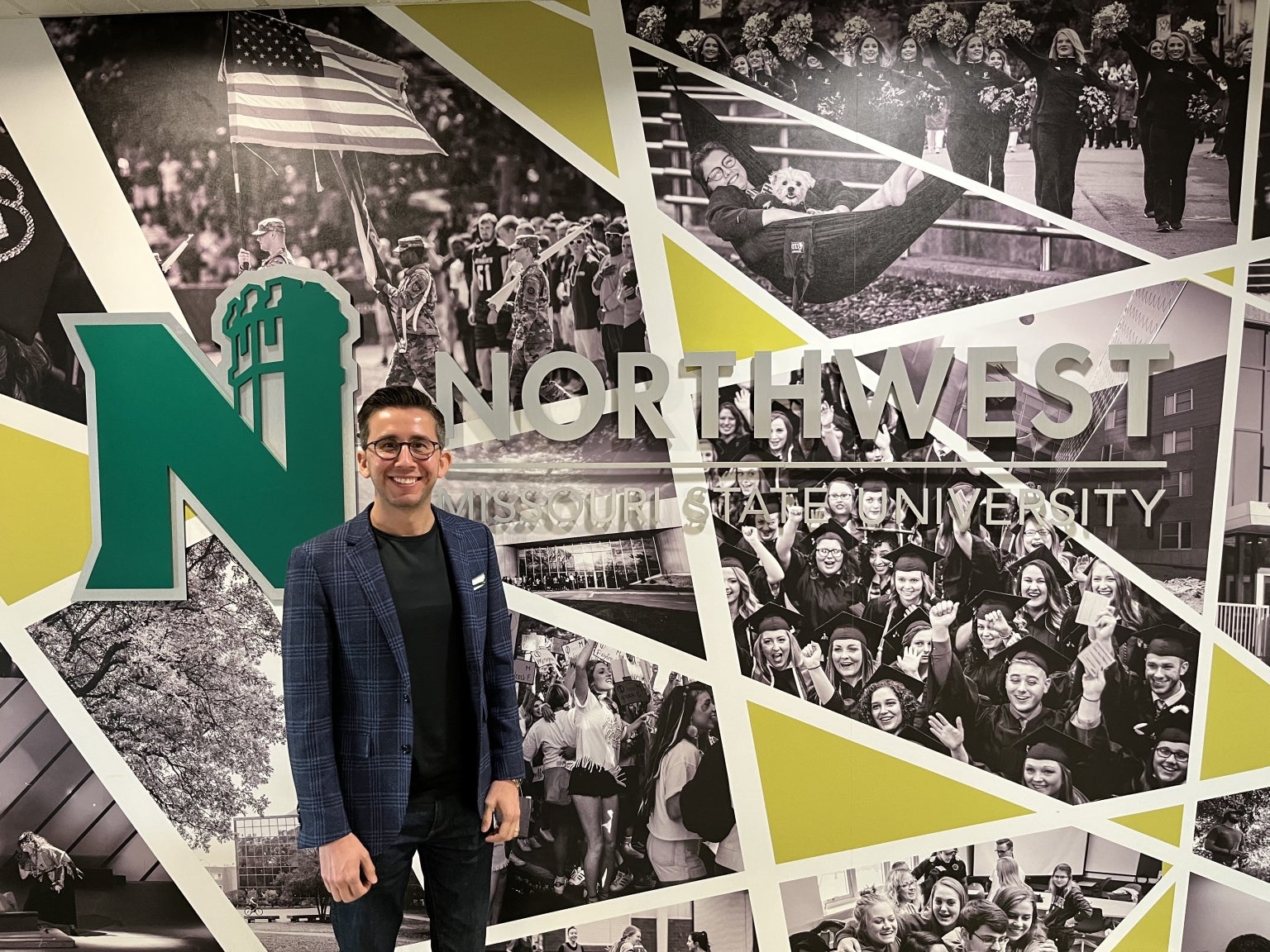
At Northwest Missouri State University, Sanchez studied computer science and worked as a software developer. After graduating in 2002, he entered software engineering and consulting, including healthcare-informatics work at Cerner. The career made sense: a technically curious student from a practical place learning to build systems that other people had to use.
It also gave him a valuable suspicion of the gap between vision and execution. Organizations often knew what they wanted technology to accomplish but struggled to translate that ambition into something functional. Sanchez became interested in the translation itself: how software, strategy and human behavior meet. Marketing would eventually become his field, though he arrived carrying an engineer's habit of looking for the system underneath the slogan.
An operating system built in three places
Washington entered the story again when Sanchez moved there with Anthony Shop, his husband and eventual co-founder. Shop was pursuing an MBA at George Washington University. He had a communications background and Sanchez had the technology. Sanchez proposed that they try building a business together. Shop has described himself as the reluctant one; Sanchez supplied the persuasion.
A bad pitch, then a better company
The first attempt did not sparkle. Sanchez and Shop entered the university's Pitch George competition and failed to advance from the opening round. The loss delivered something more durable than applause: a mentor, Steve Loflin, and an invitation to rethink the idea. With help from mentor Michael Grove and teammate Danny Zaslavsky, they changed course. The revised concept won the university's 2011 New Venture Competition.
That pivot helped propel Social Driver, the agency Sanchez had begun developing around the turn of the decade. The company paired his technical background with Shop's feel for communications and public relations. Its work came to span websites, creative, social media and digital advertising for corporations, associations and nonprofits. Sanchez told a Kansas City publication in 2019 that the firm had grown for eight years without outside debt or outside investment.
Bootstrapping can acquire a moral halo it does not deserve. Here, the revealing part is less the financing than the temperament. Sanchez and Shop built through client work, referral and adaptation. They opened teams beyond Washington, including Kansas City, a return toward the region where both had roots. In 2026, the co-founders returned there to mark the agency's 15th anniversary with clients, colleagues and partners. The company expanded by practicing what its founders preached: listen, test, revise, repeat.
Give away the secret sauce
Agency culture often worships mystique. Sanchez prefers transfer. He has said a project becomes more successful when the client can take over parts of it as the work develops. In other words, expertise should leave the customer more capable, not more dependent. It is an engineer's idea of good documentation applied to a creative business.
His definition of creativity follows the same logic. “Creativity is about building a mirror so people can see themselves in the brand or mission you're building,” he has said. The line is unusually generous for an industry fond of broadcasting. A mirror makes the audience part of the composition. It replaces attention captured with recognition earned.
“You have to build room in the brand for other people to get involved.”
Thomas Sanchez on participation
Sometimes his experiments have been delightfully literal. In 2016, after noticing how many employees were using Snapchat, he created an internal account for Social Driver. It carried policy reminders, introduced new hires and hosted a contest asking employees to interpret the company's five values. A disappearing-message app may be a peculiar filing cabinet, but that was the point. Sanchez wanted to meet colleagues where they already were.
The experiment says something about his approach to technology. He is neither dazzled by tools nor precious about them. A platform is useful when it helps people participate. He has advocated open-source software for similar reasons: power shifts toward developers, entrepreneurs and marketers who can adapt a system instead of waiting on its owner. The software engineer never quite left the room. He simply began asking broader questions about who gets the keys.
Washington as a second field
Sanchez's public work extends the same argument. He chaired the District's Innovation & Technology Inclusion Council, advising the mayor and public on growing the city's technology economy while widening access to jobs and business opportunities. He served on the Northwest Missouri State University Foundation board from 2016 to 2021 and became a trustee of Campaign Legal Center. Through The Driver Foundation, connected to Social Driver, he has supported work focused on young people and diversity.
In 2016, he joined the board of The Trevor Project, a national organization serving LGBTQ+ young people. He later became secretary and, in 2024, board chair. The role has personal resonance. Sanchez grew up gay in rural Missouri and has spoken about wanting young people to see that many roads can lead toward a bright future. He and Shop also made an early business decision to be open about being husbands. What initially felt risky became part of the company's culture and its credibility.
Recognition followed: a Minority Business Leader award, an Innovator of the Year honor, inclusion among prominent LGBT+ executives, three consecutive appearances on Washingtonian's Tech Titans list and a place in the Washington Business Journal's 2024 Power 100. Lists are the confetti of professional life. Sanchez's more interesting pattern is service: company, city, university, nonprofit. Each institution becomes another place to widen the circle.
The long usefulness of learning by doing
In 2024, Sanchez completed a year-long Columbia Business School program for leaders of established Latino-owned companies. His cohort chose him to speak at graduation. It was a polished setting for an old idea. FFA had given him permission to experiment, he said, and taught him to lead by doing. Columbia supplied new methods; the operating principle survived intact.
He puts it with a dry practicality: “You're not going to be majoring in teamwork, but it's one of the most valuable skills you'll bring to your career.” The sentence could be displayed in every office where collaboration appears in a values document and disappears from the calendar. For Sanchez, teamwork is not a soft complement to technical ability. It is how the ability travels.
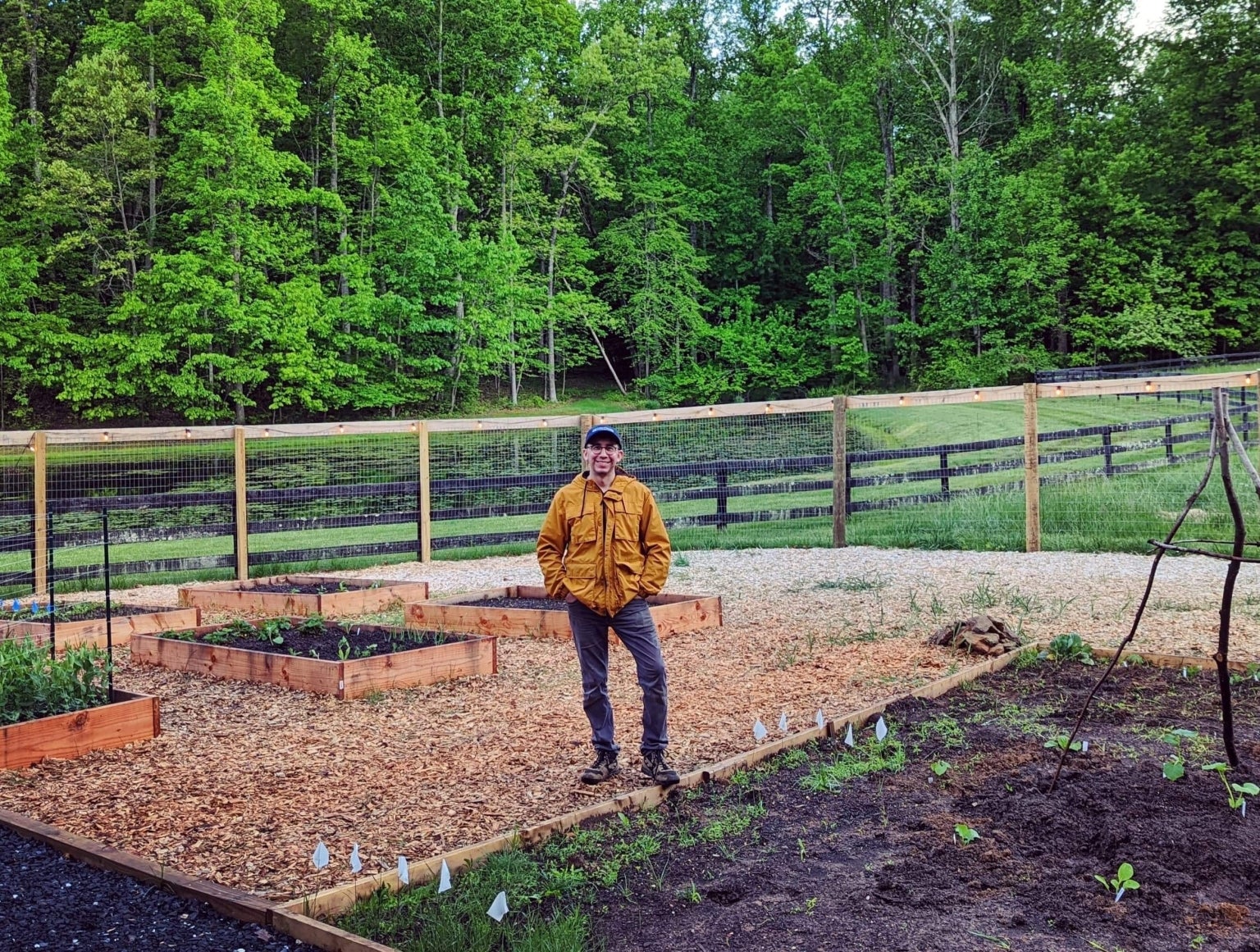
A recent photograph shows Sanchez standing among raised vegetable beds on a farm in Fauquier County, Virginia. The neat rows look far removed from digital campaigns and board meetings. They are not. A garden is technology in its oldest form: arrange the conditions, learn from the weather, tend what emerges. Nobody can order a seed to hurry, though many a quarterly plan has tried.
Sanchez's career is full of modern objects - code, platforms, social networks, data - but its central proposition is pleasantly ancient. Progress is something people cultivate together. The founder's job is to prepare the ground, invite others into the work and remain optimistic without abandoning the accounts. The eighth-grader who sold corn to see Washington would recognize the arrangement.