In January 1983, Thomas P. O’Neill III left the Massachusetts lieutenant governor’s office at 38. He had already spent two years in the legislature and eight in the state’s second-highest elected office. A reasonable amount of public life for one person; an awkward age to be treated as a finished chapter. His father, Tip O’Neill, was still Speaker of the United States House of Representatives. The family business was plainly continuing. Tom needed to decide what his part in it would become.
He had tried for the governorship in 1982. Changes to the Massachusetts Democratic Party’s rules helped keep him off the ballot, and his elected career ended there. What followed lasted considerably longer: a government relations business, a public affairs firm, and work with schools and Irish cultural organisations. The surname remained useful. The work acquired a different address.
There is a temptation, with an O’Neill, to begin and end with Tip. Tom’s life offers a more interesting problem. What do you do with an education in politics when you stop asking people to elect you? His answer has occupied the better part of four decades: help other people make their case.
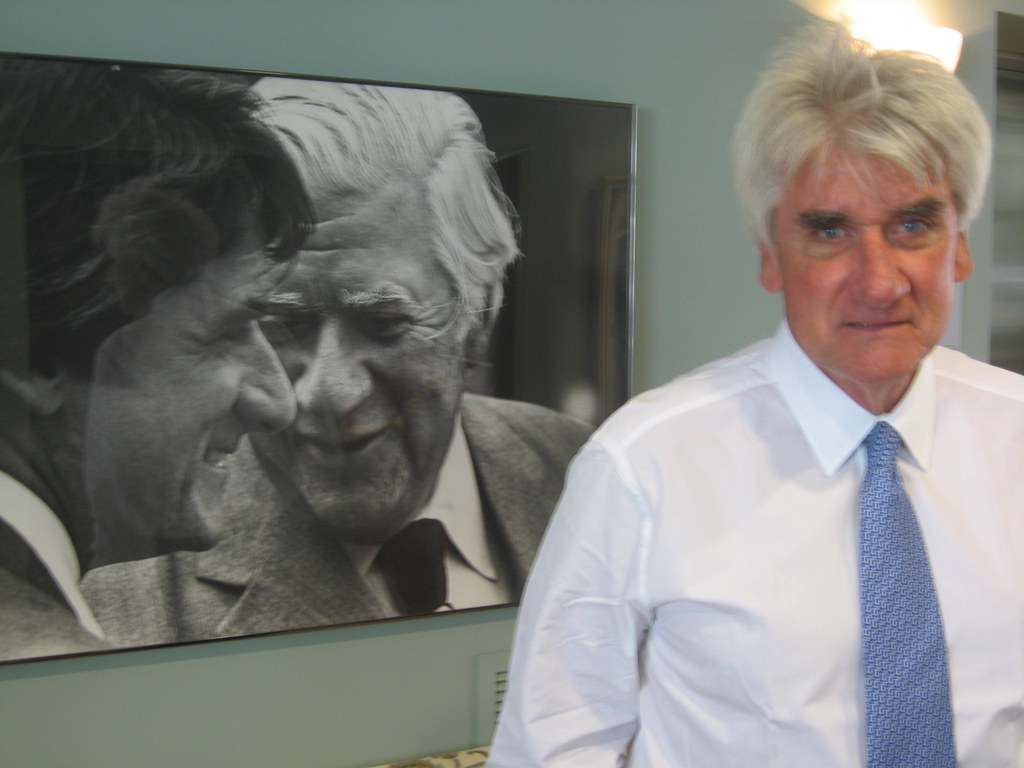
A political education before the diploma
Born in Cambridge in 1944, Tom grew up in North Cambridge, the eldest son of Tip and Mildred Anne O’Neill. He attended North Cambridge Catholic High School, earned a bachelor’s degree at Boston College, and later a master’s in public administration at Harvard’s Kennedy School. The academic credentials mattered. So did the practical instruction available much closer to home.
He began by running his father’s campaigns before running his own. In a 2023 conversation with political pollster Zac McCrary, his recollections ranged from his mother Millie’s influence to time around John F. Kennedy and campaign work with Ted Kennedy. It is an unusual childhood syllabus. Most students meet the separation of powers in a textbook; the O’Neill family offered a less abstract introduction.
Yet the lesson Tom has returned to is remarkably ordinary: people expect to be asked. His father’s famous attention to neighbours, families and local obligations made politics personal. Remembering Tip for GBH’s The Big Dig, Tom put the attraction in five words: “the power of his personality.” That observation helps explain why a career built around introductions could contain more than the introductions themselves.
Eight years between Boston and Washington
Tom represented Cambridge and Belmont in the Massachusetts House in 1973 and 1974. He became lieutenant governor in 1975, serving under Michael Dukakis and Edward J. King before leaving office in 1983. The job placed him between state ambitions and the federal machinery needed to pay for them.
He established and administered Massachusetts’ Office of Federal-State Relations, operating in Boston and Washington. Transportation funding was a particular concern. That meant coordinating New England governors with congressional delegations from the Northeast and Midwest. A road proposal may begin with a line on a map. Getting it financed requires rather more people to agree on where that line should go.
He also served on the State Department’s Ambassadorial Screening Committee. These responsibilities gave his public career a recurring shape: connecting institutions that had different constituencies, different procedures and different reasons to say no. The later consultancy would work across much the same terrain, though the clients would change.
The next office had clients
O’Neill founded Bay State Investors in 1983 to advise clients on government relations. In 1991 he formed McDermott/O’Neill, the predecessor of the firm now bearing his name. His business proposition joined government relations with communications: the people making decisions and the people shaping the public argument belonged in the same plan.
By December 1999, that business had attracted a Canadian buyer, GPC International. O’Neill was chief executive of its US operations. In an interview that month, he explained regional expansion through existing client needs. Work for a company in Boston could point toward opportunities in Providence or Hartford. Work for Harvard could suggest something useful for Brown. The geography followed the assignment.
He described opening regional offices and sharing clients across them. The thought was practical rather than glamorous. His account concerned the businesses and institutions already being served, then the next place their problems might arise. Government relations, in this telling, sounded less like collecting prestigious names and more like following a customer’s unfinished business.
The same interview recorded business delegations he had led to China, Cuba, Ireland and Kuwait. Boston was his base, but the questions clients brought him did not necessarily stop at the Massachusetts border. A local political education could travel surprisingly well.
“The first steps were to open offices within the region and to share clients.”
Tom O’Neill, on building a regional business, 1999
Two practices, one continuing relationship
In 2020, O’Neill and Associates merged its strategic communications practice with Washington-based Seven Letter. Government relations continued under the O’Neill and Associates name. The distinction matters: describing the transaction simply as the sale of his firm obscures the part of the business he continued to lead.
Today his company identifies him as founder and chief executive, while also describing him as a founding partner of Seven Letter. The arrangement gives a concrete form to the idea behind the 1991 business. Lobbying and public communication remain connected, even when their practitioners sit within different firms.
The company’s stated approach also makes a point about access inside its own organisation. Clients are meant to receive senior advice alongside junior staff work. It is a useful detail in a business where the name on the door may be the reason someone walks through it. An introduction establishes an expectation. Someone must still handle the assignment.
Government relations + strategic communication
The invitation becomes a responsibility
One place O’Neill applied that thinking was the workplace itself. In October 2020, he co-wrote an appeal for business leaders to help employees vote. The argument asked employers to make participation easier by giving people the time and information they needed. Campaign experience had taught the authors how much effort goes into finding voters; management gave them a chance to remove a practical obstacle.
The family lesson about asking people had become an employer’s obligation to make room for the answer. It was a modest proposal with a tangible consequence: the working day could accommodate an election. A CEO’s civic responsibilities, in this account, extended to the schedules of colleagues.
Education offered another route. In November 2022, Cambridge Matignon announced a centre for civics, leadership and public service named for Tip. Tom agreed to be honorary chair of its advisory board. The proposed programmes would introduce middle and high school students to government and public service, including communication and problem-solving skills. The family name would sit above an invitation to participate.
Returning to his old school, by another route
O’Neill’s connection to Cristo Rey Boston is particularly personal. Its predecessor was North Cambridge Catholic, his own high school. He became a longtime board chair; an accreditation visit recorded a board made up largely of business leaders, alongside educators and religious members. The school offered a place where his professional network could have a practical use beyond a client brief.
His firm has sponsored Cristo Rey Boston’s corporate work-study programme since its introduction there in 2004. Students spend part of their education working in professional settings. The arrangement helps finance their schooling while giving them experience of an office that might otherwise remain an unfamiliar place.
In October 2025, the company welcomed two more students, a sophomore and a freshman. The announcement placed them alongside a wider internship programme that had mentored hundreds of college students over more than 25 years. For a business built around access, there is something fitting about the smaller daily act of giving a student a desk and work to do.
A dinner in Boston, a school in Donegal
The Irish side of O’Neill’s public life includes service with the American Ireland Fund and the Boston Irish Abbey Theatre Association. In October 2013, an Irish Senate discussion supplied a revealing detail: as president of the Abbey’s Boston foundation chapter, he was hosting a dinner for 30 prospective supporters. Cultural fundraising had acquired a familiar instrument. Invite people into a room, make the case, ask them to help.
Thirteen years later, the setting was a school in County Donegal. Following the 2026 Tip O’Neill Irish Diaspora Awards in Buncrana, Tom and Shelly O’Neill visited Scoil Naomh Bríd in Muff. Both serve on the RISE Community Fund board. The grant they presented would fund additional Chromebooks and a transport trolley for the school.
Tom and Shelly described the appeal together: “practical support that can make an immediate difference.” The family connection to Donegal stretches back generations. Here it came down to something quite specific that pupils and teachers could use.
That is a good place to leave a career so often introduced through a famous surname. O’Neill has occupied elected office, built a business and helped gather support for institutions on both sides of the Atlantic. His later chapters keep returning to a recognisable task: finding people who can help, explaining what is needed, and asking. Sometimes the result is a government relations assignment. Sometimes it is a trolley full of school computers.
Continue the conversation
- O’Neill’s official biography ↗
- Personal LinkedIn profile ↗
- O’Neill and Associates ↗
- Listen: Pro Politics with Zac McCrary, 2023 ↗
- Listen: GBH’s The Big Dig, part three ↗
- Read: the 1999 Providence Business News interview ↗
- Read: the 2020 appeal to employers on voting ↗
- Read: the October 2026 Donegal school visit ↗