There is a tidy version of Thomas LeDuc’s career, and then there is the interesting one. The tidy version says that he started on the sales side of cybersecurity, moved into marketing, helped shape categories at Securonix and Verodin, joined Semperis in 2019, and eventually became its Chief Marketing Officer. It is accurate, efficient and rather like describing a film by listing its shooting locations. The interesting version begins with a camera.
Before cybersecurity acquired him, LeDuc worked as a commercial director. He studied at Columbia College Chicago and made independent films. Then, in 2015, he entered Securonix as an inside sales executive. The move placed a storyteller inside an industry famous for acronyms, dashboards and a heroic resistance to the ordinary sentence.
He learned the customer from the phone outward. Within months he had moved into marketing operations. By the end of 2016 he was at Verodin, working in product marketing for a company trying to establish continuous security validation as a category. The role called for more than attractive language. A new category has to teach people to notice a problem they have grown accustomed to overlooking.
Sometimes I need to just shut up and listen.
Thomas LeDuc, writing about customer-led marketingThat line, the title of an essay he published in 2017, contains most of his operating philosophy in nine words. Customers did not need another recital of features. Executives did not want technobabble. They wanted evidence that their security programs worked, explained in language that survived the elevator ride to the boardroom. Listening became less a mannerly pause than a method of product discovery.
The long stay
Startup marketing careers often resemble short-term rentals. The marketer arrives for the launch, paints the walls, invents a category and leaves before the pipes complain. LeDuc took the less fashionable lease. He joined Semperis as Vice President of Marketing in May 2019, when the identity-security company was still a handful of people and annual recurring revenue sat in the low millions.
The timing demanded range. An early marketer writes copy in the morning, debates positioning at lunch, fixes an event in the afternoon and studies the numbers after dinner. LeDuc’s remit eventually spread across brand, corporate and product marketing, customer programs, demand generation, analyst relations, field and channel activity, and sales development. In January 2022, he became CMO.
Semperis also presented a peculiarly invisible marketing problem. Its territory is identity infrastructure, including Active Directory, the quiet directory of users, permissions and machines beneath much of corporate life. Nobody outside an IT department wakes eager to discuss a directory. Everybody understands the consequences when access fails, an attacker gains control or recovery drags on. LeDuc’s job was to connect the obscure system to the operational stakes without converting fear into theater. The vocabulary changed over the years, from recovery toward identity resilience, but the translation remained the work.
One company, a wider frame
Semperis annual recurring revenue during LeDuc’s tenure
By 2025, LeDuc was leading 35 marketers across the operation. The bars show the reported order of magnitude, not an annual series.
By late 2024, Semperis had crossed $100 million in annual recurring revenue, the threshold that venture shorthand calls “centaur” status. By the following year, LeDuc was leading a 35-person marketing team. Those numbers suggest a straight ascent. His own account is more useful: growing with the company meant unlearning as much as learning.
The habits that make an early employee valuable can make an executive exhausting. Touch every detail for long enough and care begins to impersonate control. LeDuc has spoken candidly about learning to stop micromanaging without becoming indifferent. He hires for people who want a blank page rather than a playbook. The corollary is that he has to let them write on it.
The old craft returns
The filmmaker never entirely left. In 2016, LeDuc’s video work won a Gold SVUS Business World Award. The next year, two thought-leadership videos took Gold and Silver honors from the Info Security Products Guide. Yet a marketing video, however artful, still has a destination printed on its boarding pass. A feature documentary can wander into more difficult territory.
The idea for Midnight in the War Room emerged from a conversation involving LeDuc, Semperis communications leader Bill Keeler and Chris Inglis, the first U.S. National Cyber Director. They were discussing the breaches that had escaped the technology pages and entered public memory: hospitals interrupted, pipelines stopped, institutions shaken. LeDuc had heard cyber defenders tell stories for a decade. He thought those stories could rival any action film, except the wider public rarely saw the people living them.
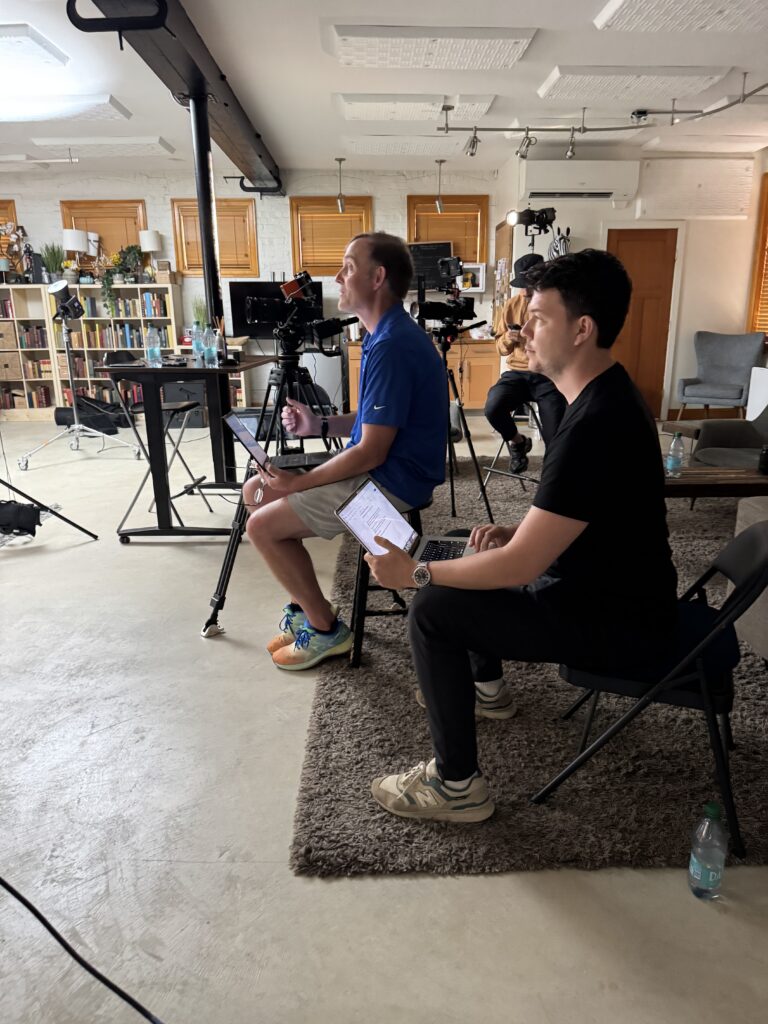
Semperis CEO Mickey Bresman approved the project with one rule: no product talk. It was a shrewd constraint. Remove the demonstration, the logo parade and the inevitable solution slide, and the filmmakers had to earn attention with people. LeDuc became executive producer and co-director alongside Keeler. More than 50 experts joined the film, including former national-security officials, global CISOs, reformed hackers, cyber psychologists, journalists and victims.
The cast crosses boundaries that industry events often preserve. Jen Easterly and Chris Inglis appear beside former CIA director David Petraeus, researcher John Hammond, cyber psychologist Mary Aiken and Marcus Hutchins, whose role in stopping WannaCry made him an unlikely public figure. The question is not which tool catches an alert. It is what constant alertness does to a person, and why anyone chooses to accept that responsibility.
I’ve always believed storytelling is how we make people feel something and take action.
Thomas LeDuc on the purpose behind the filmThere is a pleasing reversal here. Earlier in his career, LeDuc translated technical systems for business executives. With the film, he translated an entire profession for families, students and anyone whose lights have always come on without explanation. Cybersecurity’s trouble, from a storyteller’s point of view, is that success looks like an uneventful Tuesday. The defender prevents the spectacle and then must persuade everyone that the absence of spectacle was hard work.
Making the invisible legible
LeDuc wants young people to see cybersecurity as exciting, aspirational and meaningful. It is a recruitment argument disguised as cinema, though “disguised” gives it too much mischief. He says the ambition plainly: if the film helps even one young person recognize cyber defense as heroic work, it has done its job.
That aspiration also explains why the documentary dwells on people rather than polished abstractions. A teenager may not dream about identity infrastructure. A teenager can understand a tired expert making an impossible decision while a hospital, supply chain or public service hangs in the balance. Specific human pressure is the bridge across technical distance.
Enters cybersecurity on the sales team at Securonix, then moves into marketing operations.
Joins Verodin in product marketing and continues award-winning video work.
Arrives at Semperis as Vice President of Marketing.
Becomes Semperis Chief Marketing Officer.
Semperis passes $100 million in annual recurring revenue.
Midnight in the War Room premieres at Black Hat USA in Las Vegas.
The work was deliberately communal. More than 50 cast and crew members volunteered their time and skills. Sarah Simpson, the producer and assistant director, carried the production behind the scenes. Wayne Snyder, part of the Semperis marketing team, composed the score. LeDuc publicly shared credit with the ease of someone who has learned that a larger canvas requires more hands.
The film premiered at Black Hat USA in Las Vegas in August 2026. LeDuc also joined cast members at the conference’s CISO Summit, bringing the project back into the professional community that supplied its stories. After the premiere, he described it as a love letter to that community and a call to action, then announced plans for a wider tour.
A career in translation
It is tempting to treat filmmaking as LeDuc’s colorful second act. The chronology disagrees. Film came first, then sales, marketing operations, product marketing and executive leadership, then film again. The continuous line is translation: from customer to product, engineer to executive, obscure category to market, private strain to public story.
Even his side projects follow it. One Semperis team passion project became a Braille space-education initiative tied to Space Camp. The subject changed, but the impulse remained: take something distant and make it available to a person previously left outside the frame.
LeDuc’s public leadership conversations tend toward the parts that org charts conceal: conflict, territorial instincts, the change from startup improvisation to scaled process, and the difference between culture written on a wall and culture practiced in a room. He is a father of two, travels often and is cheerfully pro-dog. These details are modest, which is precisely why they belong. A profile about making cyber professionals human should permit its subject the same courtesy.
His career offers no neat choice between operator and creator. The operator gave the filmmaker access to the war room. The filmmaker taught the operator to listen for a better story. At Semperis, LeDuc stayed long enough to see the blank page become a large organization. With Midnight in the War Room, he made the page larger still, then handed it to the people whose best days are the ones the rest of us never notice.