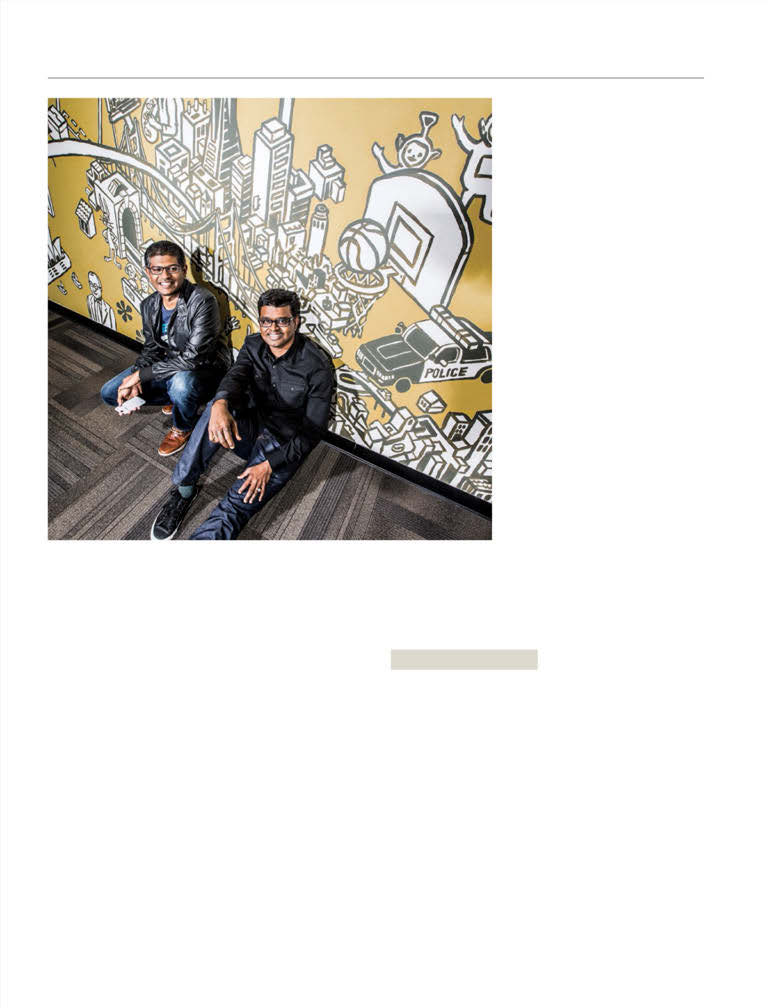
Thiru Arunachalam wanted to close the funding round by Friday. It was Monday, in June 2013, and someone had another introduction to make. A Chinese company called Alibaba might like to invest in Peel. Arunachalam and his co-founder, Bala Krishnan, barely knew the business. They had a deadline. The prospect of one more conversation had the appeal of one more form at the airport.
Alibaba persisted. An initial suggestion of $1 million became an offer of $5 million. A representative came to Mountain View; there was a long lunch. The money arrived before the week was out, ahead of the other investors’ transfers. A company built around the television remote had acquired a backer with rather more expansive interests.
The episode catches something of the peculiar scale of Arunachalam’s work. Start with an ordinary irritation, follow the connections, and eventually the conversation involves handset manufacturers, broadcasters and a Chinese internet company. His latest company, WALT, takes him into enterprise data. The household object has gone. The irritation with unnecessary complication appears to have survived.
A pear on the coffee table
Peel began with a reasonable complaint about the television remote. Arunachalam and Krishnan thought the smartphone could do the job better. It had a screen, it could display pictures, and it was already in someone’s hand. A familiar domestic arrangement suddenly looked negotiable: the television had its controller, the cable box had another, and the viewer was expected to serve as the integration department.
The early solution required hardware. An iPhone could run the application, but getting its instructions to a television called for an infrared bridge. Peel’s accessory was shaped like a pear. The setup involved the home network and an object near the television. The little fruit made a serious technical connection in a cheerfully unserious costume. It also asked a customer seeking less complexity to install something new.
An April 2012 description of the system laid out its Wi-Fi and ZigBee connections, its infrared transmitter and its network cable. There was ingenuity underneath the soft outline. There was also a sequence of things that had to work before anyone could settle down to watch. The distance between a good idea and a comfortable evening was measurable in setup instructions.
The remote moves into the phone
The more consequential change came through Android handset makers. Phones with built-in infrared transmitters could do work that had previously required the accessory. Peel developed relationships with manufacturers including Samsung and HTC. Software could arrive with the phone, ready to participate in the living room. Arunachalam had crossed from selling an additional object to working inside an object people were already buying.
That change deserves more attention than the fruit. A separate gadget needs its own purchase decision, its own explanation and somewhere to sit. Embedded software borrows the reach of the handset. Peel still had to make the experience work, but a different organization was carrying it to the customer. The product’s route into the home had changed as much as its engineering.
By October 2014, Alibaba’s additional $50 million investment had become public. Peel’s commercial model included charging television networks to promote shows through the app. The strategic interest was understandable: a phone that could help someone choose a program could also help a broadcaster find a viewer. The modest remote had become a place where entertainment, discovery and advertising met.
Peel’s shift removed a separate hardware purchase from the path to using its remote software.
The viewer came before the market
Arunachalam grew up in India, where television had occupied a generous share of his attention. When Peel began pursuing Indian consumers, he described his childhood viewing with a comically extravagant estimate of the hours involved. He liked television’s capacity to let people relax. That is a useful detail about someone selling a new way to watch: the machinery was supposed to make an evening easier.
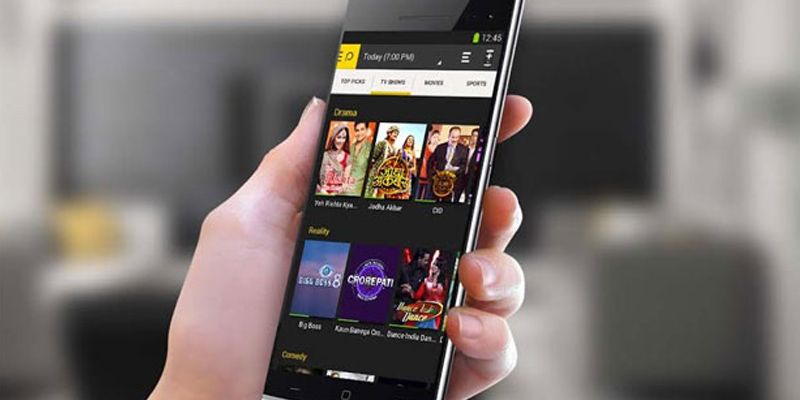
He also resisted pretending that familiarity with the country meant understanding its market. India’s languages, programming and distribution required work. Peel’s use of pictures offered one practical answer. A viewer might recognize a show before reading its title. “When you see it, you know what it is,” he said in 2014. The sentence is almost a miniature product brief.
By November that year, Peel reported 100 million total users across 87 countries. Those are historical reach figures, rather than a count of people watching every month. Their significance is still considerable: an interface designed around a familiar activity had traveled across markets. In December 2015, Peel’s India plans included YouTube discovery and proposed regional-language catch-up programming, extending the job beyond changing channels.
A recommendation has a family problem
Arunachalam’s own writing about television was more revealing than a list of partnerships. In a December 2015 essay, he described how difficult it had become to choose among live channels and streaming services. Recommendations helped, until other members of the household used his account and complicated the picture of his preferences. A household, inconveniently for the algorithm, contains more than one person.
He was interested in another loss, too: the shared experience of watching something together, or at least at roughly the same time. On-demand viewing let everyone keep their own timetable. Conversation then became a negotiation over spoilers. He wanted better discovery and better ways for people to connect around programs. His concern reached beyond the mechanics of making a television obey.
The commercial argument followed the same practical instinct. In his account of social television, a conversation about a show was only part of the business. Broadcasters needed evidence that promotion produced viewing. Peel’s tune-in links could connect a mobile interaction to a channel change or a reminder. Arunachalam wanted the path from attention to action to be visible enough to measure.
The cost of occupying the screen
Advertising eventually made that relationship more uncomfortable. In January 2019, security researchers described Peel’s full-screen ads appearing when devices were unlocked and its persistent background activity. Their assessment was that the app had become too aggressive in pursuing revenue. An application intended to save effort was inserting itself into moments when someone simply wanted to use a phone.
This belongs beside the distribution story. Preinstallation can spare a user the effort of discovering a utility. It also puts the utility in a privileged position, sometimes before the user has made an active choice. That makes the boundary of acceptable behavior especially important. The same access that helps a product become familiar can make an interruption feel presumptuous.
Peel’s record therefore contains a tension familiar to advertising businesses. The viewer wants an easier evening; the advertiser wants another opportunity to be noticed. A founder’s original product ambition does not settle that argument. Every subsequent design choice takes a side. Arunachalam’s career is more interesting with that complication included, because the consequences reached the very experience he had set out to improve.
Back underneath the interface
Before Peel, Arunachalam had worked on engineering and product teams at Apple. He also holds an engineering degree from NIT Tiruchirappalli and an MBA from Wharton, whose alumni designation places him in the class of 2007. His route included strategy consulting. These are different vantage points on a product: how it works, how it earns its place and how an organization decides to pursue it.
The next chapter brought him back toward the technical work. Announcing his return to data engineering after Peel, he described the company’s exit as successful and spoke about unreliable structured data as an obstacle to enterprise AI. The personal note was more memorable than the industry diagnosis: coding again felt like coming home. WALT now gives that return a company and a job to do.
“I’m coding again, and it feels like coming home!”
Thiru Arunachalam, on returning to data engineering
WALT presents its product as agents that build and operate data platforms, including ingestion, transformation, analysis and governance. Its stated approach works with existing tools. For a customer, the proposition is that useful automation should fit into the systems already in place. The resemblance to Peel’s handset chapter is an interpretation, but a suggestive one: the existing infrastructure becomes part of the route to adoption.
What does the person want?
What the answer actually means
His 2026 essays show where he thinks AI products can go wrong. One uses a question about Mac sales in “NA.” A system needs to know whether that means North America, Namibia or an unavailable value. Knowing the name of a database column is insufficient. The example makes the difficulty legible without requiring the reader to enjoy a discussion of query construction.
Another essay argues that extra context cannot rescue poor underlying data. Better retrieval can deliver an unreliable number more efficiently. In August, he advocated preserving meaning across fragmented data systems instead of making a wholesale migration the prerequisite for progress. These are positions he is arguing for, and WALT has a commercial interest in them. They also show an engineer’s impatience with making the customer reorganize everything first.
By October 15, 2026, his writing had turned to the controls surrounding autonomous agents. WALT’s proposed guardrails include inspectable records, editable business definitions and human approval before production code changes. The language of autonomy gives way to questions about permission and accountability. A useful machine still needs a clear understanding of who is entitled to decide.
The career has traveled from an infrared accessory to systems that reason over enterprise data. Along the way came unexpected investors, manufacturer partnerships, a large television audience and a difficult advertising chapter. The practical question remains pleasantly ordinary: can this take less effort? The next question is harder, and belongs to the person using it: can I trust what happens when I press the button?