A tub of protein powder is a surprisingly complicated object. Finding one is easy. Deciding which one deserves a place in your kitchen takes more work. That gap between availability and understanding is where The Vitamin Shoppe has built its business.
The first question is simple: Do you have it? The second is more interesting: What am I looking at? A specialist retailer earns its keep on that second question. The Vitamin Shoppe calls its store associates Health Enthusiasts. The proposition: a person who can help a customer navigate a crowded shelf.
- A specialist’s edge: help shoppers understand the choice.
- A costly factory detour ended with a supply agreement.
- Brand events and digital tools give stores new jobs.
A catalog was an early search engine
Jeffrey Horowitz opened the first store in New York City in 1977. The company added a mail-order catalog in 1981 and launched VitaminShoppe.com in 1998. Long before shopping across channels acquired a corporate vocabulary, the business was already moving between a physical counter, a printed page, and a screen.
The catalog had another job. A 2006 company filing explained that direct sales supplied data used to help select future store locations. Orders were clues about where demand lived. There is a useful idea here for anyone building a retail business: let an inexpensive channel reveal where an expensive one might belong.
Owned products followed in 1989. Today, the portfolio includes BodyTech, Vthrive, plnt, ProBioCare, and True Athlete alongside The Vitamin Shoppe brand. This is a merchant with two roles: it gives outside brands distribution and sells alternatives bearing names it controls. The assortment lets shoppers compare within a category while giving the retailer more than one route to a sale.
The $86.1 million detour
In 2014, the company tried moving further upstream. It bought Nutri-Force, a supplement manufacturer, for a final purchase price of $86.1 million. The logic was attractive: more control over formulations, faster product development, and earlier visibility into trends. Owning the factory seemed a reasonable extension of owning the label.
The operating problems arrived before the exit. Its 2016 annual report described production-capacity difficulties, lost third-party customers, and weaker service. The company recorded $39.2 million in goodwill and customer-relationship impairments that year. A 2017 restructuring added roughly $12.3 million in costs. These accounting charges and operating costs are different measures; adding them to the purchase price would produce a misleading loss figure.
In May 2018, The Vitamin Shoppe sold Nutri-Force to Arizona Nutritional Supplements, receiving approximately $15 million in net proceeds. It also signed a long-term supply agreement. The practical change was clear: keep access to manufacturing while handing factory ownership to another operator. Private labels could remain central without keeping the machinery.
Give the shelf a social life
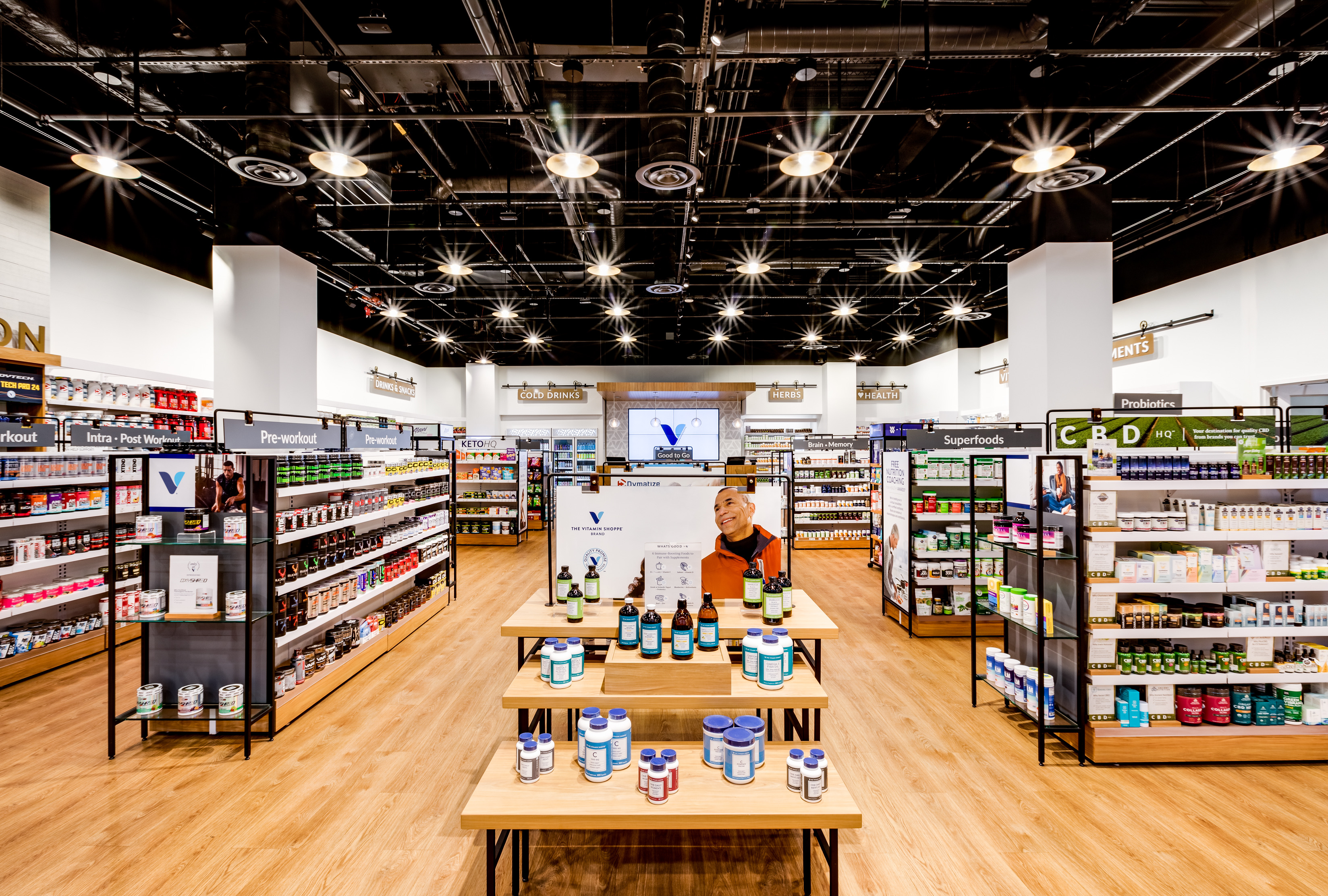
The newer experiments make more of the store itself. In March 2025, The Vitamin Shoppe introduced Hometown Stores, giving selected sports-nutrition partners enlarged spaces inside existing locations. Bucked Up, Gorilla Mind, RYSE, RAW Nutrition, and EHPlabs participated. The installations offer room for merchandise, exclusive products, events, and the kind of photographs fans actually want to share.
Bucked Up’s executives arrived by helicopter for a launch video in Sandy, Utah. An EHPlabs event in Houston drew more than 400 fans. Its American locations were called Community Hubs, since the brand is headquartered in Australia. “Hometown” was a useful organizing idea, with enough flexibility to accommodate geography.
For a brand, the appeal is a ready-made physical audience. For The Vitamin Shoppe, it is a reason to visit beyond replenishing a bottle. An online marketplace can put products beside one another. A local event can put their customers in the same room. That matters when products are available elsewhere.
A familiar CEO, a different owner
In May 2025, Kingswood Capital Management and Performance Investment Partners completed their acquisition from Franchise Group. The reported deal value was $193.5 million. Franchise Group had entered Chapter 11 in November 2024. The chain’s ownership story belongs in that context; a parent’s financial distress and a shopper’s experience at the counter are different parts of the business.
Sharon Leite returned as CEO after previously leading the company from 2018 to 2023. The buyers said they would invest in stores, digital commerce, private brands, and relationships with emerging suppliers. That agenda favors the work of a specialist merchant. It also puts familiar competitive pressures back in view: GNC offers another supplement-focused destination, while Amazon, iHerb, warehouse clubs, and mass retailers offer other combinations of price, assortment, and convenience.
The next aisle is already here
The customer base now stretches from committed gym-goers to people building an everyday supplement routine. Products range from vitamins and probiotics to protein drinks, bars, herbs, and sports nutrition. In March 2025, the company introduced Whole Health Rx GLP-1 Support supplements, organized around protein, fiber, synbiotics, multivitamins, and a nutrient powder. The launch packaged familiar categories around a newly visible customer need.
In January 2026, AG1 arrived across more than 640 stores and online, making The Vitamin Shoppe its first national specialty retail partner. That month, a new Upper East Side store introduced Shoppe Advisor, a touchscreen discovery tool with product information, wellness content, and inventory checks. Its role is to support the conversation as shoppers and associates explore the range.
By June, the company’s consumer research was pointing toward simplicity: among people changing their health approach, 44% prioritized foundational habits, versus 21% pursuing advanced optimization. Leite put it neatly: “Innovation still matters, but credibility has become the ultimate differentiator.” Hiring Kimberley Gardiner as marketing and growth chief in September added another executive responsible for connecting stores, e-commerce, and customer loyalty.
“Innovation still matters, but credibility has become the ultimate differentiator.”Sharon Leite · CEO · June 2026
What the second question is worth
For shoppers, the useful starting point is a concrete need, a budget, and a willingness to compare labels. Stores, pickup, delivery, and free virtual nutrition coaching offer different ways to explore the assortment. The retail model works best when help with choosing is worth the trip. A customer who already knows the exact item and only wants the lowest delivered price has less reason to linger.
Other retailers can copy the underlying discipline: use demand signals to place stores, give partner brands reasons to bring people through the door, and distinguish ownership from access. The factory episode supplies the expensive reminder. The local events supply the livelier one. A shelf becomes more useful when someone can explain what belongs on it.