Here is the version of the story that is easier to tell: an indie band from Los Angeles drops a slow, sighing song about heartbreak, Billie Eilish posts a clip of herself humming along, and suddenly the entire internet is crying in a genre it had never heard of. Clean. Tidy. Great headline.
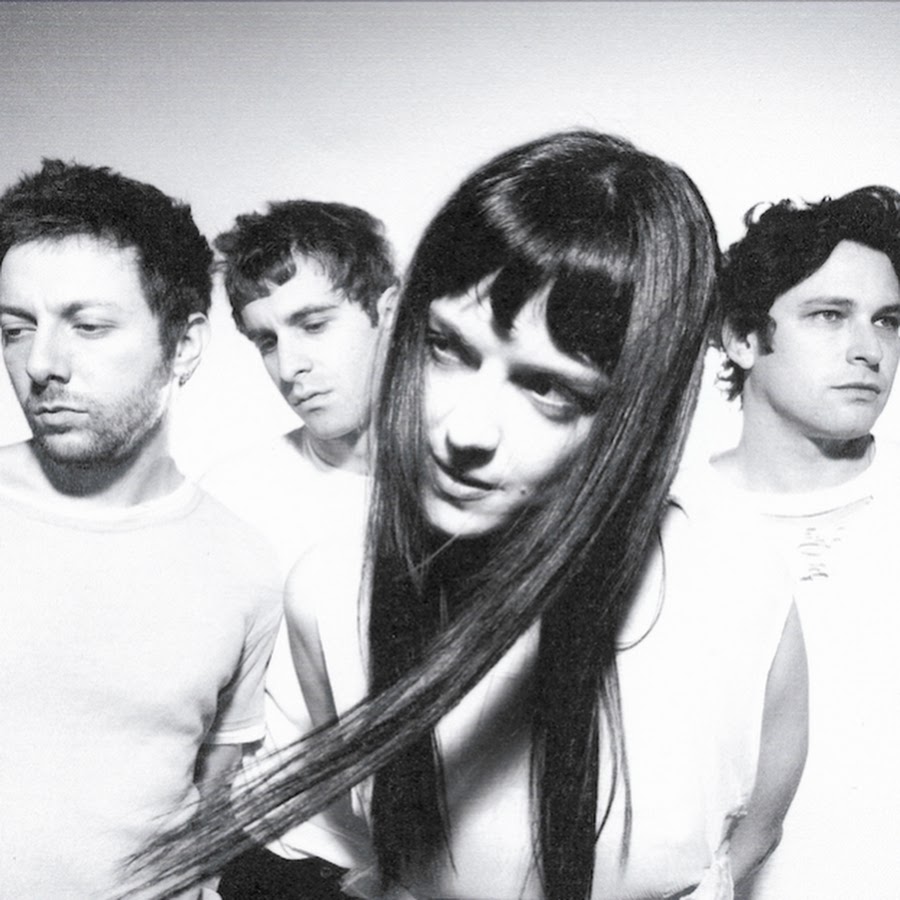
The real version is better. The Marías - lead vocalist María Zardoya, drummer and producer Josh Conway, guitarist Jesse Perlman, and keyboardist Edward James - have been making their hazy, bilingual, cinematic music since 2016. They built a following the old-fashioned way: two EPs, relentless touring, sync placements in TV shows, and a passionate corner of the internet that treated them like a secret they were not sure they wanted to share.
Then the band's founding couple broke up.
Josh Conway had never managed sound before the night he met María Zardoya at the Kibitz Room inside Canter's Deli. He was running the board on a whim. She was performing on the bill. By the end of the night, they were talking about making music together. He did not know a word of Spanish. She did not know he was going to become her bandmate, her producer, and her partner - all at once.
The Sound That Would Not Fit Anywhere
Before The Marías had a name, they had a feeling. María Zardoya grew up in Snellville, Georgia, near Atlanta, after being born in Puerto Rico - absorbing Selena and Nina Simone, Norah Jones and Erykah Badu, in roughly equal measure. Josh Conway grew up in Los Angeles, self-teaching production through the lens of Tame Impala, D'Angelo, and Radiohead. Together, they created something that did not fit neatly into Spotify's genre categories: lush guitar riffs wrapped in synthesizers, melodies that drift between Spanish and English mid-sentence, tempos that refuse to hurry.
Their 2017 debut EP Superclean Vol. I established the template: intimate production, languorous rhythms, an atmosphere so thick you could lean on it. The follow-up, Superclean Vol. II, arrived in 2018 with a cover photograph featuring a red couch they found on Craigslist and hauled to Josh's dad's house - the same place where they recorded the music. It was that kind of operation. Small, personal, and absolutely committed.
None of this was supposed to be a career. Their earliest recordings were created for television sync placements. The band formed almost accidentally, from proximity and chemistry, and pivoted toward live performance only when it became clear that people were genuinely moved by what they heard.
I felt it in my bones that this was our 'Britney moment' and that there was something special there. That feeling is what I'm always chasing when writing music.
- María Zardoya, on writing "Hush"Cinema and the Chart That Changed Everything
They signed with Atlantic Records in partnership with Nice Life Recording Company around 2020, and in June 2021 released their debut studio album Cinema. It was everything the EPs had promised and then some: 13 tracks that moved between longing and joy, in English and Spanish, always at the band's own insistence.
The single "Hush" did something unexpected. It climbed to #1 on the Billboard Adult Alternative Airplay chart in September 2021 - the first act to debut at the top of that chart since Bakar's "Hell N Back" over a year earlier. The Grammy nomination for Best Engineered Album followed. For a band that had operated largely outside the mainstream, it felt like a confirmation.
The Bad Bunny Effect
In 2022, Bad Bunny released Un Verano Sin Ti - and The Marías were on it. Their contribution, "Otro Atardecer," placed them inside the most listened-to Spanish-language album in streaming history. When that album received a nomination for Grammy Album of the Year - the first Spanish-language album ever nominated in that category - The Marías were credited contributors. A band that had been the internet's best-kept secret was now on an album that 74 million people had added to their libraries.
The Breakup That Became the Album
filed under: beautiful disastersHere is the part that should have ended the band. In 2022, after eight years together as both romantic partners and creative collaborators, María Zardoya and Josh Conway broke up. The person who wrote the songs and the person who produced them were no longer the same person - in any meaningful sense of the word.
They took a six-month hiatus. They went to individual therapy. They went to couples therapy - or what Conway described as something the label helped arrange to save the band. And then, slowly, they started writing again. Not around the breakup. Through it.
The result was Submarine, released on May 31, 2024. It is a breakup album made by the people who actually broke up with each other. There is no outside narrative. No interpolated perspective. Fourteen tracks of submerged grief and strange beauty - "Echo," "Blur," "Paranoia," "Love You Anyway" - with a closing track called "Sienna" that arrives like a long exhale at the end of something.
Submarine debuted at #17 on the Billboard 200. Stereogum named it Album of the Week, comparing the band to Beach House and BadBadNotGood. The record did what their best work always does: it moved people in ways they struggled to articulate.
They said it would be tough, but we persevered, we made it work, and it's been the biggest payoff of our lives.
- Josh Conway, on founding the band with his then-partnerThe Anti-Hit That Conquered TikTok
Nobody planned for "No One Noticed." It is not a radio-ready single. It does not build to a conventional chorus. It moves at the pace of a memory, and it sounds exactly like what it is: a song about the particular loneliness of falling apart when no one around you can see it happening. Conway has called it "kind of an anti-hit - not uptempo, not traditional radio."
By July 2024, it was everywhere. TikTok users were posting it with captions about grief, breakups, depression, and invisible pain. Then, on July 17, 2024, Billie Eilish posted a clip of herself singing along. Within hours, streams accelerated into the stratosphere.
"No One Noticed" reached #22 on the Billboard Hot 100 - the band's first-ever entry on that chart. It cracked the top 5 of Hot Rock & Alternative Songs. It was the kind of chart performance that happens when a song stops being a song and becomes a shared experience.
"No One Noticed" was already building on TikTok when Billie Eilish posted herself singing along on July 17, 2024. The next 48 hours looked like a seismograph during an earthquake. What had been a slow viral build became a vertical line. The Marías, characteristically, seemed slightly bewildered by it all.
Coachella, Three Times
The Marías have performed at Coachella multiple times now - but 2025 was different. Both weekends. The Mojave Stage. A 16-song, 54-minute set that included "Ojos Tristes," their collaboration with Selena Gomez and Benny Blanco that had topped the Latin Pop Airplay chart earlier that year, as well as "Otro Atardecer," the Bad Bunny track that had first introduced them to a stadium-scale audience.
By 2025, The Marías were no longer the underground's best-kept secret. They were among the most talked-about acts in indie and Latin alternative music, and their Coachella presence reflected that. This was not a "discovery" booking. This was a headline-adjacent slot for a band that had earned it through a decade of unglamorous, consistent work.
The Selena Chapter
The "Ojos Tristes" collaboration arrived in 2025 as part of Selena Gomez and Benny Blanco's album I Said I Love You First. The song interpolates Spanish singer Jeanette's classic "El muchacho de los ojos tristes" - a choice that made perfect sense for a band whose music has always lived between Spanish and English, between Los Angeles and the broader Latin diaspora.
It debuted at #4 on Billboard Hot Latin Songs, climbed to #3, and eventually topped the Latin Pop Airplay chart. The Marías won Premios Juventud 2025 for "Colaboración OMG." For a band that has always resisted easy categorization, the Selena alignment clarified something: The Marías belong to the Spanish-speaking world as much as they belong to the indie one. They always did. Now the charts reflect it.
The Grammy Nomination: Ten Years in One Moment
When the 68th Annual Grammy Award nominations were announced, The Marías were listed for Best New Artist. The phrase deserves a moment of attention: a band formed in 2016, with two studio albums, a cult following, a Bad Bunny collaboration, and a decade of touring - "new."
Conway was characteristically philosophical about the timing: "It's amazing. If this had happened six or seven years ago, it might've felt different, but now we've built a foundation and have loyal fans. It feels like a bonus."
They performed "No One Noticed" at the Grammy ceremony during the Best New Artist medley - a moment that felt like a full-circle arrival. The song that was "too slow," "too sad," "not a radio hit" was now being performed on the biggest stage in recorded music. The anti-hit had won.
The María Zardoya Solo Chapter
As The Marías navigated their Grammy moment, María Zardoya launched a parallel solo project under the name "Not for Radio." Her debut solo album Melt (October 2025) debuted at #13 on the Billboard 200 and #2 on Top Rock & Alternative Albums. In April 2026, she released the follow-up solo EP Bloom. The band continues. The solo work continues. Both are, unmistakably, María Zardoya.
What Actually Makes This Band Different
The Marías have never worked with an outside producer. Josh Conway has produced everything - every song, every album, every mix - from a home studio setup that has evolved from Josh's dad's house to an apartment living room. Their sound is, in the most literal sense, the sound of two people (now four) figuring things out on their own terms.
María Zardoya sings in Spanish and English not as a marketing strategy but because that is how she thinks. Her influences - Selena and Sade, Nina Simone and Norah Jones, Erykah Badu and Julieta Venegas - are not genre choices. They are the people who taught her what a voice could carry.
The band has a touring trumpeter, Gabe Steiner, who is not an official member but whom fans consistently name as their favorite. They find this funny. They eat eggs while recording vocals. They named the band after María's first name, which is also the most common woman's name in the Spanish-speaking world, which is either coincidence or poetry.
They have been called dream-pop, psychedelic soul, indie pop, synth-pop, jazz-adjacent, and "that sad Spanish band." None of these labels are wrong. None of them are sufficient. The Marías occupy a frequency that genre maps do not quite cover - the frequency of something deeply felt, carefully made, and stubbornly itself.
It's amazing. If this had happened six or seven years ago, it might've felt different, but now we've built a foundation and have loyal fans. It feels like a bonus.
- Josh Conway, on their Grammy nomination after a decade of workThe Story Is Not Over
In April 2026, Cultured Magazine published a major feature story: "How Leaks, Label-Sponsored Couples Therapy, and Bad Bunny Made the Marías a Hit." The headline reads like satire. The story is entirely true.
The Marías are, at this precise moment, at the intersection of everything that is interesting about contemporary music: the Latinx underground meeting mainstream pop radio, the indie DIY ethos surviving contact with the major label system, personal catastrophe being transmuted into songs people play on repeat at 2am when they cannot explain to anyone why they are crying.
They met at a bar. They fell in love. They made music. The music got good. They broke up. The music got better. A pop star sang along on TikTok. The world finally noticed. And through all of it, Josh Conway kept producing in the same home studio, and María Zardoya kept singing in both languages at once, and the band kept being exactly what it always was: the thing that happens when real feelings get enough space to become something beautiful.
That is not a formula. That is not a strategy. That is just the truth, playing at whatever frequency the Mojave Stage can hold.