The voice with the nodes, the songs with the bruises, and the nerve to say it without the dance.
Sienna Spiro is 20 years old, signed to Capitol Records, and one of the most-streamed new artists on Spotify in 2026. She is not a Disney kid. Not a talent show finalist. Not a brand deal waiting to happen.
She wrote her first song at 10 because a group of kids at school made her feel small - and performing it in front of them felt, as she put it, "like medicine." That impulse - to transmute pain into music, to say the precise thing that hurts rather than the safe thing that soothes - never left her. It became her entire career.
Born in London on September 28, 2005, Spiro grew up in a home where her father, jeweler Glenn Spiro, played jazz and soul constantly. Etta James. Aretha Franklin. Nina Simone. Frank Sinatra. Teddy Pendergrass. Marvin Gaye. Before she was a teenager, she had already absorbed a curriculum that most music school graduates never fully learn: the idea that a song is a story, and a singer's job is to make you believe it.
She attended Francis Holland School in Sloane Square, then enrolled at East London Arts & Music (ELAM). She lasted eight months. Not because she failed - but because she was already being managed. A social media post led to a connection with Miriam Maslin at Method Music, and suddenly dropping out wasn't a risk. It was the only logical move.
"Writing has been my therapy since I was 10, to be honest."
She also has vocal nodes - small bumps on her vocal cords that give her voice its signature raspy, resonant quality. In another world, that's a medical problem to be treated. In hers, it's the signature. She jokes, with entirely genuine self-deprecation, that she is "technically a terrible singer." The 28 million people streaming her music monthly seem to disagree.
What makes Spiro unusual - genuinely unusual, not press-release unusual - is the combination of deep musical heritage and a refusal to perform anything she doesn't mean. Her TikTok following of 1.7 million people did not grow because she chased trends. It grew because she put up covers and originals that sounded like someone actually feeling something, in an ecosystem that mostly rewards people doing the opposite.
Her breakthrough single "MAYBE." generated 600 million TikTok views and 149 million Spotify streams. After it blew up, she received hundreds of messages from domestic abuse survivors telling her it captured an experience they couldn't put into words themselves. She had written it about something else entirely. That gap - between what an artist intends and what a listener needs - is where the best songs live. Spiro keeps finding it.
By the time "Die on This Hill" dropped in October 2025, she had established herself as one of those rare artists who earns attention rather than gaming algorithms. The song, about lifetimes of stubbornness and showing up for people who don't reciprocate, reached UK #9 and US Billboard Hot 100 #19. It has 401 million Spotify streams. P!nk, Demi Lovato, and Sam Smith have covered it or performed it publicly. Omer Fedi - the producer who made records with Harry Styles, Olivia Rodrigo, and The Weeknd - helped produce it, which says something about how seriously the industry has come to take her.
In 2026, she appeared on The Tonight Show, earned a BRIT Critics' Choice nomination, landed on Forbes 30 Under 30 Europe, and placed "Material Lover" on The Devil Wears Prada 2 soundtrack alongside Lady Gaga, SZA, and Doechii. The debut album is still coming. The Royal Albert Hall dream is still there. She's 20 years old and already has nearly 900 million Spotify streams.
She dreams of living on a farm. Which is, if you think about it, exactly the kind of thing someone like Sienna Spiro would want.
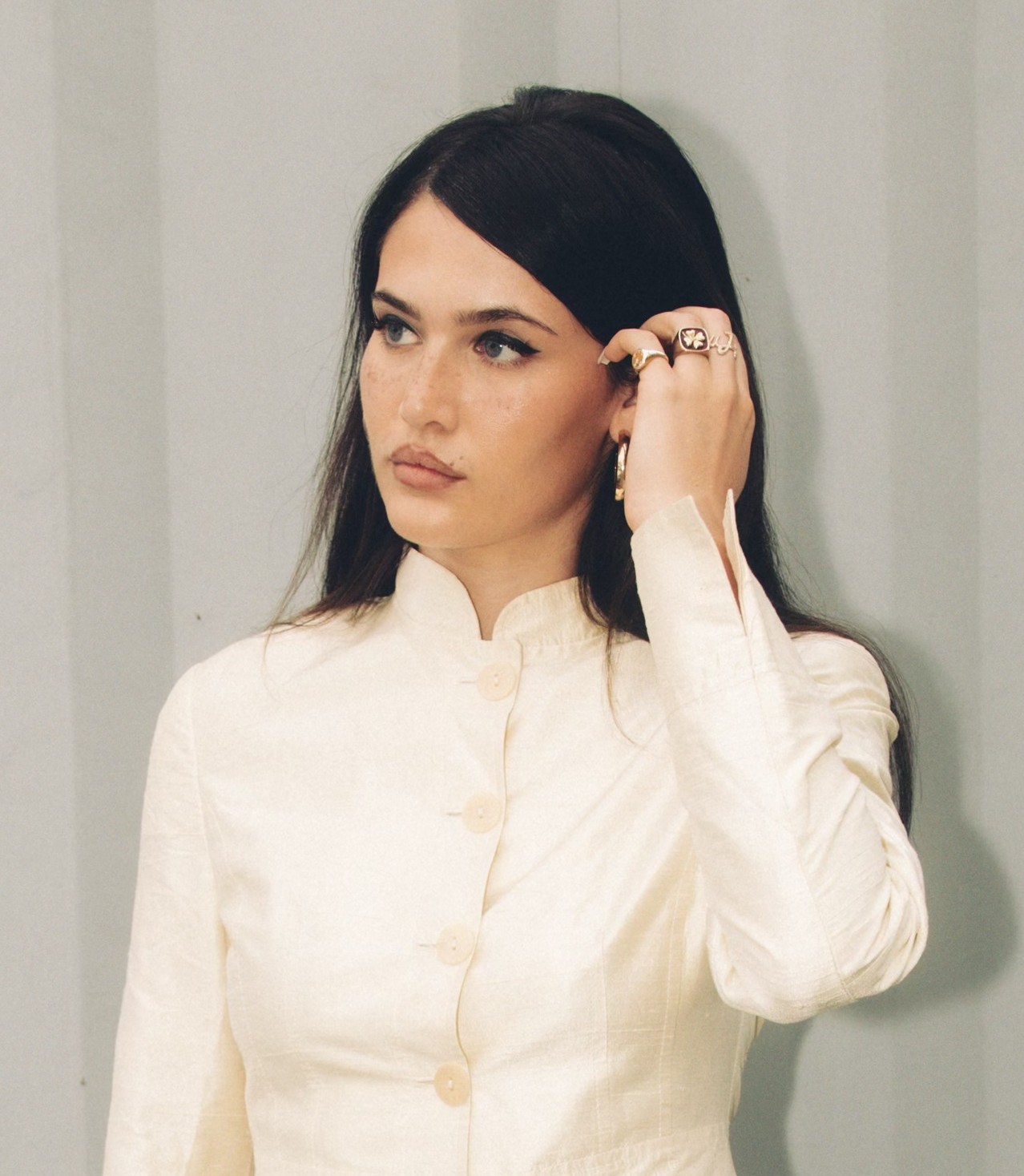
"I didn't write it about one specific story, more rather about a lifetime of stubbornness and showing up for people that never did for me."
- Sienna Spiro, on "Die on This Hill"
There is a particular kind of songwriter who functions less as an entertainer and more as a private detective - someone who goes into the difficult rooms of human experience and comes back with a report that tells you exactly what happened in language you recognize but couldn't have produced yourself. Sienna Spiro is that kind of writer.
She did not arrive at confessional pop through therapy or trend. She arrived through bullying, a childhood piano, a father's record collection, and the stubborn conviction that a song is either true or it's furniture. Her earliest influences - Etta James, Nina Simone, Aretha Franklin, Dinah Washington - were all artists who sang like the stakes were real, because for them they were. Spiro absorbed that lesson early and has never let it go.
The songs she has written and released since 2024 are not complicated. They do not require decoding. "Die on This Hill" is about stubbornness in the face of people who take more than they give. "MAYBE." is about the excruciating maybe that lives in the middle of a decision you already know the answer to. "The Visitor" is about the terror of impermanence and the wish not to be a passing episode in someone else's life. These are not niche themes. They are the interior weather most people walk around in without being able to name it.
What makes Spiro's versions of these themes distinctive is not originality of subject but honesty of execution. She records live. She prefers single takes. She uses real instruments. She does not use autotune. She has vocal nodes - a medical condition that gives her contralto a rough, worn quality that no production trick can replicate. When she sings that she's "technically a terrible singer," she's offering you a choice: believe the technical judgment, or believe your ears. Most listeners choose their ears.
The TikTok success requires a moment of explanation because it is genuinely strange. She has 1.7 million followers and "MAYBE." generated 600 million views and 6 billion video creations. None of that was engineered through dances or trends. She posted covers. She posted originals. She was precise and unperformative. TikTok, which rewards novelty and movement, somehow responded to stillness and weight. She was the first British artist featured in TikTok's "Behind the Breakthrough" campaign - a fact that would read as ironic if it weren't simply accurate.
The production partnership with Omer Fedi is worth noting. Fedi has worked with Harry Styles on "As It Was," with Olivia Rodrigo, with The Weeknd. He is not a producer you bring in for cheap polish. He is a producer you bring in when the music is already serious and needs to be heard at scale. The collaboration on "Die on This Hill" - with pianist Michael Pollack, string arranger Peter Rotter conducting a 20-piece ensemble, and strings from Rob Moose - produced something that sounds like it was made to last. It charts like it was made to last, too.
By the time she appeared on The Tonight Show in January 2026, the momentum had become self-sustaining. Sold-out tours across North America, the UK, and Europe. A BRIT Critics' Choice nomination. A Sony Music Publishing deal. A placement on the most anticipated movie soundtrack of the year. And a debut album still in progress - something she has said, with characteristic carefulness, she will not release until she believes in every song.
The aspiration to play the Royal Albert Hall is not a casual ambition. It is a very specific ambition - the kind that contains within it a whole history of what music can mean at the highest level of craft and presentation. The aspiration to live on a farm is equally specific. Together, they sketch the portrait of someone who wants the work to matter and the life to be quiet. That tension - between public scale and private simplicity - runs through everything she makes.
"It took me nine tries to write 'The Visitor.' I've felt like one my entire life - I'm terrified of impermanence."
- Sienna Spiro
BRIT Awards 2026 - Critics' Choice Nominee
Forbes 30 Under 30 Europe, Class of 2026
SiriusXM Future Five 2026 - one of five breakthrough artists selected
2026 American Music Awards - 2 nominations: Best Vocal Performance & Breakthrough Pop Artist
"Die on This Hill" - Gold in UK, Belgium, France, New Zealand, and Portugal
First British artist featured in TikTok's "Behind the Breakthrough" campaign
"Material Lover" on The Devil Wears Prada 2 soundtrack - alongside Lady Gaga, SZA, and Doechii
The Tonight Show with Jimmy Fallon - January 7, 2026
COLORSxSTUDIOS performance - "Dream Police" (a benchmark for authentic new artists)
"My belief about art is that it doesn't come from humans, it comes from something else. You are just a vessel."
"No one's doing a f*ing renegade dance to my song."
"Technically, I'm actually a terrible singer."
"I got so many messages from women about domestic abuse... I just couldn't believe that something I wrote had that effect."
"I was very young when I started making music... I was trying really hard to be something that I wasn't."
"One of my biggest dreams is being able to play at the Royal Albert Hall. The other is to create an album - a proper project of songs I'm proud of."
"I took out my earpiece and I heard people singing 'MAYBE.' and I thought I was gonna cry."
"This song isn't just a love song; it's an ode to my life. A request to not be just a passing experience."
"One of my biggest dreams has always been to make music for movies. It's a song about loving real things - in a world full of social media, AI, and everything digital."
- Sienna Spiro, on "Material Lover" for The Devil Wears Prada 2