A startup can borrow a meeting room. Borrowing a working chemistry laboratory is a more demanding proposition. There are instruments to acquire, spaces to prepare and experiments that refuse to become cheaper just because the company is young. At The Innovation Space in Delaware, much of that physical groundwork is already in place. The founder still has to produce the evidence.
Based at DuPont’s Experimental Station, the nonprofit incubator and accelerator serves businesses in life sciences, clean technology and advanced materials. Its offer combines laboratory access with commercial advice and, for selected companies, investment. The appeal is practical: spend more of the company’s early effort proving what it can do, with fewer separate arrangements to make before work begins.
The organization reports that companies it has supported have raised more than $1.24 billion since its founding in 2017. That figure belongs to those businesses collectively. The more interesting question is what happens before a startup becomes part of a fundraising headline, when its next experiment and its next bank balance are uncomfortably close companions.
A building was part of the opening bid
The Innovation Space began with a substantial advantage: partners willing to contribute useful assets. In April 2017, Delaware, DuPont and the University of Delaware announced an independently governed nonprofit at the Experimental Station. The state committed $5 million over three years. The university committed $1.5 million over the same period. DuPont committed $1.25 million in startup funding.
DuPont also contributed a laboratory and office building then valued at about $15 million, equipment valued at up to $2 million, and nonprofit setup costs. The cash commitments totaled $7.75 million, separate from those physical assets. This was an institution assembled around existing scientific capacity, with public and private partners sharing the opening expense.
Founder and chief executive Bill Provine brought experience from inside DuPont. In a 2018 interview, he described a career that began in research and expanded into manufacturing, business development and venture formation. That background helps explain the organization’s preoccupation with what comes after a discovery. A promising material still needs a market; a clever process still needs a business.
The university’s original commitments also included internships, faculty workshops and grant-writing support. The founding arrangement placed several kinds of help within the same organization’s reach. A region trying to reproduce the approach would need to inventory its available facilities and expertise before commissioning a new building with an optimistic name.
The garage has a fume-hood problem
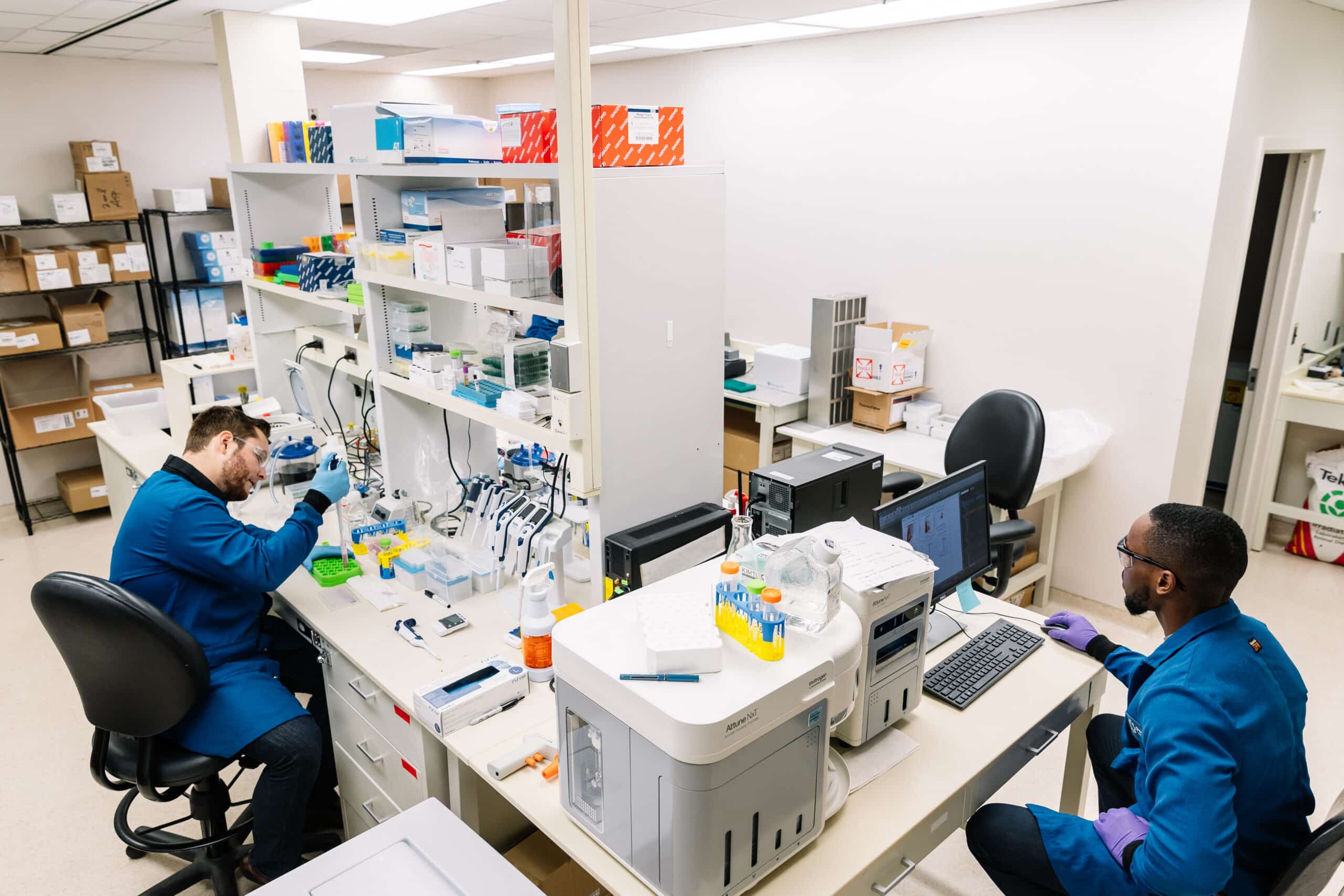
Today, The Innovation Space advertises more than 90 laboratories across a 130,000-square-foot facility. Founders can choose among lab pods, half labs, full labs and suites. The basic attraction is avoiding a full laboratory buildout before a young business has established how much space it needs.
The equipment list makes the proposition concrete. Biology resources include flow cytometry, PCR systems and cell-culture facilities. Chemistry capabilities include a scanning electron microscope, X-ray diffraction and nuclear magnetic resonance spectroscopy. A scientist reading that list can ask a much better question than whether the place feels entrepreneurial: can I perform the measurements my next milestone requires?
Shared access also changes what a company has to own. A startup may need the result of an analysis long before it needs a dedicated instrument. That distinction is the economic logic of shared scientific infrastructure. The value depends on matching available capabilities to the actual research plan, including how frequently a team will need them.
This puts The Innovation Space in the same broad market as shared-lab operators such as BioLabs, which has locations in Philadelphia and Princeton. BioLabs also combines laboratory access with networks and support. Delaware’s offer is distinguished by its Experimental Station setting, its chemistry-and-materials remit alongside life sciences, and the combination of resident investment and founder programs. The right comparison is specific: equipment, location, terms and commercial expertise.
The first correction came in cash
First Fund supplies the story’s most revealing adjustment. Its early offer centered on services. In 2020, The Innovation Space expanded that offer to include cash, bringing the maximum package at the time to $150,000, divided equally between the two. Access to a well-equipped workplace was useful, but the business still had other expenses.
“Entrepreneurs still need to eat”
Bill Provine, speaking to Delaware Business Times in 2020
Provine’s explanation was refreshingly literal: founders needed money for materials and to sustain themselves. The change suggests a limit in the original services-only proposition. It does not establish that the program failed. It shows the organization recognizing that one kind of support could leave another essential need uncovered.
The current detailed First Fund offer provides up to $240,000 in combined support. Its cash component ranges from $30,000 to $120,000, supplemented by the value of space and services. The published six-month valuation is $30,000 for a half lab, one office and support, or $60,000 for a full lab, two offices and support. Those are program package valuations, not a universal rental price list.
Combined cash, laboratory space and services. Cash component: $30,000-$120,000. Residency required.
It is an investment through a convertible loan. Published terms include a 36-month duration, 8% simple interest, a 20% conversion discount and a $5 million valuation cap. Companies must become residents, and cash is released after they move in and begin operations. For a founder, the decision therefore involves financing terms and a location commitment as well as laboratory access.
The portable lesson is to check which expenses a support package actually covers. Donated expertise, equipment access and cash serve different purposes. A company can have plenty of one and still stall for want of another. A useful startup budget makes those gaps visible before the founder accepts an offer.
Three doors, depending on the next problem
For someone still sharpening a science business concept, Spark Factory offers a lighter commitment. The free virtual mentorship event pairs a five-minute presentation with five minutes of questions and 30 minutes in mentor breakout rooms. Participants bring both their progress and the questions they need help answering. The stated commitment is five to ten hours over a month.
That format rewards specificity. A founder who can explain the scientific concept, its proposed market and the decision currently blocking progress gives mentors something concrete to work on. Follow-on mentoring may continue after the event. It is a way to seek experienced feedback before making a larger commitment to facilities or financing.
Science Inc. serves companies further along. The current accelerator runs for 14 weeks in a hybrid format, with sector-specific commercialization content, individual mentoring and investor engagement. Applicants should have early scientific validation, foundational market research, a business model and milestones. The program also specifies at least $50,000 already raised and an intention to fundraise within 12 months.
The accelerator changed its structure in 2025, introducing a life sciences cohort for the fall and clean technology and advanced materials for the spring. The organization described the change as a way to deliver more targeted support. In February 2026, it announced 10 companies for the spring cohort. The logic is straightforward: the commercial questions facing a therapeutics founder differ from those facing a materials supplier.
The Early Stage Growth Grant addresses another situation: a young company with committed funding that needs room to develop. It offers up to two years of private laboratory space and support. Eligibility includes incorporation less than five years earlier, more than $200,000 in committed funding and a plan to grow at The Innovation Space, with milestones, hiring and fundraising spelled out.
The nonprofit has bills, too
Supporting company formation is itself a business operation. The nonprofit’s 2024 tax-return data records approximately $9.98 million in revenue and $6.99 million in expenses. Contributions accounted for about $5.23 million, program services for $2.84 million and investment income for $881,000. The mix shows why both paying users and outside supporters matter.
Public backing has also financed specific needs. In February 2023, The Innovation Space announced $2.475 million in congressional funding for facilities, including laboratory upgrades, scientific equipment and mechanical and HVAC improvements. A separate 2023 Economic Development Administration award provided $750,000, with an equal local match, to support First Fund staffing, outreach, investment assessment and portfolio assistance.
These expenditures reveal two recurring requirements: maintaining the place where science happens and employing people who can help businesses progress. A building alone cannot evaluate investment opportunities. An advisory program cannot replace laboratory ventilation. The model needs both forms of capacity, funded over time.
Industry participation adds another resource. IFF joined as a strategic partner in June 2025, with employee engagement and board leadership. Its involvement brings industry experience closer to founders facing questions about product development, scale-up and market readiness. For the startup, the useful outcome is a better-informed commercial decision, whether or not that conversation leads to an investment.
Read the results with the right denominator
The organization reports supporting more than 156 startups cumulatively. Its 2025 report records 39 companies supported during that year, 15 additions and more than $40 million raised by ecosystem companies. These measures describe participation and company activity. They should not be read as a controlled test of how much funding the incubator caused.
The practical test for an applicant is narrower. Does the available infrastructure fit the next experiment? Does the mentor network understand the intended customer? Does the funding buy enough progress to justify its terms? A team unwilling to establish operations in Wilmington cannot meet First Fund’s residency condition. A business without relevant laboratory needs has less reason to pay for this particular setting.
For founders who do fit, the opportunity is tangible: enter with a specific scientific and commercial problem, then choose the support that helps resolve it. The Innovation Space has put laboratories, people and early money within the same organizational reach. The experiment, the customer and the next decision still belong to the founder.
Visit the labs. Meet the programs.
Official website · First Fund terms · Science Inc. · News and stories