Richard Greco had a complaint about the way companies handled regulatory affairs. The work was landing with “the least busy person in a company.” In his account, reproduced by RAPS in a 2017 remembrance, a consequential responsibility had become a matter of calendar availability. Someone needed to deal with the rules. Whoever had time would do.
Greco founded the Regulatory Affairs Professionals Society in 1976. His answer was to give the work a professional home: somewhere practitioners could learn from each other and develop a dialogue with regulators. The interesting part is how literal that answer became. RAPS now offers the courses, publications, examinations and meeting places around which a professional life can be organized.
- RAPS serves people working on the regulatory and quality side of healthcare products.
- Its offer combines professional community, education, news and credentials.
- Membership, training and examinations are separate purchasing decisions.
The rulebook needs a conversation
Consider the spread of products RAPS covers: drugs, medical devices, biologics, diagnostics and digital health. The people working on them share an occupational problem. Scientific ideas must meet regulatory requirements throughout a product’s life. Knowing the text matters; deciding how it applies requires expertise, context and judgment.
RAPS works on that gap. Regulatory Focus provides reporting and analysis. The Journal of Regulatory Affairs, launched with its January-February 2026 issue, offers member-exclusive, peer-reviewed work on a bimonthly schedule. Online University supplies self-paced learning. Convergence and Euro Convergence put practitioners in the same room. Each format addresses a different pace of learning, from today’s development to a subject requiring sustained study.
Then there is Regulatory Exchange, or RegEx, the online community. In this corner of professional life, those letters mean colleagues rather than a programming expression. The members-only mentoring program adds one-to-one guidance, and a person may participate as a mentor, a mentee or both. Expertise can move in several directions.
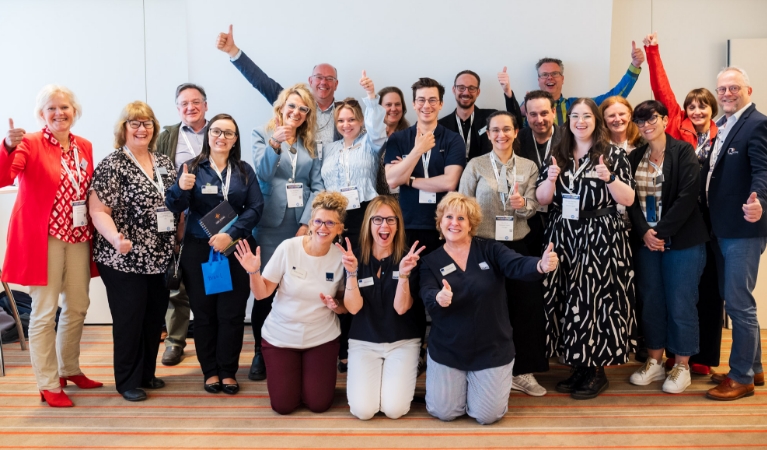
This is also a particular kind of customer relationship. RAPS serves individuals building careers and organizations developing their regulatory workforce. Its membership categories accommodate students, established practitioners and teams. The common purchase is access to a professional environment: information, people and structured opportunities to learn. The usefulness depends on the task someone brings to it.
Three credentials, three different jobs
The alphabet soup deserves a moment. RAPS Institute, an affiliated organization, is home to the RAC and RCC certifications. The RAC has separate Drugs and Devices designations. Its eligibility rules recognize combinations of education and experience: a bachelor’s degree normally requires three years of regulatory or related work; a doctorate requires one. There is also a route based on ten years of relevant experience.
The Foundation in Regulatory Affairs, introduced in May 2025, addresses a different audience. FRA is an assessment-based certificate for foundational knowledge, with no experience prerequisite. Its introduction and global strategy tracks cover devices and pharmaceuticals. For someone moving from research, manufacturing or quality into regulatory work, that distinction is useful. Starting knowledge and practiced professional judgment are different things to assess.
The RCC has a narrower target: knowledge of Europe’s Medical Device Regulation or In Vitro Diagnostic Regulation. RAPS identified the creation of the Person Responsible for Regulatory Compliance role as a catalyst for developing it. The organization also draws an explicit boundary: passing does not qualify someone for that statutory role or guarantee they meet its requirements. A credential has a defined scope, however useful the letters look after a name.
“the least busy person in a company”Richard Greco, recalling an approach regulatory affairs had outgrown
Do the membership arithmetic
RAPS lists standard individual membership at $250 for one year, with lower-priced categories for eligible students, government and nonprofit employees, and professionals in emerging markets. Buying membership opens access to resources and discounts. Education and examinations can still carry substantial additional fees.
Its published 2026 comparison lists a RAC exam at $605 for members and $760 for nonmembers. The $155 difference alone falls short of the annual standard dues. Someone buying only that exam would spend $855 on membership plus the member exam fee. The decision therefore turns on the other benefits a person will actually use.
The institution behind the discounts has its own arithmetic. RAPS reported $16.31 million in total revenue for 2025 and $16.88 million in expenses, a deficit of roughly $565,000. Program services supplied 94.5% of revenue. This is a nonprofit whose finances depend heavily on delivering paid services, rather than a donation-funded model. Its educational mission has to meet a purchasing decision.

A map you can borrow
One useful RAPS product is less glamorous than a conference badge: the 2021 Regulatory Competency Framework. It describes requirements across four career levels. A subsequent addendum and performance assessment tool help turn that description into development planning. A manager can identify a specific gap before buying a course. An individual can ask for training against a defined requirement rather than a vague ambition to improve.
There are alternatives. TOPRA also provides professional membership, education and networking. The overlap does not prevent cooperation: RAPS and TOPRA jointly presented conferences in London in 2025. RAPS also works with AFDO through the Healthcare Products Collaborative, established in 2022. Its published program policy rejects paid speaking slots and bases speaker selection on expertise.
RAPS’s distinctive proposition is the connection between these activities. A practitioner can encounter an issue in the news, study it, discuss it with peers and assess relevant knowledge within one professional community. That is useful when someone needs continuing development across a career. A narrowly defined project may instead call for specialist advice. Membership cannot make a product decision for its owner.
The same test applies to credentials. A newcomer can use foundational study to understand the field, but that study does not remove the experience requirements of professional certification. An experienced specialist can use a targeted exam to demonstrate knowledge, but the certificate cannot take responsibility for the specialist’s next decision. The distinction makes RAPS easier to use intelligently.
For an employer, the copyable idea is straightforward: define the skills a role needs, assess the employee against them, then choose the learning. The framework and assessment tools give that conversation a starting point.
At fifty, the society still revolves around Greco’s staffing objection. The practical lesson travels beyond healthcare: name the responsibility, define the competence, and give the people doing the work a way to learn together. Leaving an important job to whoever is free has a cost, even when nobody has put it in the budget.