A person can spend years paying rent without producing a single photograph worth posting. There is no ribbon cutting, no unboxing, no handsome object to add to a wish list. The money simply leaves. This makes rent a peculiar destination for Fancy, a name that once meant the opposite: a glossy stream of things people coveted, collected and sometimes bought.
The Fancy of today asks a different question. If the biggest recurring purchase in a renter's life is unavoidable, can it at least return a little cash and a record of responsible payment? The current Fancy app advertises 1% cashback on rent after shopping with partner brands, direct deposit by ACH, referrals and reporting of on-time rent payments. Its pitch is less glamorous than a designer lamp. That may be its advantage.
- Fancy began as a social shopping platform built around discovery and purchase.
- The old company drew a large audience but reported a $4.2 million net loss for 2019.
- The present renter app links partner shopping to rent cashback and offers optional credit reporting.
- The test is whether brands, property managers and renters all get enough value to keep the loop running.
The party had excellent taste. The arithmetic did not.
Joseph Einhorn founded the original Fancy around 2009. It started with a generous idea for the early social web: let people collect pictures of things they loved, let other people discover them, and place a buy button near the desire. Fancy became a shop, a magazine and a public wish list in the same browser tab. Investors liked the prospect. By 2013, the company was reported to have a valuation near $600 million. It raised a Series D of about $20 million in 2015, led by Carlos Slim Domit and Japan's Culture Convenience Club.
The internet was excellent at generating admiration. Conversion was harder. Greg Spillane, who became chief executive in 2019, later said the company had never lacked users; profitability was the problem. In one interview, he described opening a Manhattan storage box full of metal cards redeemable for $1,000 in Fancy credit. They had been handed out at parties to famous and fashionable guests. It is an almost too-perfect artifact of a particular startup age: a promotional expense you could use as a paperweight.
“The company never had an issue with users or experience, it was really around profitability.”Greg Spillane, former Fancy CEO, 2020
A federal filing gives the anecdote a ledger. The historical issuer, Thing Daemon, reported about $5.1 million of sales and a $4.2 million net loss for 2019. Its sales had fallen from about $6.6 million the previous year. This does not mean each gift card caused a loss, and it does not describe the finances of the current renter app. It does show the weight that a beautiful audience could not lift. Fancy's 2020 crowdfunding pitch still celebrated 12 million cumulative accounts and transactions in 135 countries. Those figures belonged to the social shopping era.
A crowd is a splendid thing. It is not, by itself, a margin.
A bill with a return address
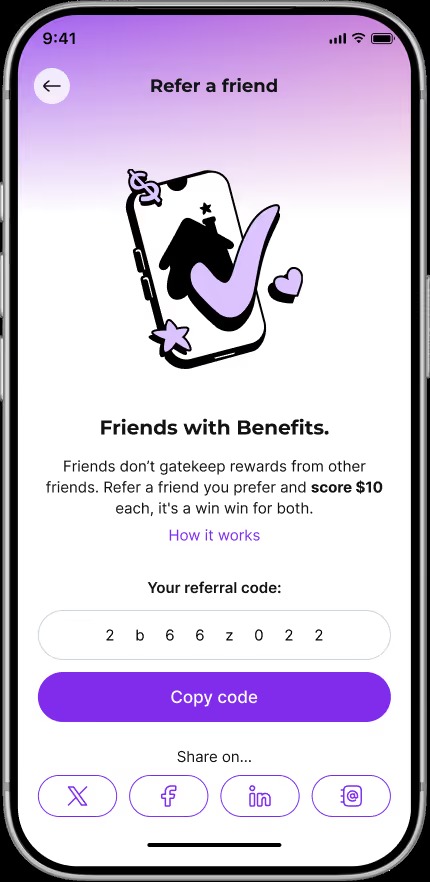
The Fancy now visible at Fancy.com has a different center of gravity. The current company identifies itself as a financial rewards app based in Irvine, California. Its website starts with rent and works backward to shopping: buy from partner brands, unlock cashback on a monthly rent payment, and receive money in a linked bank account. The offer is framed as cash rather than points or gift cards. The site also promises $10 to each side of a qualifying friend referral and local events for members.
For renters, the problem is obvious. Rent is often their largest payment, yet it normally yields neither a loyalty reward nor a credit-file benefit. Fancy proposes to change both. For property managers, its LinkedIn page pitches fewer late payments, stronger tenant retention and engagement data. For brands, it offers access to renters at a moment when they are thinking hard about their household spending. The business sits at the crossing of loyalty marketing, consumer finance and property management. It is closer to a three-sided rewards network than to the old boutique marketplace.
Shops with participating brands and pays rent on time.
Gets a route to a customer with a recurring household expense.
Gets a tenant engagement tool and a reason to encourage timely payment.
The loop only works if each side values what it receives more than what it pays.
The most important word in the 1% promise is “unlock.” Fancy's site says shopping with partner brands is part of qualifying for cashback on rent. That condition distinguishes the app from the casual impression that a rent payment alone creates free money. It also hints at the economics: merchant-funded customer acquisition may help pay for the renter's reward. Fancy has not published a full breakdown of those payments, so that remains a reading of the model, not an audited account.
Free to enter; a price on the extra
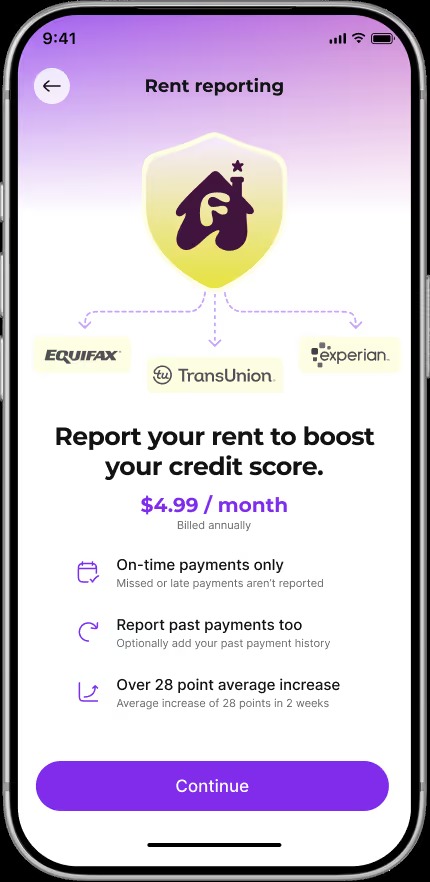
The app store listing advertises rent rewards with no extra fees. Fancy's own product mockup, however, shows a separate rent-reporting feature at $4.99 a month, billed annually. That screen says it reports on-time payments to Equifax, TransUnion and Experian and offers an option to add past payment history. The price is visible in the company's promotional image, so a prospective customer should treat the core reward and the credit feature as distinct decisions. A reported average credit-score increase on the mockup is a marketing claim, not a prediction for any one renter.
What does the renter actually do? Download the app, connect the information required to verify a lease or payment, shop through qualifying offers if chasing cashback, and connect a bank account to receive it. The exact steps and eligibility rules belong to the app's current terms. A person who already shops with the participating brands may find the offer useful. Someone who must spend extra to earn a rebate has to do the less romantic calculation: a reward is not a saving if it induces a larger purchase.
The continuity is in the incentive
At first glance, designer objects and rent ledgers have little in common. Fancy's old platform rewarded people for sharing products that might sell. The new one rewards shoppers for actions that might bring brands and property operators more valuable customers. Both versions put a reward between attention and a transaction. What has changed is the anchor. The old platform had to persuade a browsing user to buy something discretionary. A renter already has a reason to return every month.
That may be the clearest lesson another company can copy: start with an existing habit and identify a benefit that every participant can measure. For Fancy, those measures are cashback actually deposited, on-time rent reported, retailer sales attributable to offers and retention that property managers can observe. A home screen full of visits is a weaker result. The earlier company had plenty of those.
There are limits to the formula. Renters need qualifying offers they would choose anyway. Managers need reliable verification without creating work for staff. Brands need sales that justify the reward. And credit reporting only helps if the data reaches the bureaus in a useful form for the renter's own file. Fancy is early enough in this incarnation that its published material mostly describes what it intends to deliver, not the long-run results. Its Google Play listing shows a modest download count compared with the old platform's historical scale. Comparing the two as though they were the same active user base would flatter the wrong decade.
The Fancy once asked its users, in effect, “Wouldn't you like that?” The new question is less elegant and more useful: “You are paying rent anyway. What comes back?” The answer must be found in deposits, credit files and repeatable economics. This time, the party can wait.