The first product Johnny Cohen sold was not clothing. It was a crowd. A man at a nightclub saw people orbiting Cohen and assumed he ran the place. Could he bring guests to an event? Cohen said yes. Within 48 hours, by his account, 250 people arrived. The man hired him to represent a denim line. A social accident had exposed an economic fact: attention tends to gather around certain people, and other people will pay to borrow the gravity.
The Confessional Showroom is what happened when Cohen turned that fact into a room. Founded in 2014, the company is part fashion PR agency, part sample library, part event producer and part very analog marketplace. Independent designers stock the supply side. Stylists, editors, photographers and performers create demand. Between them sits a team whose job is to make the introduction useful.
This is not retail in the familiar sense. The important transaction is often a pull: a stylist borrows a piece for a magazine shoot, music video, television appearance or red carpet, hoping that an image and a credit line will carry the designer farther than the garment travels. The showroom says more than 50 of these pulls happen each week. That number explains the company better than any velvet rope could.
The garment has to leave the building
A designer can make an extraordinary jacket and still fail at the final six feet. It sits on a rack, unknown to the stylist who needed precisely that jacket yesterday. Fashion's visibility problem is not a shortage of images. It is a shortage of trusted shortcuts. A stylist under deadline does not want 40,000 search results. She wants one person to say, “Come upstairs. I have it.”
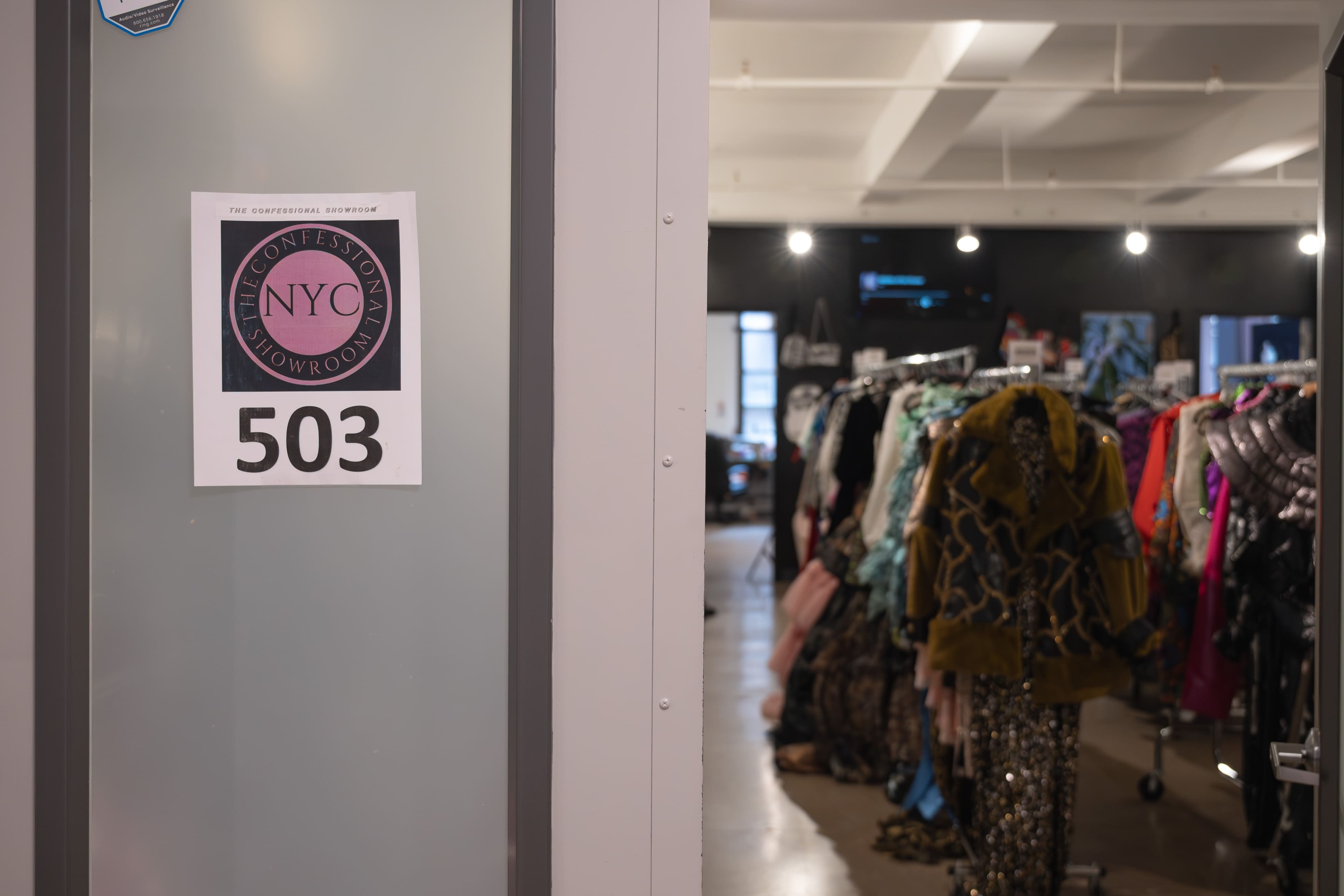
That shortcut is The Confessional's real inventory. Its New York room is in the Garment District, at 132 West 36th Street; a second outpost sits in Miami's Design District. The company describes a 3,000-square-foot operation that grew from a single client. Physical space matters because clothes are tactile, fit is awkward and serendipity remains stubbornly resistant to software. But the square footage is not the moat. A room without repeat visitors is merely expensive storage.
The company says it has worked with more than 1,500 stylists and photographers worldwide. Its site claims represented brands have appeared across more than 10,000 magazine editorials. Those are company figures, but there are outside footprints: ELLE Baltic credited the showroom on a 2026 editorial; designer Zofi lists a seven-month tenure in the New York showroom; Hat Couture says its 2018 partnership opened a market among celebrity stylists and performers. The proof is dispersed because the product is dispersed. It appears in the small type beneath a photograph.
“Your network is everything and your reputation is everything.”Johnny S. Cohen, founder
The price of being in the room
Fashion agencies often sell possibility in the foggiest language available. The Confessional does something more useful: it publishes prices. A clothing brand pays $1,200 a month. An accessories brand pays $1,000. Both commit for six months. In plain arithmetic, the wager is $7,200 or $6,000 before shipping samples, replacing losses or making enough inventory to keep the rack alive.
Published terms: six-month contract, paid monthly. Rates shown on the company's join page in 2026.
The rest of the menu reveals how the business has widened. Studio rental is $100 an hour with a four-hour minimum. Model digitals cost $250. A look book for a 10-to-20-piece collection starts at $1,250. Approved magazine and billboard opportunities are quoted between $1,000 and $5,000. There are PR, digital marketing, content production, pop-up events, fashion shows, celebrity placement and sales services around that spine.
This stack matters. Membership revenue makes the relationship recurring; studio work monetizes the room; production turns samples into assets; events put several clients beneath one spotlight. The fashion show is not a random flourish. It is a batch process for attention.
Selection is the advertisement
Cohen's language about taste is not subtle. In one interview, he said a line had to be “unique” and make a statement before he wanted it in the room. Strip away the theatrical phrasing and there is a sound marketplace rule underneath: abundance weakens recommendation. If every plausible brand gets admitted, the stylist once again faces the search problem the showroom was hired to solve.
This is how The Confessional differs from buying an ad or hiring a generalist publicist. It combines curation, proximity and repeated use. The company is selling designers access, but it must protect the experience of the people who do not pay it - stylists and editors. Their trust is the scarce side of the market. Fill the rack with interchangeable clothes and they stop visiting.
The name reflects the same instinct. Cohen has said that designers, editors, photographers and stylists would tell him their hopes, obstacles and setbacks in the room, then leave feeling better. He called it a confessional. That origin could be dismissed as branding, except that useful creative businesses often run on precisely this kind of soft information. A stylist mentions tomorrow's problem. A designer admits what is not selling. The broker remembers both.
The rack is not the product. The trusted reduction of choices is the product.
Copy the loop, not the chandelier
The transferable lesson is not “open a showroom.” It is to find a costly gap between two groups and make movement through it visible. The Confessional counts pulls, not merely posts. It creates recurring occasions for its network to return. It charges one side while keeping the other side's search experience useful. And it packages the expensive extras - photographs, look books, runway moments - close to the point where clients already need them.
What a brand can copy
Track the sample from rack to credit. Build a short list of repeat stylists. Create one clear reason to return each week. Price the commitment, then report qualified movement instead of vague reach.
What the model requires
Distinctive, camera-ready inventory; quick sample logistics; a six-month budget; patient follow-up; and enough margin to treat editorial attention as a long game rather than a guaranteed sale.
The conditions matter. This model is a poor fit for a label with one fragile prototype, no replenishment capacity or a need for immediate retail conversion. A pull is not a purchase order. A placement can create credibility without creating cash. Even a large network loses value when the collection looks like everything else in it.
Cohen has described an early low point: moving back in with his mother before his brother helped him buy his first showroom. The more revealing turn came earlier, with that accidental party. A stranger mistook social density for a business. Cohen eventually agreed. The Confessional Showroom remains an elaborate version of the same bet: gather the right people, give them something worth talking about and charge for the bridge between them.
Keep looking