Consider the biomedical founder with a clever device, a thin bank account, and a federal government that spends billions on health research. The founder does not merely need money. She needs the correct office, the correct program, a credible answer to a public problem, and someone who knows the difference between an enthusiastic conversation and an appropriation. In the three miles between a laboratory bench and Capitol Hill, promising ideas can become strangely hard to see.
The Conafay Group occupies that three-mile gap. From an office on Pennsylvania Avenue in Washington, D.C., its advisers help life-sciences companies, universities, medical researchers, nonprofits, and coalitions pursue federal funding and policy goals. They map a technology to an agency mission. They introduce scientists to program officials. They pressure-test proposals. They build allies. Sometimes they lobby Congress. Sometimes they help a university researcher understand why an elegant experiment is not yet a federal program.
This is less glamorous than inventing a drug and more consequential than polishing a pitch deck. The firm’s best trick is translation - not from English into jargon, but from one professional logic into another. Scientists ask whether something is true. Agencies ask whether it closes a capability gap. Legislators ask who needs it, what it costs, and why government should act now. The same project must survive all three conversations.
The proposal fails before it is written
Most weak federal proposals do not first fail at the sentence level. They fail at fit. A team spots a solicitation, forces its existing work into the language of the notice, and starts typing. By then, the decisive mistakes may already have happened: the wrong agency, the wrong maturity level, no operational user, no coalition, or a problem that matters scientifically but sits outside the buyer’s current mission.
What the work actually looks like
George Mason University’s Institute for Biohealth Innovation described the method in unusually practical terms: help researchers understand agency requirements, supply intelligence on Department of Defense needs, facilitate relationships with decision-makers and intramural scientists, vet work before submission, and foster outside partnerships. In 2020, Mason reported 18 full proposals submitted with Conafay’s help, 46 faculty members and teams supported, four workshops held, and $3.25 million awarded at that point. That is a consulting engagement translated into observable work.
The money is non-dilutive. The effort is not.
Federal R&D money has a seductive label: non-dilutive. Unlike venture capital, it does not require a founder to sell a slice of the company. But “no equity” is not the same as “free.” The application consumes expert time; the award brings reporting and compliance; the calendar answers to appropriations, program priorities, and administrations rather than a startup’s runway. A promising product can wait months for an answer and still lose.
These figures describe client funding outcomes and efforts supported - not The Conafay Group’s revenue.
Those numbers explain why a specialist exists. BARDA, NIH, the Department of Defense, and Congress do not behave like four departments of one customer. They have different mandates, budget cycles, acquisition habits, and tolerance for technical risk. Conafay’s service list follows the terrain: federal government relations, non-dilutive funding, academic research development, coalition management, public-private partnerships, and business-to-business introductions.
What does that expertise cost?
The model is professional services: retainers, defined projects, and lobbying engagements, with senior judgment as the scarce input. A customer can hire an in-house government-affairs lead, use a giant multipurpose lobbying shop, retain a grant writer, or attempt the work alone. Conafay’s answer is narrower. Its people are meant to understand a therapeutic, device, diagnostic, or research platform while also knowing which federal door might open.
An archaeologist inherits a lobbying firm
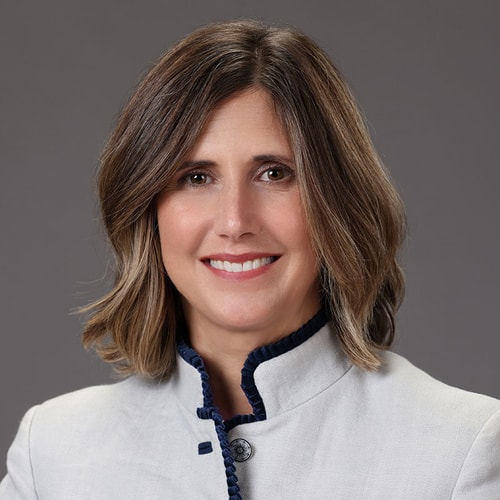
The human version of this translation business is Jessica Kenyon. Her early academic background was archaeology. Her family included virologists. Then came more than a decade overseeing and managing military medical research, including work at the Army’s Telemedicine and Advanced Technology Research Center. She learned how programs are chosen, funded, communicated, and moved across the tri-service world. By the time she entered consulting, she had watched federal research from the inside.
Stephen Conafay had founded the firm in 2012 after a career that included senior roles at Pfizer, Glaxo, a major law firm, PhRMA, and Shandwick. Kenyon joined in 2016. She became senior vice president and managing director in 2021, then CEO in 2023. Conafay remained founder, strategic counselor, and what he calls a player-coach. It was a handoff in stages, not a ceremonial disappearance.
Kenyon later called her path “accidental entrepreneurship.” The useful part of that phrase is accidental. She did not arrive with the founder mythology of a garage and a master plan. She arrived with domain knowledge, accumulated trust, and a growing belief that her instincts were worth using. When she stepped into the top job, she also joined a CEO peer group because she did not want to lead in isolation. The change of mind was subtle but important: expertise was no longer enough; leadership needed a room where uncertainty could be spoken aloud.
A narrow firm in a wide market
The Conafay Group is small - the public roster is a little over a dozen people - but the résumés cross Capitol Hill, BARDA, military medicine, health policy, pharmaceutical companies, communications, and academic research. That mix matters more than headcount. A large firm can offer geographic reach and political firepower. A grant shop can improve an application. A contract lobbyist can carry a message. Conafay tries to connect the full chain from technical claim to federal rationale.
Where the firm puts its weight
Its customers reveal the boundary of the market: biopharma and medical-device companies, academic medical centers, research institutes, patient or health coalitions, and organizations working in biodefense and national health security. Public records name clients and collaborators ranging from George Mason and LSU Health Sciences Center to Emergex Vaccines, the Antibiotics Working Group, and UC Davis. The firm also briefs members of the Medical Technology Enterprise Consortium on appropriations, defense authorization, and BARDA priorities.
The model works best when three conditions coexist: the science is credible, a federal mission plausibly needs it, and the client can stay engaged through a slow, uncertain process. Remove any leg and the proposition weakens. A company desperate for cash next month should not confuse a federal strategy with bridge financing. A laboratory without convincing evidence cannot network its way around the evidence. And a product with no relationship to a public capability gap will remain a difficult fit, no matter how gracefully the proposal is written.
Strong fit
- Defensible biomedical evidence
- Clear agency or public-health relevance
- Runway for long federal cycles
- Willingness to build coalitions and comply
Poor fit
- Capital needed immediately
- Science too early to survive scrutiny
- No credible federal mission match
- A client expecting introductions to replace execution
The part worth copying
Few readers should copy The Conafay Group by opening a lobbying office. Many can copy its operating logic. Begin with the buyer’s mission rather than your own vocabulary. Hire people who have sat on the other side of the table. Test fit before polishing prose. Treat coalition-building as product development: each credible ally improves the case and exposes a blind spot. Keep the scientist in the room when the policy language is written, and keep the policy operator in the room when the technical promise is tested.
A five-line field guide
- Write the public problem in one sentence before describing the technology.
- Name the exact agency mission and capability gap your work addresses.
- Ask a former buyer or program operator to challenge the fit.
- Build relationships and allies before a deadline turns strategy into panic.
- Measure the pipeline - meetings, concepts, submissions, awards - not just the final win.
The larger lesson is mildly uncomfortable. Good ideas do not travel on merit alone. They travel through institutions, and institutions have languages, calendars, incentives, and memories. The Conafay Group has built a business by learning those details without abandoning the science. In Washington, translation is not the decorative step after invention. Quite often, it is how invention gets a future.