Robin Clough did not discover tequila in a boardroom. In 2012, while studying for an MBA in California, he was eating at a roadside restaurant in Mexico with his friend Sebastian Gonzalez. The owner offered them a pour. Clough expected the familiar bargain: endure the burn, reach for lime, move on. Instead, the liquid was subtle enough to sit with over a meal. It changed the problem from “How do we sell tequila?” to “Why does so much tequila get sold as something to survive?”
That distinction became Tequila Enemigo. Clough, Gonzalez and Clough’s childhood friend Max Davies-Gilbert began working on the company in 2013, then launched in Britain in 2017. They were not distilling a celebrity accessory. They were building an argument against shot culture, sugary camouflage and marketing that outran the contents of the bottle. The Spanish word enemigo means enemy or adversary. It gave the founders a name and, more usefully, something to oppose.
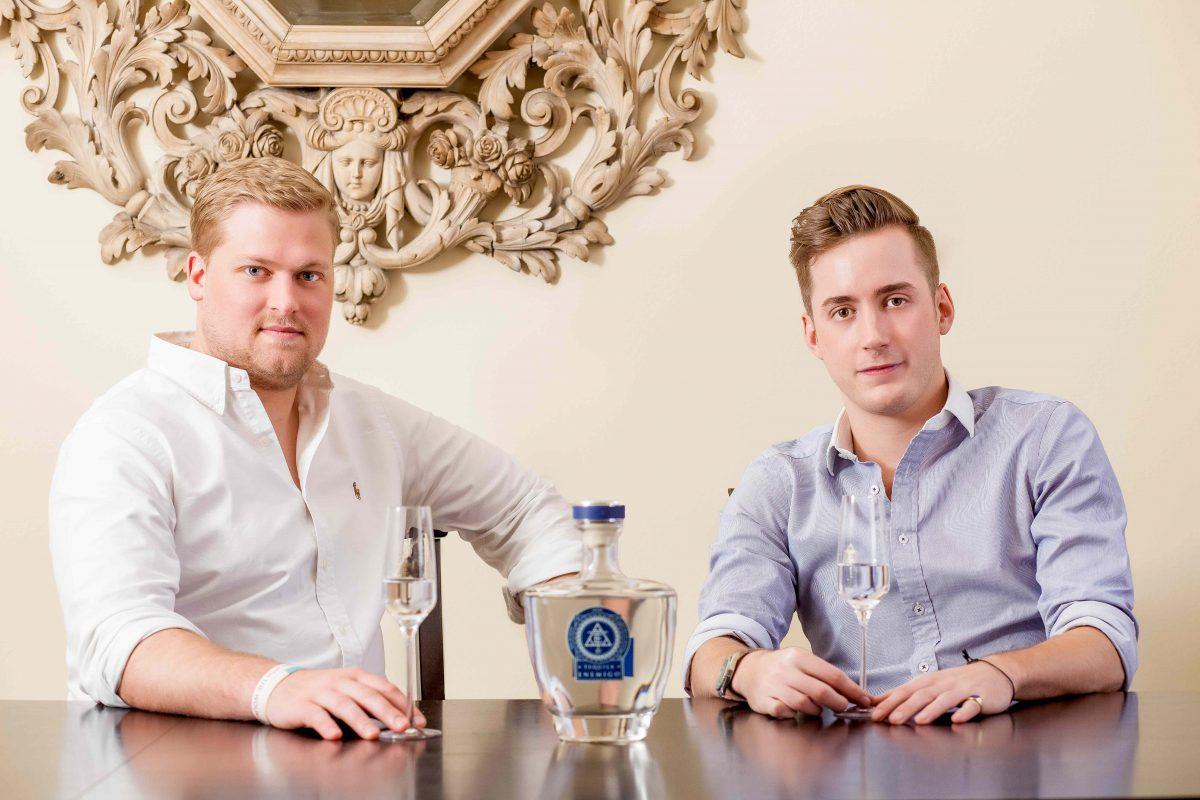
The first thing to fail was the recipe. Then the next 87.
The founders said the initial launch cost roughly $35,000, assembled from their savings and money from a few friends. The budget did not leave room for a billboard war. It did leave room for trips to the town of Tequila, hundreds of taste tests, bottle and label work, Mexican export rules, UK licensing and a long search for a master distiller. A university professor reportedly called Clough’s plan “laughable.” It is the kind of insult that looks wonderfully cinematic after the fact and painfully plausible before it.
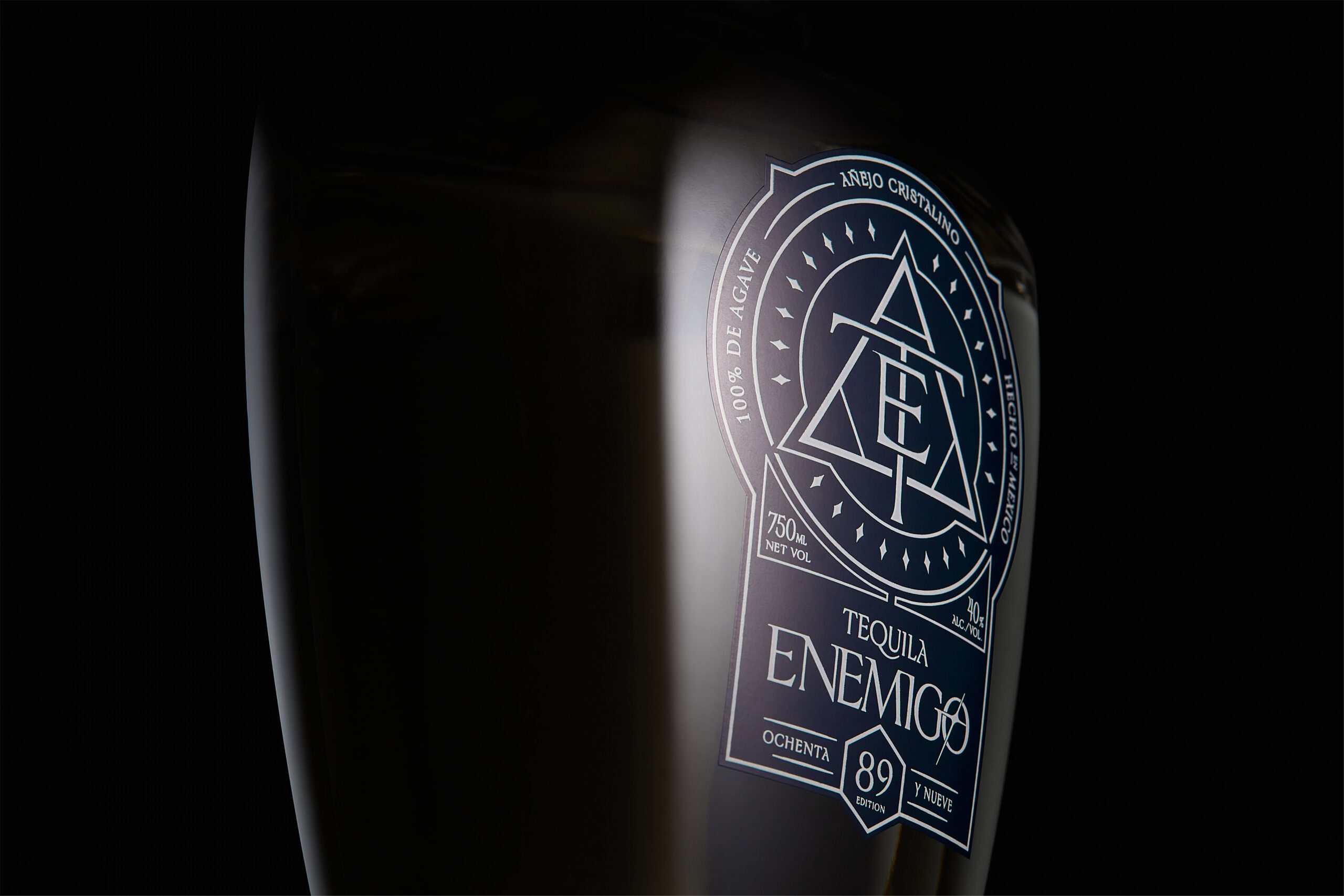
Enemigo 89 Añejo Cristalino records the product work in its name. The recipe took 89 iterations. The finished tequila spends more than a year in custom American oak, where it acquires color and barrel character. It then passes through a three-phase carbon-cellulose filtration system that makes it clear again while aiming to retain an añejo’s coconut, vanilla and oak notes. The visual trick gets attention; the oddity of clear liquid carrying aged flavor gives a bartender something concrete to explain.
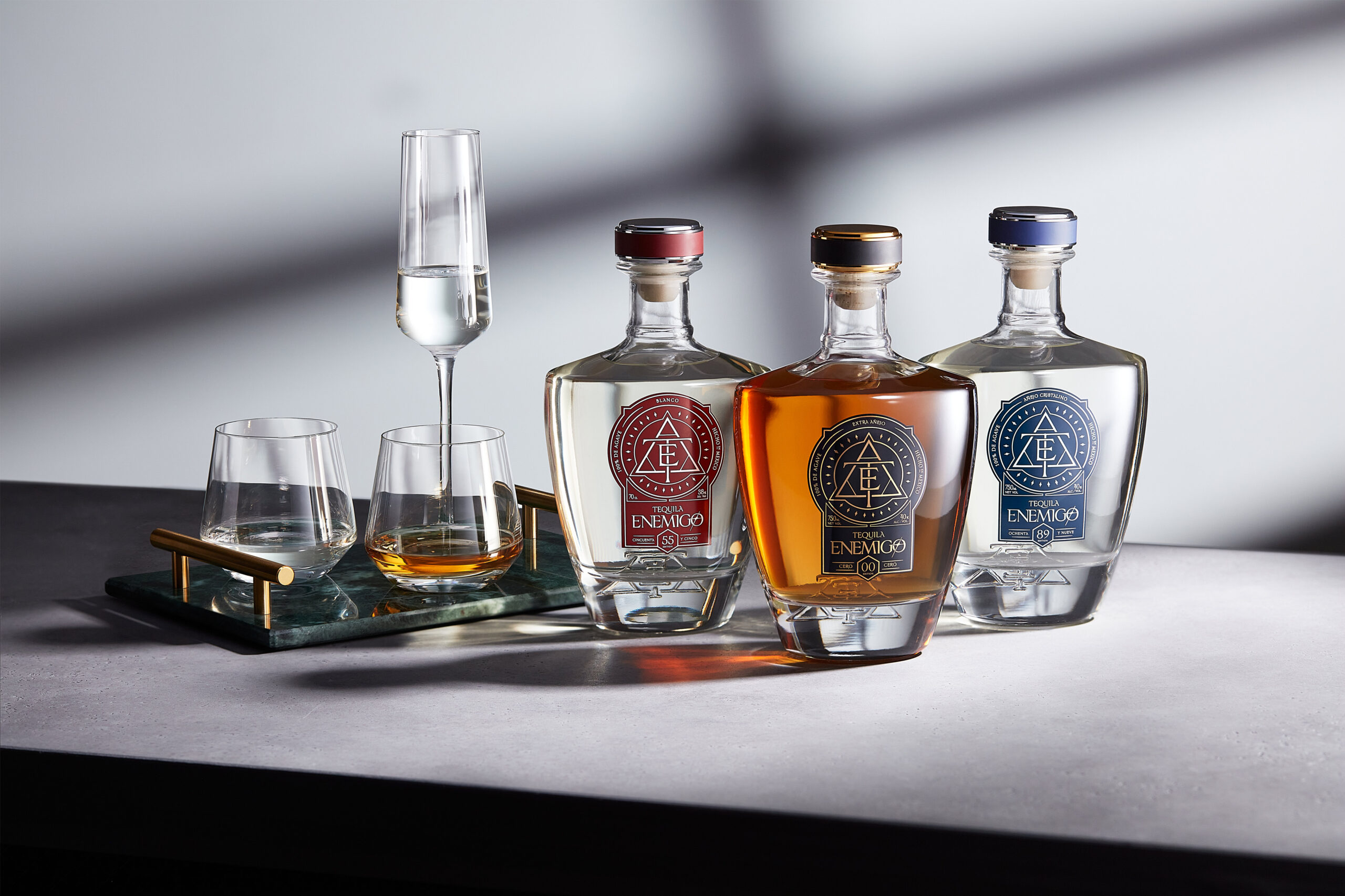
The broader range makes the same product ladder legible. Enemigo 55 Blanco is unaged and floral, with agave and mineral notes. In the United States, the company says it blends the Blanco with aged Blanco to meet the 40 percent ABV requirement while preserving its profile. Enemigo 00 Extra Añejo waits more than three years in custom oak and is made in limited quantities. The names reward the curious: 55 marks another founding-era iteration; 00, the company says, needed no correction from its conception.
A luxury brand built one room at a time
Enemigo’s customers are legal-drinking-age consumers who want a premium sipping tequila, cocktail drinkers who prefer a restrained mixer, and collectors who like a production story with a hard limit. Its other customers are the gatekeepers: bars, restaurants, hotels, clubs, specialist retailers and distributors. The company’s own locator points to venues such as Casa Cipriani, Baccarat Hotel and The Modern in New York. Early accounts included London clubs and restaurants. This is not accidental decoration. For a small brand, the room is an endorsement.
The serving ritual did similar work. The founders recommended Enemigo 89 neat in a long-stemmed flute, or with sparkling mineral water and lime. A flute says “consider this” before anybody has tasted a drop. It also puts distance between Enemigo and the salt-shot-lime routine it was organized against. Competitors such as Clase Azul, Don Julio 1942, Patrón and Casamigos arrive with heritage, sculptural packaging, distribution or celebrity familiarity. Enemigo’s answer is a stack of mutually reinforcing details: additive-free positioning, lowland agave, volcanic-filtered water, custom oak, clarification, numbered recipes, selective venues and a distinct serve.
Our job is to be incredibly smart about where we invest our resources, and continue to bring an excellent product to market and let that do our talking for us.Robin Clough, co-founder
The business model is conventional in outline and selective in execution. Bottles move through distributors into hospitality and specialist retail, with online purchasing available in supported markets. Limited releases add a collector tier. The most useful measure of scale here is footprint: public materials place it in Mexico City, London, New York, Los Angeles, Dubai and Milan, among other luxury markets.
What changed their minds
There were two useful reversals. The roadside pour changed Clough’s belief about what tequila could taste like. Later, customer demand changed the company’s rollout. The founders originally focused on Britain and Europe, but reported demand pushed them into the United States sooner than planned in 2018. In January of that year, an external investment valued the company above $5 million.
The larger turn came in September 2023, when luxury distributor MadaLuxe Group acquired a majority stake for an undisclosed price. The founding team kept a significant minority interest and continued running daily operations. For MadaLuxe, the acquisition opened a spirits division. For Enemigo, it offered the distribution machinery and luxury relationships that a 15-person company would struggle to assemble market by market.
Football, hibiscus and a very small barrel
In October 2024, Enemigo became the first tequila partner of an English Premier League club through a long-term deal with Fulham FC and Fulham Pier. The arrangement went beyond perimeter signage: Enemigo became the exclusive tequila across hospitality spaces at Craven Cottage, supplied match-day cocktails and opened a permanent bar in the Riverside Market. It turned sponsorship into sampling infrastructure.
The next activation was unusually specific. In May 2025, Handshake Speakeasy created the Jiménez Handshake Margarita with Enemigo 55 to honor Fulham’s Mexican striker Raúl Jiménez. Hibiscus, lime and vanilla tied the player’s identity to the drink without asking a logo to do all the work. The company positioned it as the opening serve in a player cocktail series ahead of the 2026 World Cup.
At the opposite end of the volume spectrum sat Finito Vintage ’24: one Extra Añejo finished in a historic Bordeaux Premier Cru cask, 300 bottles, and no second barrel. By September 2025, the company said every bottle had been sold or allocated to collectors, private clubs and connoisseurs, with Sotheby’s as premier global retailer. The price was $1,050, £1,050 or €1,050 per bottle. At the dollar list price, that is a theoretical $315,000 of retail value across the entire release, before channel economics. The stunt worked because the limit was physical, not a countdown timer invented by a marketing department.
What a founder can steal
Pick an enemy
“Shot culture” is narrower and more useful than “bad tequila.” It tells the team what to change in product, glassware, venue and copy.
Keep the iteration count
The 89 attempts are not backstage trivia. They make patience visible and give customers a story short enough to repeat.
Borrow the room
A trusted restaurant, club or stadium bar can lend context before a young brand has mass recognition.
Turn media into trial
Fulham’s permanent bar and exclusive serves let a sponsorship produce tastes, not merely impressions.
The copyable sequence is simple to describe and hard to fake: identify a hated category habit, design against it, preserve evidence of the work, launch in places that reinforce the claim, and expand when pull appears. Enemigo could not win by outspending a global spirits group. It could make every scarce dollar point in the same direction.
When this playbook breaks
It does not work when “premium” is only packaging, when production cannot survive a demand spike, or when selective distribution simply makes the product impossible to buy. It also struggles if the category enemy is imaginary. Customers must already feel the tension.
International growth introduces another dependency: local distribution. Camus France Distribution, appointed to carry Enemigo in France in 2025, announced in 2026 that it would cease operations and seek a successor for the brand. A great bottle cannot replenish a shelf by itself. The same selectivity that builds status can become fragility when one partner owns the route to market.
That leaves Tequila Enemigo in an interesting market position. It is larger than a founders’ experiment and smaller than the celebrity and conglomerate-backed names surrounding it. The majority acquisition brought reach without publicly removing the founders from the controls. Its strongest defense remains the system established before the deal: a specific product difference, a recognizable ritual, disciplined venues and stories attached to numbers customers can remember.
The romantic version begins with a roadside epiphany and ends with a sold-out barrel. The more useful version is less tidy. Eighty-eight recipes did not make the cut. A professor laughed. A French distributor later closed. Between those points, the company kept changing tactics without changing its premise. Sip it slowly. Let the liquid make the argument. Build the shelf space from there.