Bob Whetsten had a peculiar problem. The tests were performed near the patient. The man responsible for monitoring them could be hundreds of miles away. As CoxHealth’s point-of-care program spread across Missouri, its administrative coordinator spent much of his working life getting to the work.
“I would waste most of my day driving everywhere,” he recalled in a TELCOR customer case. Regional hospitals already used TELCOR QML to connect testing devices and clinical records. Whetsten saw that the same arrangement could serve outpatient sites. The case describes 39 outpatient implementations and less time on the road. Checking what had happened no longer required arriving where it had happened.
- TELCOR connects bedside testing to clinical records and laboratory billing to payment workflows.
- QML manages devices, results, operators, and the exceptions that deserve human attention.
- Its lab business offers software for internal teams or a managed billing service.
- The recurring lesson: changing the workflow matters as much as installing the software.
The result needs a passport
Point-of-care testing happens outside the central laboratory: at a bedside, in an emergency unit, in a clinic. That convenience creates a second task. The number must reach the right patient record, carry the right context, and come from an operator whose credentials are current. A quick measurement can acquire an unexpectedly long administrative itinerary.
QML sits between those devices and the host systems. TELCOR builds communication modules for different instruments, brings their results into a common platform, and interfaces with laboratory and electronic medical record systems. It also tracks quality-control results and operator certifications. Some customers use one device type; others use more than twenty. The software has to accommodate the collection rather than dictate it.
The instructive detail lies in an interruption. An unvalidated patient identifier can remain in QML for review and correction before the result is resent. A host interface can therefore act as a checkpoint. Speed without correct identity would be a rather expensive form of efficiency.
Devices do not all speak with the same vocabulary or capabilities. TELCOR’s public list of more than 160 device types distinguishes one-way from two-way communication. “Connected” needs that qualification. A buyer should ask what can actually travel in each direction on the instruments already installed.
The spreadsheet had reached its limit
At Renown Health in Nevada, the friction took a different form: spreadsheets for tracking issues, manual operator-file changes, patient-ID corrections, and expanding clinics. TELCOR’s Renown account describes rolling go-lives and six new clinics opening during implementation. Nightly operator feeds replaced weekly file manipulation, and shared notes let colleagues divide work without duplicating it.
There is a useful distinction here between centralizing work and centralizing visibility. Testing can stay distributed. The people supervising it need a common view. With an operator-management interface, competency updates can flow into QML rather than wait for someone to reconcile another file. The benefit is easiest to understand on the morning a coordinator does not have to perform that reconciliation.
The claim that needed to be left alone
TELCOR’s other major business addresses the trip from a laboratory service to a payment. Its RCM software handles laboratory and pathology billing, including payer rules, claim processing, payment posting, denials, appeals, and analytics. Its Revenue Cycle Services team can operate the billing process for a lab that prefers managed service.
Consider Elite Clinical Labs in Louisville. Every claim once required manual attention; payments were checked and entered by hand. The TELCOR-published case reports billing staffing needs falling from six full-time equivalents to 2.5. The team initially thought the detailed implementation process excessive. Then the remittances arrived and the method began to make sense.
“We learned to trust the system.”Vonda Townsend · Elite Clinical Labs
The uncomfortable change was leaving clean claims alone. Experienced staff had been accustomed to working the whole account. Premature corrections could introduce mistakes. Once routine claims moved without unnecessary intervention, attention could go to denials. The case describes opportunities to reallocate people into authorization and appeals work. Software adoption required a revision of what conscientious work looked like.
The invoice is only the first cost
Skin Pathology’s older practice-management software had been configured for a doctor’s office. Growth and more complicated collections made the fit increasingly awkward. Its customer account records a January 2014 TELCOR implementation, automated billing processes, and a change from sixteen billing employees to eight. Estimated annual compensation savings were $370,000.
That figure is a reported labor saving, not net return on investment. A purchasing calculation also needs the contract, interfaces, training, staff time, and continuing operating costs. Skin Pathology valued user-based pricing and access to data. TELCOR currently describes its software licensing as client-owned, without a percentage-of-collections charge. The managed service is a separate purchasing decision.
TELCOR’s in-house versus service guide makes a sensible concession: a lab with capable billers and outdated tools may do well keeping billing internal. A startup without that expertise may prefer a service. It gives indicative implementation windows of 30-60 days for billing service and 90-120 days or more for SaaS. Those are planning ranges, not promises.
The comparison should include money that fails to arrive. TELCOR’s billing-cost discussion points to slow follow-up, rework, and limited visibility as costs beyond the quoted fee. A low rate becomes less charming if it accompanies a drawer full of unresolved claims.
A company built to answer the phone
Jim Terrano, Deb Larson, and Becky Clarke founded TELCOR in 1995. Their company now serves hospitals and laboratories in the United States and Canada. Chris Terrano leads RCM; Nick Terrano leads point of care. Its stated values include integrity, innovation, dedication, acceptance, passion, and collaboration. The more revealing evidence of culture is what a company agrees to do when support becomes inconvenient.
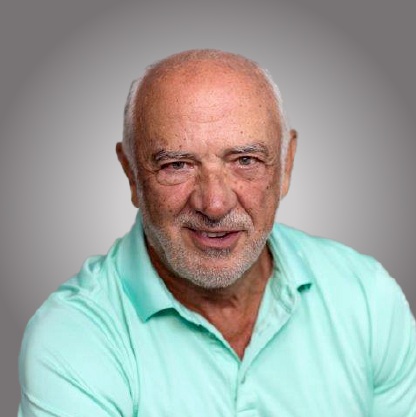 Jim Terrano
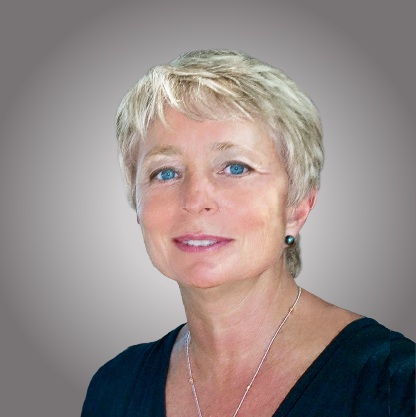 Deb Larson
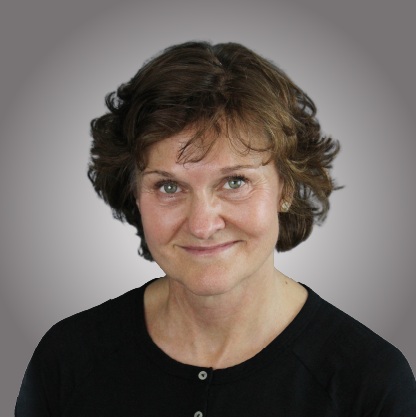 Becky Clarke
In its twentieth-anniversary account, TELCOR describes working for months after LifeScan exited the hospital glucose-meter market. The company incurred overtime and higher operating expenses to keep customers’ testing programs running. The point of the episode is practical: device choices can change unexpectedly, and continuity has to be somebody’s job.
Accel-KKR invested growth equity in January 2016. TELCOR’s later milestones include a thirtieth-anniversary campaign in 2025 and its third consecutive Great Place to Work certification announcement in February 2026. Those are milestones of an established specialist whose software has to live inside other organizations’ daily routines.
Now the paperwork gets an operator
In April 2026, TELCOR announced its acquisition of Sample Healthcare. The added AI platform interprets unstructured information and executes workflows such as authorizations, appeals, payer follow-up, and document processing. Sample remains available independently, and TELCOR says it is applying the capabilities within its own billing-service operations.
That changes the work available to automation. A rules engine can act on a well-formed field. Documents and multi-step payer interactions demand a different kind of processing. TELCOR’s AI offering emphasizes human oversight and starting with a targeted workflow. The useful test is whether that particular process becomes faster and more reliable under supervision.
Bring the awkward case to the demo
TELCOR occupies two related markets: point-of-care data management and laboratory revenue cycles. Its case rests on device breadth, laboratory expertise, configurable workflows, and implementation support. Vendor neutrality is shared by competitors: Abbott’s RALS also advertises it, alongside manual-result entry and operator management. A slogan cannot settle a procurement decision.
Bring a troublesome device, a recurring patient-ID exception, or an appeal that eats an afternoon. Ask how the proposed system handles it, who owns the remaining work, and what a successful rollout requires. Clean data, staff training, and management commitment belong in that conversation. Automation has less room to help where routine work is already efficient; missing information and unconfigured interfaces still need fixing.
The transferable lesson is modest enough to use tomorrow: identify repeated interventions, write down which ones follow rules, and preserve human attention for exceptions. At CoxHealth, that meant seeing the work without driving to it. At Elite, it meant knowing which claims to leave alone. Healthcare’s gaps can be small. The working day they consume is not.