The most revealing number in RLDatix's recent history is not its customer count, its acquisition tally or the roughly $2 billion private-credit package arranged in 2024. It is 1.3. That was the App Store rating of Loop, a mobile workforce app used by 500,000 people when Dan Michelson arrived as chief executive in late 2024. A bad restaurant can survive a few one-star reviews. A scheduling app for nurses and other healthcare staff cannot shrug off a rating like that, because the customer opens it to learn when life will happen.
Michelson says the complaint followed him into a meeting with the National User Group: everyone raised the same concern. Customers had lost confidence, product quality was weak and support responsiveness was falling short. The new CEO did something refreshingly untheatrical. He admitted it. Then RLDatix invested in support, built a customer-success organization from scratch and put engineering on Loop.
the alarm
the reported result
By the company's 2026 account, Loop had reached 4.5 stars and 1.7 million users. One reviewer said the app changed how they balanced shifts, overtime and family life. The precise engineering work has not been itemized publicly, and neither has its cost. What is visible is the order of operations: stabilize service, condition the product, then move on to innovation. This is less glamorous than announcing an AI strategy. It is also more useful.
“Trust is something you give, not something you get.”Dan Michelson, chief executive
The form nobody wants to fill out
RLDatix lives in the administrative nervous system of healthcare. A nurse reports a near miss. A risk manager investigates. A claims team watches legal exposure. A compliance officer maps policy to a regulator's standard. Medical staff verify that a physician is credentialed. Schedulers try to cover Saturday night without burning out the ward. When an electronic health record goes offline, someone still needs the patient's history.
Those jobs are usually described as modules because software companies like modules. In a hospital they are one chain of consequences. The distinctive RLDatix pitch is that incident reporting, policies, credentials, staffing and data access should share context. A serious safety event should not die as a row in a database. It should inform an investigation, change a policy, surface a staffing pattern and appear on a leadership dashboard.
the signal
the cause
the policy
the work
again
The portfolio is wide because RLDatix bought its way into adjacent workflows. The modern company emerged in 2018 when Toronto's RL Solutions combined with London's Datix. Datix had begun in 1986 after lawyer Brian Capstick saw recurring injuries while defending hospitals against clinical-negligence claims. RL Solutions, founded by Sanjay Malaviya, brought software for risk, infection prevention and patient feedback. Together they had more than 3,000 clients across 19 countries.
Then came more pieces: Verge Health for compliance and provider management; Allocate Software for rostering and workforce operations; Galen for clinical-data migration and archiving; SocialClimb for reputation and patient growth; and IPeople for EHR downtime access and business continuity. Current company materials put the footprint above 10,000 health and care organizations in more than 30 countries. RLDatix says over 80 percent of U.S. health systems use its products.
A roll-up tries to become a platform
The acquisition logic is easy to draw and hard to execute. An incident-reporting company can become more valuable if it also controls the policy library, provider record and workforce workflow. Yet every acquired product arrives with its own data model, interface, customers and technical debt. The thing that creates breadth also creates seams.
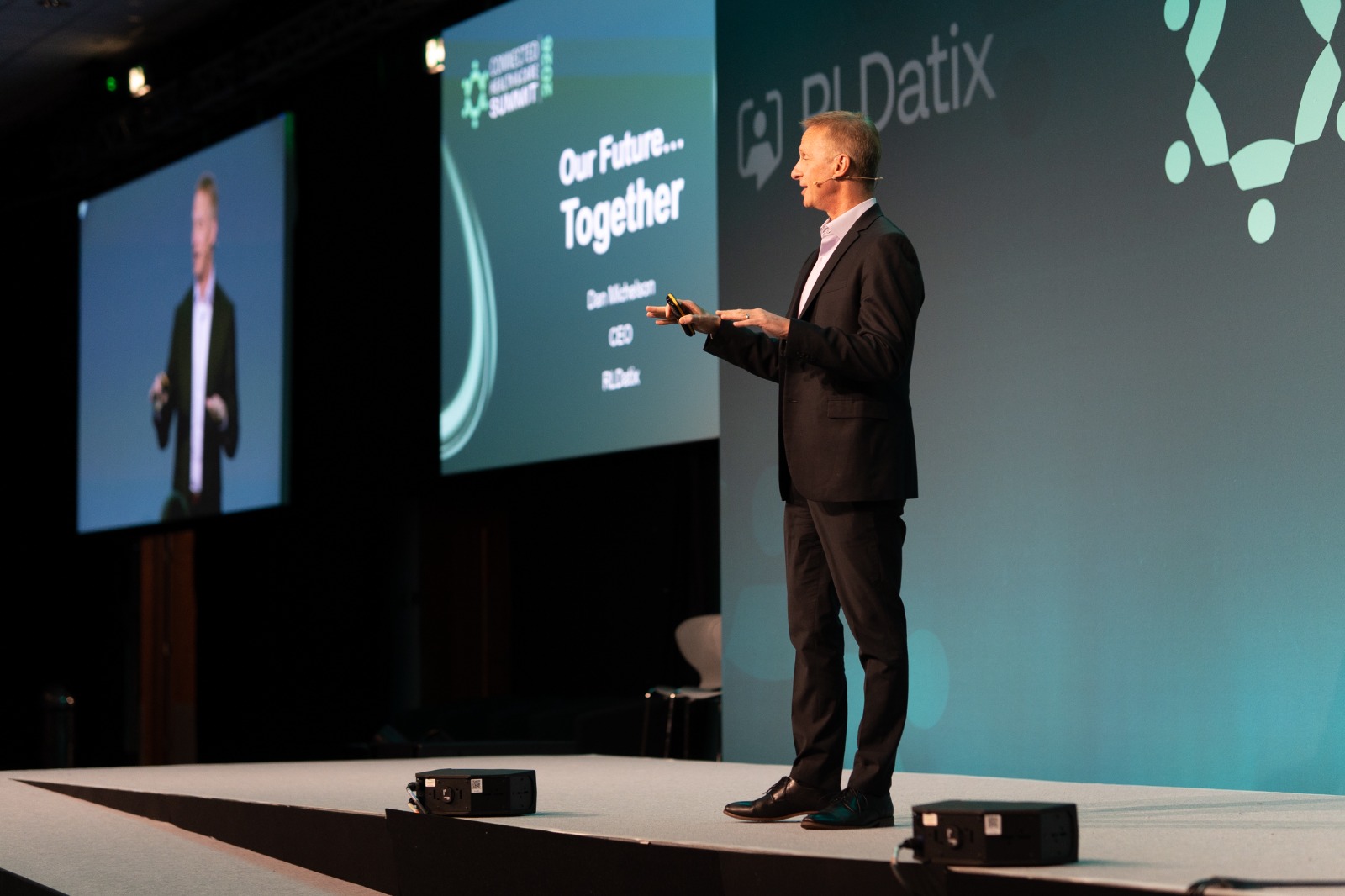
RLDatix now calls the connected layer RLD360. It spans patient safety, risk, compliance, governance, provider readiness and analytics. At its 2026 North American summit, the company showed AI-assisted incident reporting, automated policy generation and Risk Insights Dashboards. Other tools include Ask Optima, Smart Match and Loop Locate for workforce use, plus AI work with MedStar Health designed to extract patterns from thousands of safety-event reports in seconds.
That sounds attractive because hospital risk teams have no shortage of narrative data. The danger is mistaking faster reading for safer care. A model can group reports; it cannot make a department discuss an ugly pattern, assign an owner or enforce a changed procedure. RLDatix works best where leadership already treats reporting as the beginning of a learning loop. In an organization that collects forms to satisfy an auditor, another dashboard becomes prettier storage.
The customer examples are concrete but deserve the correct reading. USA Health says its serious safety-event rate fell 75 to 80 percent while it used RLDatix and worked to change safety culture. UMass Memorial Health reported an 83 percent cut in event-resolution time. University Hospitals Health System reported more than $1.1 million saved through streamlined processes and consulting. These are customer outcomes, not controlled trials. The software helped organize the work; people changed the organization.
The buyer is a committee
RLDatix does not sell one thing to one person. A chief quality officer may care about event reporting and serious-safety-event rates. Legal and risk teams want claims history. A compliance leader wants survey readiness and version-controlled policies. Medical-staff offices need credentialing and privileging. Nursing operations needs safe coverage, while finance watches overtime and agency labor. The data team worries about retiring an old EHR without losing a decade of charts.
That committee explains both the appeal and the sales friction. One vendor can promise shared records, fewer handoffs and a common view of risk. But a wide contract creates more stakeholders, more integration decisions and a longer path to value. RLDatix's professional services, credentialing services and workforce assessments are therefore part of the product in practice. Software records a workflow; expertise helps decide which workflow the organization should have.
The alternatives change from room to room. Riskonnect, SAI360, Ideagen and NAVEX compete in risk and compliance. symplr overlaps in healthcare operations and provider management. Healthicity and MedTrainer attack compliance from more focused positions. Specialist scheduling, credentialing, incident-reporting and data-archive companies can be better fits when the requirement is narrow. The old fallback is a mix of EHR tools, shared drives, spreadsheets and institutional memory.
RLDatix's advantage is healthcare specificity plus breadth. Its forms, standards, credentialing work and staffing products were designed around care settings, not adapted from factory safety or generic corporate compliance. Its liability is the same breadth. A buyer should test the connections it actually needs, not purchase a diagram. Ask a vendor to demonstrate one real chain: report a medication near miss, assign the review, update the relevant policy, notify the right staff and show the change on a dashboard. If that chain needs five exports and three service tickets, the platform is still a portfolio.
What the repair actually cost
RLDatix does not post a menu price. This is enterprise software sold through demos, contracts, implementation work and services. The visible capital story is larger: Five Arrows and TA Associates remained majority owners when Nordic Capital made a minority investment in 2022. In 2024, Blue Owl, Ares and Golub participated in a private-credit package of about $2 billion, mostly to refinance existing facilities. That financed the balance sheet, not a disclosed Loop repair budget.
Cost is therefore best understood as organizational. A health system must integrate patient, staff and medication lookups; map regulators' requirements; clean provider records; define who owns follow-up; train thousands of users; and keep workflows usable enough that busy clinicians report incidents. RLDatix offers HL7 links, CSV imports, EHR launch points and professional services, but no vendor can purchase local attention on a customer's behalf.
The bit worth stealing
The copyable play is smaller than RLDatix's platform. First, listen for the complaint that appears in every customer conversation. Second, fix the service experience around it so users can see movement before the code is perfect. Third, give engineering a measurable target that customers understand. Only after that should the roadmap widen.
RLDatix followed that sequence in public: support investment, a new customer-success function, the Loop repair, workforce assessments, then live AI features. It also had conditions many companies lack - an installed base of hundreds of thousands, recurring enterprise relationships and enough capital to work on service and product at once. A small vendor with six months of runway cannot copy the spending. It can copy the prioritization.
The same caveat applies to customers. The connected-platform approach is strongest for a large health system trying to standardize workflows across facilities, link safety findings to policy and provider records, or retire legacy data systems. It is weaker for a small organization that needs one narrow tool, lacks integration staff or prefers best-of-breed products. Breadth only becomes an advantage when somebody does the connecting.
RLDatix's next test is therefore not whether it can add another module. It is whether a scheduler, risk manager, compliance officer and clinician can feel the connections without learning the history of 16 acquisitions. The company has already demonstrated one important instinct: when half a million people are telling you the app is bad, the grand strategy can wait.