The client needs a website. The designer needs feedback. Someone has to write the copy. At Tehama Group Communications, those familiar agency problems share a calendar with college coursework. The people doing the work are students at California State University, Chico, and the organization paying for it expects something it can actually use.
That arrangement has been running since fall 1990. TGC, as the agency is known, gives public relations and creative students responsibility for outside assignments before they graduate. Its place in the market is specific: a university-based communications shop for small businesses, nonprofits, public bodies and campus organizations, particularly in California’s North State. The interesting part is how much ordinary agency work fits inside an academic institution.
A honeybee brochure beats a hypothetical brief
Consider the Honeybee Discovery Center. Designer Katherine Ellis-Logsdon credits her TGC experience with creating a brochure and media kit aligned with the center’s updated branding. Her portfolio describes materials covering exhibits, events and community programs, with a coordinated visual treatment for visitors, journalists and potential partners.
It is an instructively unglamorous assignment. A brochure has to help someone understand what a place does. A media kit has to give another person enough usable information to tell its story. Matching the colors is only part of the job. The organization needs language and pictures that remain useful after the design presentation ends.
More recently, student Gwen Ryan documented work on the Touch a Truck Chico website between January and April 2026. She describes collaborating with another intern and the client, taking responsibility for website copy informed by strategy and audience research. That is a concrete answer to what a student agency delivers: words intended for a public website, with an identifiable author and a real client.
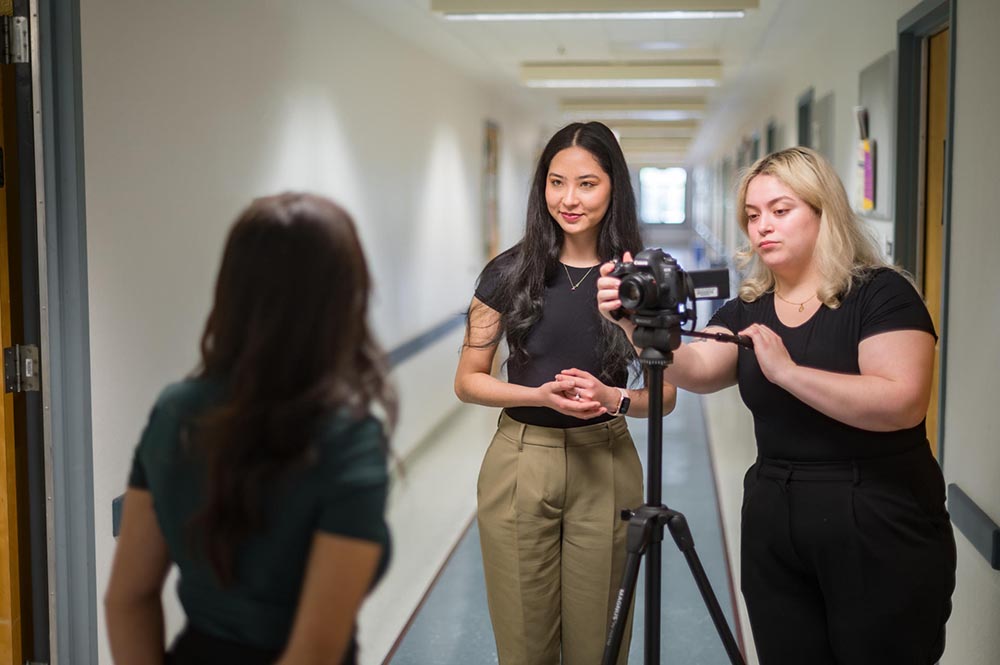
These projects sit within a broader menu of media relations, brand development, social content, graphic and web design, photography, video and event promotion. The value for a small organization is coordination: a writer and a designer can work on the same problem. A client buying several separate pieces still needs those pieces to sound and look as though they belong together.
The city is a client, too
TGC’s work also reaches into public information. Minutes from Chico’s Climate Action Commission record a February 2023 discussion of an electrification outreach campaign partnership with the agency. It is a different communication problem from selling a product: public agencies need residents to understand a subject well enough to engage with it.
Another example appears in First 5 California’s 2017-18 annual report. With support from TGC students, Butte Thrives members developed “Faces of Aces” videos in which local participants discussed adverse childhood experiences and resilience. Here, the production task depended on making room for somebody else’s account of their life.
Campus clients have supplied their own assignments. A December 2010 graduation-initiative report identified work for TGC on brand identity, social media presence and collecting student responses. The same report described an unresolved question about positioning the initiative’s web presence. That detail is useful: producing a page and deciding what it should communicate are separate tasks.
Across these examples, the recurring problem is translation. An organization knows its own work intimately; its audience arrives without that background. TGC’s service is to help turn institutional knowledge into something that can be read, watched, recognized or acted on.
Who gets to run the account?
Chico State says roughly 20 to 25 students are selected each semester. Applicants supply relevant samples; many journalism and PR applicants also complete an editing test. Students manage the agency through a general manager and directors, while the faculty adviser approves published work and answers questions. Most participants spend about 15 hours a week on TGC.
“Agency members are all students and the creative minds behind TGC.”Chico State’s description of the agency
In her client-recruitment description, adviser Janell Bauer explains that small teams bring different skills together over a 15-week semester. The agency’s stated clients include Girls on the Run, KROOD luxury home fragrance and Chico Art Center. TGC also says it takes one pro bono account each semester.
That combination makes the experience more demanding than simply contributing a design to a class project. Somebody has to organize the work across specialties. Former account executive Madison Starobin’s portfolio offers a glimpse of that administrative layer: client meetings, two content calendars, and Basecamp used to assign tasks and manage timelines. Creative work needs a place where the next person can find it.
- 01DefineAudience + purpose
- 02MakeWords + visuals
- 03ReviewClient + adviser
- 04DeliverUsable materials
A bounded assignment gives a changing team something concrete to finish.
The $500 figure needs its date
The economics are unusually visible in old university paperwork. A 2015-16 program review reported average client fees of about $500. It said client income went back into agency operations and an academic scholarship, while the university supplied office space and the department covered the adviser’s teaching assignment. Those were historical arrangements, not a price list for a new engagement.
A later, 2021-22 review described approximately $1,000 to $2,500 in client fees per semester, varying with paying accounts and pro bono work. These are aggregate semester receipts, not per-client prices. Donations and university activity funding provided other support. The expenses were wonderfully practical: phone service, printing, software updates and office supplies.
Historical average client fee.
Not a current service quote.
Cheap creative work still needs electricity, equipment, supervision and time. TGC’s campus setting helps explain how the model can operate. Its facilities description places the agency in Tehama Hall 310, with a workroom and a conference table for client meetings. Alumni donations, client fees and activity funds help supply the office. The support behind the work matters as much as the invoice.
When the field trip disappeared
The 2021-22 review also records a disruption with an educational cost: COVID-19 restrictions had prevented professional site visits. Travel connects students with workplaces and people beyond campus. Losing it removes one of the ways an internship can make a career feel reachable.
The agency’s response was conditional and practical. Its carryover plan allowed for student travel if approved; otherwise, money could go toward equipment such as a laptop for off-site client presentations. This was a proposed use of funds, not evidence that a purchase occurred. It illustrates the choices behind an academic agency: support access to employers, support production capacity, and adjust to what the institution permits.
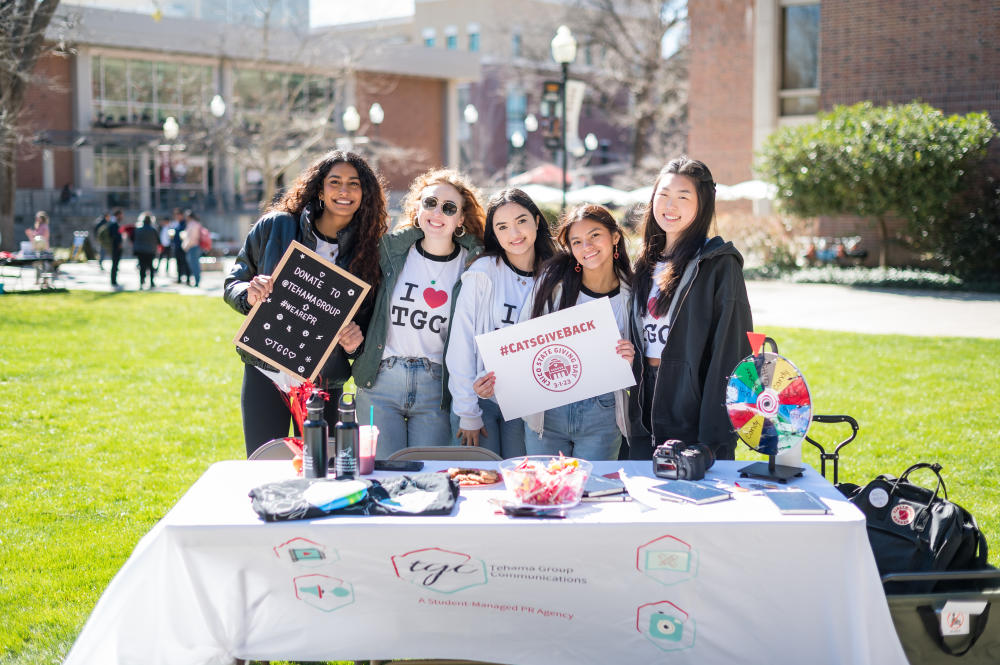
The network keeps its student address
TGC’s connections extend beyond its active client list. Chico State’s 2007 PR Hall of Fame account describes Stacy MacLean Rollo as an early account executive and later general manager. By that account, she went on to run corporate media relations at Gap Inc. Alumni careers give students examples of where this kind of work can lead, without turning an internship into a job guarantee.
The exchange continues through visits and talks. The university lists City of San Jose communications manager Claire Bang and VSC account executive Emma McDermott among TGC’s 2023 guest speakers. In April 2025, anniversary programming included a TGC session on PR careers, networking and industry practices.
Some alumni build agencies themselves. La Fuerza Latina co-founder Marlyn Angeles describes her TGC roles as account executive and public relations director, including fundraising and digital communications work. Her account shows another possible destination for the experience: serving community businesses through an organization of her own.
What a client can borrow from the semester
For a prospective client, the sensible starting point is a bounded assignment. A website’s copy, a media kit or a set of event materials gives everyone something they can inspect. This is an inference from TGC’s documented projects and schedule, not a promise about which work the agency will accept.
The model also rewards a client who can provide background, make decisions and return feedback. Fifteen weeks can pass quickly if nobody owns approval. A useful brief should identify the audience, the desired response, the materials required and the person who will keep using them after the semester. Any small organization can copy that discipline, whatever agency it hires.
The fit is less obvious for work requiring uninterrupted year-round staffing, immediate crisis availability or extensive technical maintenance. Those needs deserve an explicit discussion about coverage. A semester-based team has a different operating rhythm from a permanent in-house department. Buying the right kind of help begins with recognizing that rhythm.
There is a useful distinction between finishing an assignment and leaving a client equipped to continue. A folder of attractive images is easier to maintain if the organization knows which files to use, where the editable versions live and what each piece was designed to accomplish. These are sensible handover questions for any temporary creative team. They matter particularly when the people who made the materials are about to move on.
For students, the corresponding lesson is to describe their own contribution precisely. Ryan identifies website copy; Ellis-Logsdon identifies the brochure and media kit. That specificity makes a portfolio more informative than a general claim of having worked on a campaign. A future employer can ask about the actual choices, revisions and responsibilities behind the finished piece.
TGC offers a meeting point between organizations that need communications and students who need responsibility. Its most persuasive evidence is the work itself: a brochure somebody can hand out, a story somebody can watch, a website somebody can read. The useful question at the end of the semester is simple: what can the client keep using?