Breaking
Taylor Pearson called the death of the 9-to-5 in 2015 — then co-founded a hedge fund managing $10B+ "The End of Jobs" translated into 5 languages — #1 Amazon Bestseller — Top 25 Business Book of 2015 Mutiny Fund: where Black Swan protection meets portfolio theory — "Offense wins games. Defense wins championships." 27,000+ readers of Interesting Times newsletter — Latest: Buddhist phenomenology meets active inference Taylor Pearson called the death of the 9-to-5 in 2015 — then co-founded a hedge fund managing $10B+ "The End of Jobs" translated into 5 languages — #1 Amazon Bestseller — Top 25 Business Book of 2015 Mutiny Fund: where Black Swan protection meets portfolio theory — "Offense wins games. Defense wins championships." 27,000+ readers of Interesting Times newsletter — Latest: Buddhist phenomenology meets active inference
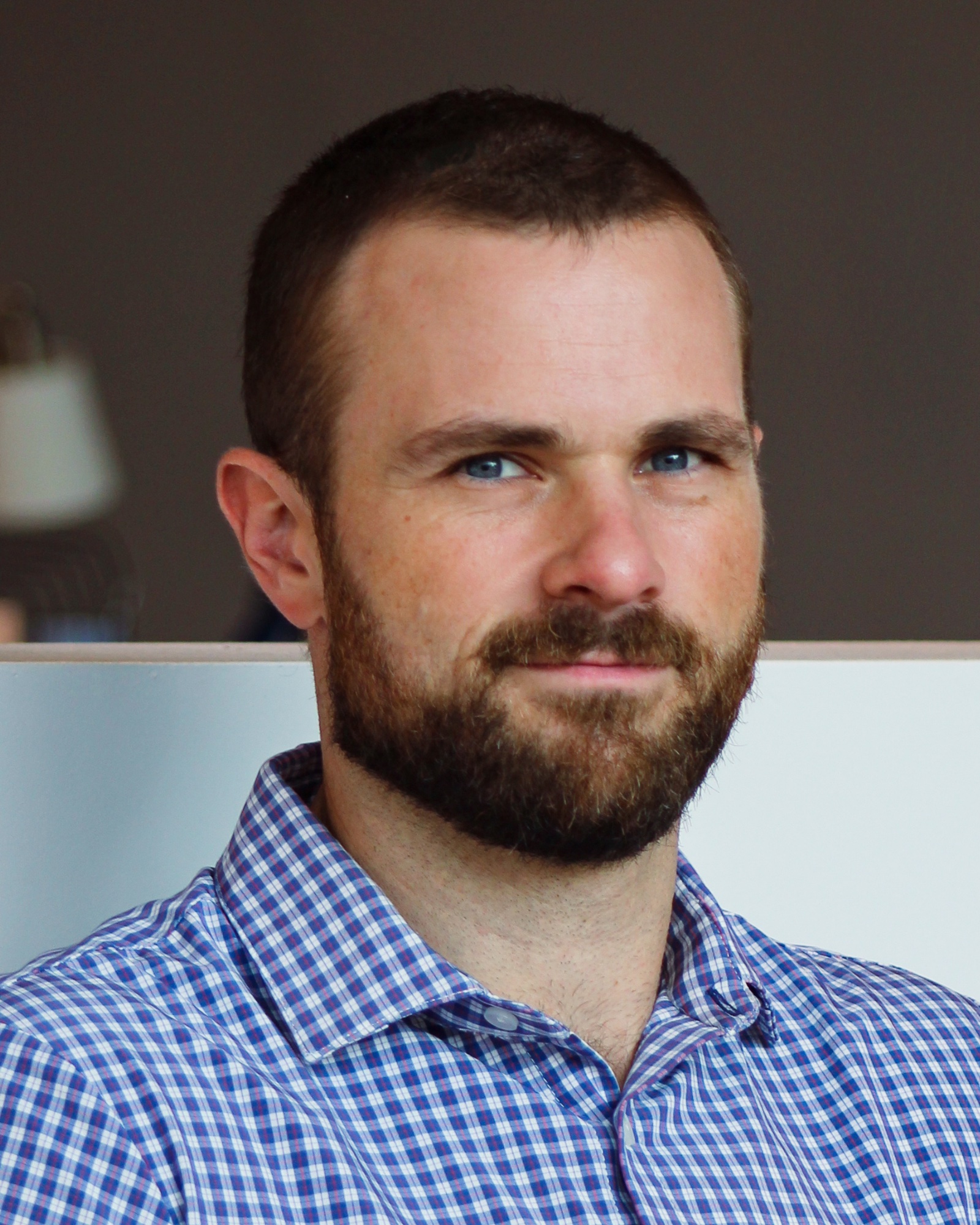
Taylor Pearson - CEO of Mutiny Fund, author of The End of Jobs
Founder • Author • CEO

Taylor Pearson

The man who said your job was riskier than starting a company - then built a hedge fund to prove it. Memphis to Argentina to Austin, one cold call at a time.

CEO of Mutiny Fund. Author of the book that told a generation to quit. Writer of the newsletter 27,000 people actually read. Former college football lineman who once won the Brazilian Super Bowl.

Mutiny Fund The End of Jobs Long Volatility Complex Systems Interesting Times Newsletter Austin, TX
$10B+ AUM via sub-advisors
27K+ Newsletter subscribers
5 Languages translated
154+ Essays published

The Guy Who Predicted the End of Jobs - While He Was Broke

In 2013, Taylor Pearson was cold-calling digital marketing companies in Memphis, trying to convince someone - anyone - to pay him minimum wage. He had a History degree from a small Alabama college, fresh memories of marching for Bolivian workers' rights in Argentina, and zero industry connections. He made a furniture-ranking website as a demo. It worked. Someone hired him.

Two years later, he published The End of Jobs. The book argued - with statistics, systems theory, and some well-placed Nassim Taleb citations - that traditional employment had become the riskier bet. That the knowledge economy was dead. That technology and globalization had already eaten the safe, predictable career. The timing was impeccable. So was the thesis. The book hit #1 on Amazon across four categories, got translated into Chinese, Japanese, Korean, and Thai, and made Inc. Magazine's Top 3 list for startup books.

He then spent the next decade proving himself right. Not by accident - by design.

Today, Taylor Pearson is CEO of Mutiny Fund, a multi-strategy long volatility and tail-risk hedge fund he co-founded with Jason Buck. Their sub-advisors manage over $10 billion in client assets. The fund's core argument will feel familiar to anyone who's read the book: most portfolios are dangerously exposed to the thing everyone assumes is safe. The right move is to build asymmetric defenses before you need them.

The through-line from "jobs are riskier than you think" to "your stock-heavy portfolio is fragile" is not a coincidence. It's the same contrarian insight applied to two different domains. Pearson has been running this play since he was 22 years old in Argentina, watching the world's economic consensus fall apart in real time.

He also writes. Every month, his Interesting Times newsletter lands in 27,000+ inboxes. The title comes from the apocryphal Chinese curse: "May you live in interesting times." Recent issues have connected Buddhist phenomenology to active inference theory, examined AI's relationship to genuine novelty, and questioned what we mean when we say we understand something. The newsletter reads like the syllabus for a graduate seminar that nobody in academia would approve.

The resume is fun. But the real story is in the method: a kid from Memphis who kept going somewhere new, kept reading the next weird book, kept betting that the contrarian analysis was right - and kept being correct often enough to matter.

What was once risky is now safe, and what was once safe is now risky. - Taylor Pearson, The End of Jobs (2015)

The Mutiny Fund name deserves a moment. Mutiny is what happens when the crew disagrees with the captain's course - and knows the ship is headed for rocks. Pearson and co-founder Jason Buck, the fund's CIO, watched the 2010s bull market inflate portfolio concentrations that would look brutal in a drawdown. Their answer wasn't to predict when the drawdown would come. It was to build a portfolio that benefits from volatility itself, regardless of direction. Black swans, tail risks, the unknown unknowns - Mutiny wants those on the asset side, not the liability side.

The fund offers three main strategies: a pure Volatility Strategy for black swan protection, the Cockroach Portfolio for all-weather allocation, and the Defense Strategy that pairs volatility with commodity trend following. The underlying logic is dead simple: offense wins games, defense wins championships. Most investment strategies are all offense. Mutiny builds the defense.

It's the same framework Pearson used when he quit a stable career path before he had one. The same framework he used when he met his future business partner through a Twitter thread about stablecoins in 2018 and decided to build a hedge fund. Frameworks travel. People who find good ones apply them everywhere.


The End of Jobs
Money, Meaning and Freedom Without the 9-to-5
Taylor Pearson

A #1 Amazon Bestseller That Arrived Right on Time

Published in 2015, The End of Jobs made an uncomfortable argument: knowledge work was being commoditized faster than anyone wanted to admit. Not just factory work. Your job too. The knowledge economy had already peaked - what came next was the entrepreneurial economy, where the people who built systems would win and those who merely followed them would struggle.

The argument landed because it was backed by data (globalization, technology costs, remote work trends) and framed through a framework most readers hadn't encountered: complexity theory. The economy wasn't just "changing" - it was evolving in a non-linear, systems-driven way that made linear career planning actively dangerous.

Derek Sivers, founder of CD Baby, read it and wrote: "I just spent far too long on TaylorPearson.me, and really love your approach to life." WSJ bestselling author James Altucher endorsed it. It sold tens of thousands of copies across five languages and still circulates in entrepreneurship communities a decade later.

#1 Amazon Bestseller Inc. Top 3 Startup Books Top 25 Business Books 2015 5 Languages

Mutiny Fund: Building the Defense While Everyone Else Runs Offense

Volatility Strategy
Pure long volatility and tail-risk protection. Designed to profit from the market events that wipe out traditional portfolios. The "what happens when everything breaks" position most investors don't have.
Cockroach Portfolio
The all-weather allocation. Named for the insect that survives everything. Combines uncorrelated return streams to hold up in inflation, deflation, growth, and collapse - because nobody knows which comes next.
Defense Strategy
Long volatility plus commodity trend following. The flagship expression of Mutiny's core thesis: pair the black swan protection with a trend-following engine that benefits from sustained directional moves. Defense and counter-attack.

"Offense wins games. Defense wins championships." Pearson and Jason Buck (CIO) co-founded Mutiny on the observation that most investors - and most portfolios - are built entirely for bull market conditions. Their sub-advisors now manage over $10 billion in client assets.


From Memphis to Markets: A Timeline

2008
Age 19. The financial crisis hits. Pearson watches the supposedly safe economic order collapse in real time. Files it away. The question isn't "when will it recover" - it's "what was actually true all along."
2011-2012
Graduates with a History degree from a small Alabama college. Goes to Brazil to teach English. Moves to Cordoba, Argentina. Studies at the Social Justice Department. Marches for Bolivian workers' rights. Wins a semi-pro football championship - the local "Brazilian Super Bowl."
2013
Returns to Memphis. Cold-calls digital marketing companies until someone bites. Gets hired at minimum wage. Builds a college furniture ranking website as his demo reel. Teaches himself SEO, WordPress, and digital marketing on the job.
2013-2014
Apprentices under Dan and Ian of the Tropical MBA podcast. Key lesson internalized: "Everything being crazy and out of control, and that being the norm." Attends his first Bitcoin meetup in Austin, spring 2014. Co-founds GetApprenticeship.com. Tries to shut it down for a year. Can't - it keeps growing.
2015
The End of Jobs publishes. Amazon #1 bestseller in four categories. Inc. Magazine Top 3 startup book. Top 25 Business Book of the year. Speaks at NYU Business School, TEDx, George Washington University. Newsletter goes from ~250 to 15,000 subscribers.
2016-2018
Writes extensively about cryptocurrency and blockchain. Begins work on Markets Are Eating the World. In 2018, collaborates with Jason Buck on a Twitter thread about stablecoins. Recognizes a business partner when he finds one.
2019-2020
Co-founds Mutiny Fund with Buck. Launches as a commodity pool operator. Structures the fund around long volatility and tail-risk hedging - the exact opposite of what most investors hold.
2024-2025
Sub-advisors surpass $10B+ in AUM. Defense Strategy refined. Newsletter reaches 27,000+ subscribers. 154+ essays published. Still reading 12 books at once. Still adding to that 1,612-item to-read list.

Taylor Pearson in His Own Words

Entrepreneurship is connecting, creating, and inventing systems - be they businesses, people, ideas, or processes. A job is the act of following the operating system someone else created.
There's a real gap between what feels emotionally risky, and what is actually probabilistically risky when you run the numbers.
If you do things that are safe but feel risky, you gain a significant advantage in the marketplace.
Globalization means you are no longer competing to be more knowledgeable than the person down the street, but more knowledgeable than seven billion people around the world.
Reality has a surprising amount of detail.
While our first instinct is usually attempting to push harder, it's more valuable to figure out where to push.
You don't have 100% agency over everything, but you almost might as well act as if you do.
We must expect anything worthwhile to take a long time.
I don't think of work as work or play as play. It's all just living.

Monthly Newsletter Interesting Times: Buddhist phenomenology, ergodicity, AI, and whatever he read last Tuesday.
Read the Archive

What Makes Taylor Pearson Tick

In 2014, Pearson tried to shut down GetApprenticeship.com. He had other projects. It wasn't generating meaningful revenue. The rational move was to kill it. He spent a year trying. The site kept generating organic traffic. Users kept signing up. Nobody had marketed it. It just... worked. He eventually left it running. The lesson: systems that self-sustain are worth more than your intentions about them.

This is a recurring pattern. Pearson builds things, then watches carefully to see which ones want to survive. The ones that do, he doubles down on. The ones that don't, he lets go without drama. His career reads less like a plan and more like a series of well-observed experiments.

The football background matters more than it sounds. An offensive lineman doesn't score points. Doesn't carry the ball. Doesn't appear in highlight reels. His job is to create space - to protect the quarterback, to open lanes, to absorb pressure so the play can develop. Pearson has described Mutiny Fund in almost identical terms. His role as CEO is to create space for the investment strategies to work. Defense creates the conditions for offense.

He played this role in Brazil too - literally. The story of winning the Brazilian semi-pro football championship is the kind of thing that sounds made up. College-educated American moves to South America, joins a local football team, competes for the championship. Except it happened. This is someone who, when dropped into an unfamiliar environment, asks "what game is being played here?" and figures out how to win it.

The intellectual breadth is real and it shows in the writing. His newsletter covers territory that most finance-oriented writers won't touch: John Boyd's OODA loop as applied to portfolio management; ergodicity as the missing concept in most investment frameworks; Iain McGilchrist's divided brain theory as a lens on why experts get stuck. The references are not decorative. They do actual work in the arguments.

He reads 12 books simultaneously. Has 1,612 on his to-read list. The reading is not productivity theater - it's the research method. "Reality has a surprising amount of detail" is his most cited observation, and it shows. The essays are dense with specific examples, specific numbers, specific people. He doesn't write in generalities because he doesn't think in generalities.

For the first time in history, we've reached a point where humans' natural drive to strive and grow by working on interesting problems aligns with what the market demands. - Taylor Pearson

Traits That Define the Work

Systems Thinker Contrarian Intellectually Voracious Globally Curious Self-Taught Long-Term Oriented Community Builder Philosophically Broad Quietly Competitive Anti-Fragile
The Endorsements
"I just spent far too long on TaylorPearson.me, and really love your approach to life."
- Derek Sivers, Founder of CD Baby
The Details That Make the Story
🏈
Brazilian Super Bowl Won a semi-pro football championship in Brazil. Yes, really. Memphis-born offensive lineman, playing for a South American team. This is not a metaphor.
📚
1,612 Books Waiting 507 books read on Goodreads. 1,612 on the to-read list. Currently reading 12 at once. This is not a hobby. This is the research method.
🍴
The Unkillable Startup Spent a year trying to shut down GetApprenticeship.com. No marketing, no resources, no attention. It kept growing anyway. He gave up and left it running.
🔗
Twitter to $10B Met hedge fund co-founder Jason Buck through a Twitter collaboration on a stablecoin article in 2018. They launched Mutiny Fund. Sub-advisors now manage $10B+.
Golf as Meditation Uses golf not to compete but to recharge. The game as a moving meditation. Former lineman finds stillness on a course. Make of that what you will.
Interesting Times Named his newsletter after an apocryphal Chinese curse: "May you live in interesting times." It's less a newsletter and more a standing invitation to pay attention.
🌍
8 Countries Before 30 Tennessee, Alabama, Brazil, Argentina, Vietnam, Thailand, California, New York, Texas. Lived and worked in each. Not tourism. Actual residency.
💻
First Bitcoin Meetup: 2014 Austin, spring 2014. Years before the mainstream boom. Pearson was at the meetup before Bitcoin had a cultural narrative to attach to.


Share