Tania Luna once found a penny on the floor of a homeless shelter in New York and felt rich. She was a child, newly arrived from Ukraine, and the coin belonged to a country whose possibilities she was still trying to understand. Years later, she would tell the story on a TED stage. The penny had acquired an excellent return: it was still giving her something to think about.
There are more conventional places to begin a founder’s biography. A funding round. A crowded office. The first important customer. Luna’s story offers a coin, then a company that sold surprises, then a business book whose protagonist is a squirrel. Anyone searching for a straight career ladder should probably bring a map of the woods.
She co-founded LifeLabs Learning and served as its co-CEO. She writes about leadership, researches human behavior, makes films, and helps organizations that work for animals. Across these projects, she keeps returning to the space between what people expect and what becomes possible when they loosen their grip.
A penny with purchasing power
Luna moved to the United States at six with her mother, father, grandmother, older sister, and their dog. Her family sought asylum. For a time, their New York address was a homeless shelter, which the young Luna understood to be a hotel. The adult description and the child’s experience occupied the same building.
Her later reflections on leaving Ukraine resist the tidy immigrant success story. The move involved the promise of opportunity, ordinary shortages back home, distrust of government, and the peculiar glamour America held from a distance. Blue jeans were part of the attraction. History can arrive dressed quite casually.
The penny story works because she lets the child’s scale of value stand. A small discovery could feel enormous. The adult listener knows the circumstances were difficult; the child had found treasure. Both things remain true. That ability to hold more than one perspective would become useful in a career spent asking people to reconsider their first interpretation.

The company that sold the unknown
By high school, Luna was working after classes for a video market research company, interviewing teenagers about brands and shopping. One remembered assignment involved the surprisingly contentious question of which way toilet paper should roll. Even before her leadership career, human behavior was proving capable of turning the mundane into a debate.
She worked full time while attending Hunter College, graduated in 2008, and began teaching there. She had imagined becoming a linguist, then found herself drawn to curriculum design. Teaching continued until 2014, alongside other work and businesses. Building a lesson and building a company both required attention to what people would actually do with an idea.
In 2008, she also co-founded Surprise Industries. The proposition was refreshingly literal: customers could buy an experience without knowing what it would be. Luna, who had once disliked surprises, made the unknown her subject and her merchandise.
That reversal matters. Her interest grew from something she had needed to learn herself. Designing an unexpected experience meant thinking about anticipation, trust, and how much uncertainty a person was willing to enter. A surprise business sells a temporary surrender of the itinerary. The customer still has to believe that someone has thought about the trip.
Four hours over bubble tea
Then came LeeAnn Renninger. Their companies approached each other during the same week: one inquiry concerned a workshop on surprise psychology, another concerned using a class as a surprise experience. The overlap was sufficient reason to meet.
They went for bubble tea in Brooklyn. What Luna remembers as a planned half-hour conversation became roughly four hours. By the end, they had decided to write a book together. It is an unusually good argument for leaving some space after a meeting.
The collaboration produced Surprise: Embrace the Unpredictable and Engineer the Unexpected, published in April 2015. The book examined how people encounter and use surprise in work, relationships, and daily life. Its subject was larger than a good party: what happens when the world refuses to follow the prediction in our heads?
Over time, their businesses merged, and Luna’s work moved increasingly toward companies. The interest in experience remained. Now the question included how to make a lesson useful after the workshop had ended and everyone had returned to a calendar full of actual problems.
An editorial map of the questions running through her books and work.
A manager is a collection of habits
LifeLabs Learning gave that question an organizational home. Luna and Renninger’s The Leader Lab, published in 2021, drew on their research and experience training managers. Its promise was practical: examine the skills behind effective management closely enough that other people could learn them.
Consider praise. Telling someone they are a good communicator may be pleasant, but it leaves them guessing about what to repeat. Luna has described the value of making such feedback more specific: identify the questions the person asked, or the context they supplied. A compliment becomes more useful when it contains something observable.
It is a small example of a larger discipline. Words such as leadership and communication can become so broad that almost any behavior fits inside them. Looking at a particular action gives a learner somewhere to begin. A manager can practice a question; practicing a reputation is rather harder.
By March 2023, LifeLabs announced an agreement to be acquired by Atairos. Its announcement described work reaching more than 300,000 managers across more than 2,000 organizations. Those were company figures at a particular moment, a measure of how far the workshop business had traveled.
managers reached across more than 2,000 organizations
Historical company figures, announced with the Atairos acquisition agreement.When the plan stopped working
Scale had not protected the company from uncertainty. By 2020, Luna has written, it had about 100 employees and 1,000 clients. Then clients’ budgets disappeared while expenses remained, including offices the team could no longer use. Layoffs were to be a last resort. Checking the bank account became a repeated task.
In recounting that period, she has described trying to make every day count as if each were the company’s single chance to recover. The approach made every choice carry too much weight. Eventually, the team allowed more time to step back, imagine, and experiment.
New services and free resources for clients followed. In her account, 2020 became the company’s best year to that point. The qualification matters: this was her description of that year, rather than a permanent guarantee attached to a management technique.
The experience also put pressure on the leader’s role. When circumstances change this quickly, having the title does not supply the answers. Other people need room to notice, suggest, and act. For a researcher interested in surprise, this was an expensive setting in which to encounter it.
“Be a cultivator, not a collector.”
Tania Luna, on developing people
The branch manager is an actual squirrel
In Lead Together, published in September 2023, Luna gave these questions a fictional workplace. Sam Squirrel is a branch manager at Nuts for You, Inc. A forest recession is approaching, and his familiar methods of directing everyone are producing poor results. The job title is a pun with responsibilities attached.
The book draws on organizational scholar Mary Parker Follett’s thinking about developing power together. Through Sam, Luna explores a workplace in which leadership can increase other people’s capacity to participate. Authority becomes something to examine, rather than a piece of furniture that came with the office.
Fiction gives the argument room to move. Readers can recognize a managerial habit in a squirrel before deciding whether they have seen it in themselves. Sam’s ambitions and mistakes provide a little distance from the embarrassment of being directly instructed. An acorn distribution company is a surprisingly hospitable place for an uncomfortable thought.
The book was recognized in Porchlight’s 2023 Leadership & Strategy award selections. Luna directs all its proceeds to Scarlet Spark. The story’s concern with expanding participation therefore has a practical destination beyond its last page.
Scarlet’s expanding circle
Scarlet was Tania and Brian Luna’s first dog. She became a point of connection with other people in New York and, eventually, the namesake of Scarlet Spark. Their home also became a micro-sanctuary for rescued animals. A relationship with one dog widened into a set of commitments.
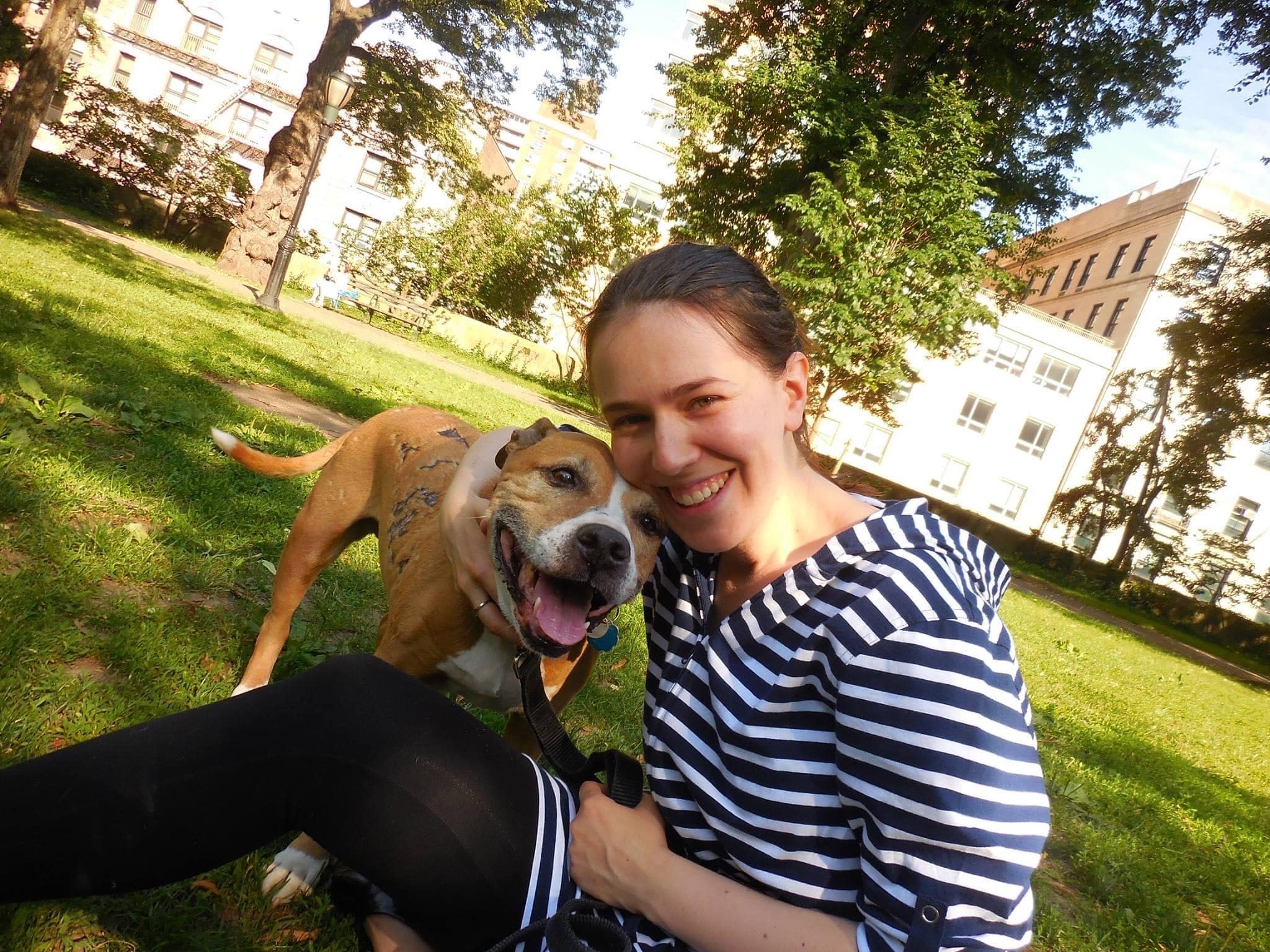
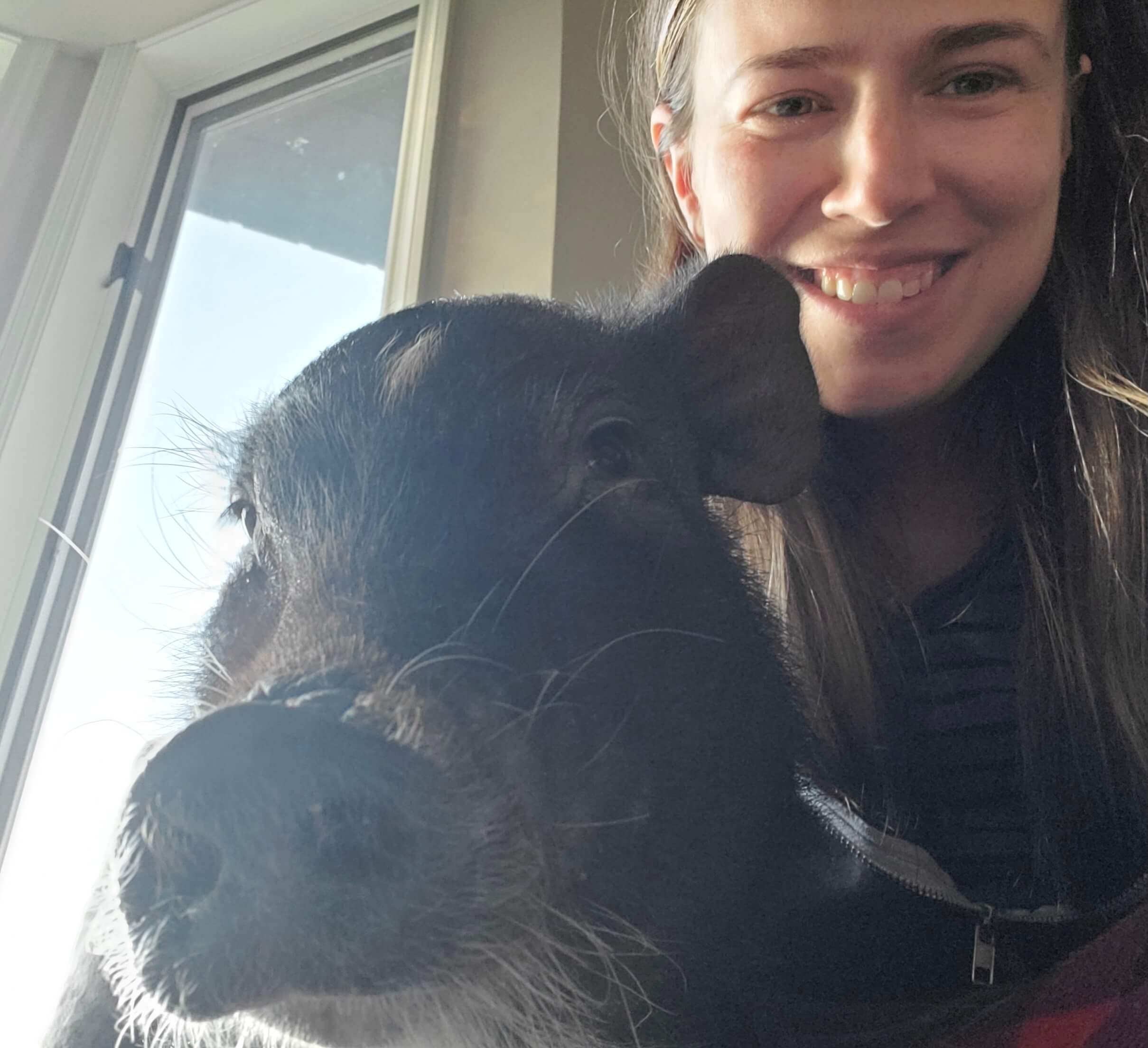
Scarlet Spark brings consulting, coaching, training, and community-building to organizations helping animals. Luna is a co-founder, consultant, and coach there. The work carries her management experience into organizations whose missions still depend on people coordinating their efforts.
The home menagerie has its own literary ambitions, at least in the naming department. Luna’s animal roster includes The Impossible Meatball Macho Man Luna. Several residents have multiple nicknames. A household can apparently support both a clear mission and a generous approach to nomenclature.
Her storytelling extends to filmmaking, too. She has written and directed shorts, and her mockumentary The Last Rodriguez streams on Amazon. The books, films, workshops, and sanctuary make a varied list. Each gives her another way to pay attention to how lives intersect.
Luna describes a desire for leadership to move toward collaboration and shared power. That aspiration asks something concrete of a person accustomed to responsibility: make it possible for others to carry some of it. The next useful idea may arrive from somewhere the leader has not thought to look.
Once, the unexpected thing was a penny on a shelter floor. Later, it was a conversation that ran four hours, a business that changed direction, a dog who helped strangers meet. Luna keeps finding reasons to leave a little room in the plan.