Russell Westbrook had a habit. When he walked into a basketball arena, he carried a Tumi toiletry bag. Tammy Brook noticed. In a business that can spend a fortune manufacturing a celebrity’s affection for a product, here was an athlete already carrying the evidence. Brook contacted Tumi. A small piece of luggage became the beginning of a larger conversation about travel, Oklahoma City and the person inside the uniform.
The resulting partnership included a short documentary and a limited-edition collection in 2017. There is something pleasingly practical about this origin story. A toiletry bag has no entourage. It does, however, tell you what someone actually uses. Brook’s contribution was to recognize that a detail small enough to overlook could carry a commercial idea.
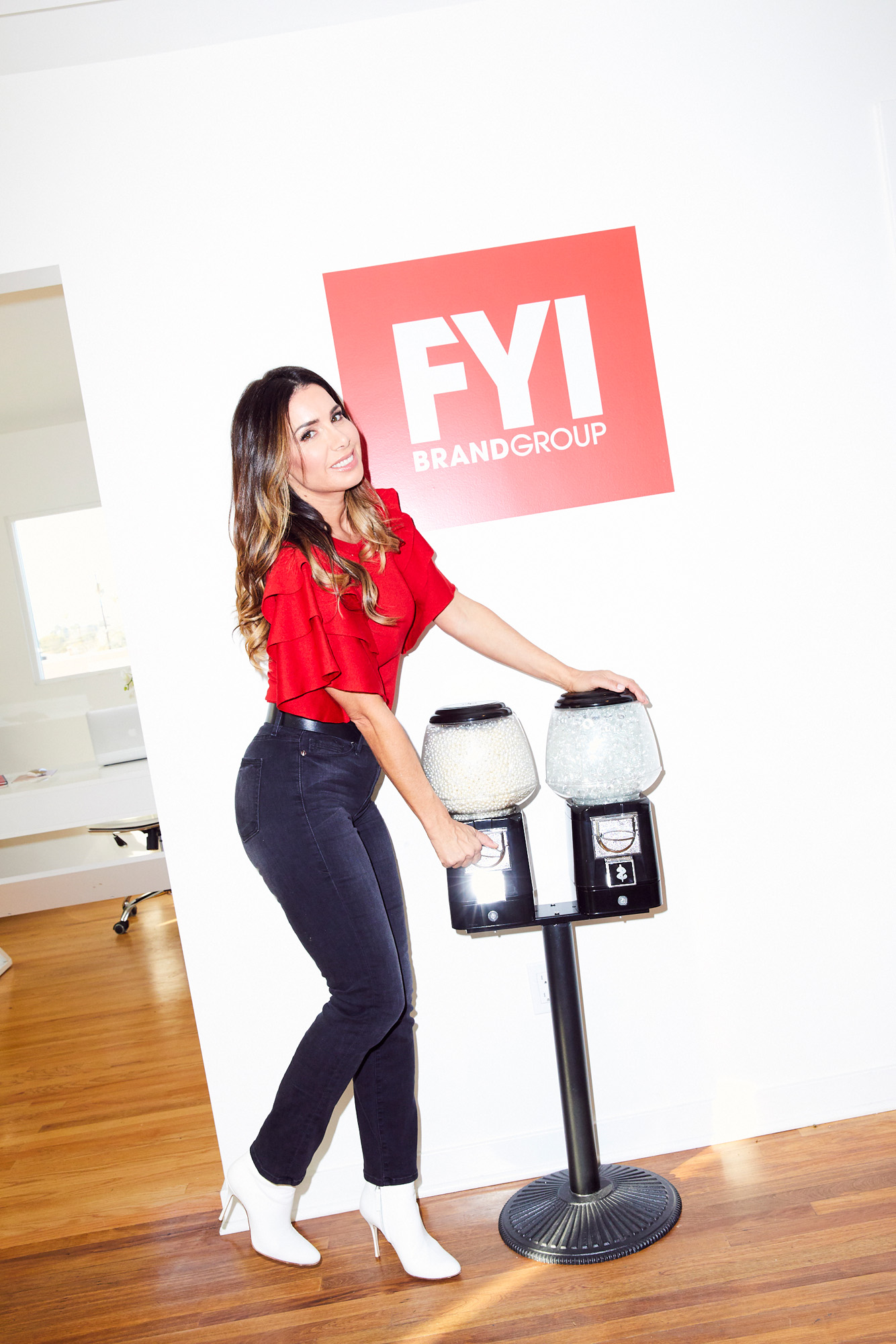
That instinct runs through her work as founder and CEO of FYI Brand Group. She looks for the interests that make a public figure more particular: the basketball player’s fashion, the rapper’s taste in art, the musician’s desire to help students. Then comes the work of finding someone who can help that interest take a public form.
A career that kept escaping its job title
Brook grew up in Brentwood, California, in a family with Israeli roots. Her professional education took her into music: she worked at Empire Management with Patrick Moxey and the hip-hop group Gang Starr. She founded FYI in 2001. The company’s early identity was publicity; the assignments soon gave her reasons to work beyond it.
By 2006, an entertainment division was taking shape. Her work with producer Jonathan “J.R.” Rotem connected her to the launches of Sean Kingston and Jason Derulo. Fashion and sport entered the picture too. By 2010, the agency was broadening its strategy business, with operations in New York and Los Angeles. A public identity could now be developed across several different settings.
Some early assignments make the breadth less abstract. In 2005, FYI helped bring MTV Cribs home furnishings to JCPenney. The television fantasy of somebody else’s impressive house had found its way into a department store. Brook also worked on Little Ballers, a documentary following four young Brooklyn basketball players. Selling a room and following a team required different skills; both involved carrying a story into another format.
Her language for that wider remit could be cheerfully domestic. “We sell the house,” she said in 2015. It is a useful sentence from someone who once promoted home furnishings. A press placement might be one room. She wanted to work on the floor plan.
The business keeps widening
- 2001Founds FYI
- 2017Westbrook x Tumi; Travis Scott x Saint Laurent
- 2018Relaunches as FYI Brand Group
- 2019Formal social-impact division
- 2026Billboard Sports & Music Power Players recognition
The record you could hold
Consider the distance between a song streamed on a phone and a vinyl record in a leather sleeve. The first travels almost without friction. The second asks to be kept. For a strategist working with musicians and fashion houses, that difference offers several possibilities: a physical object, a design collaboration and an occasion to gather.
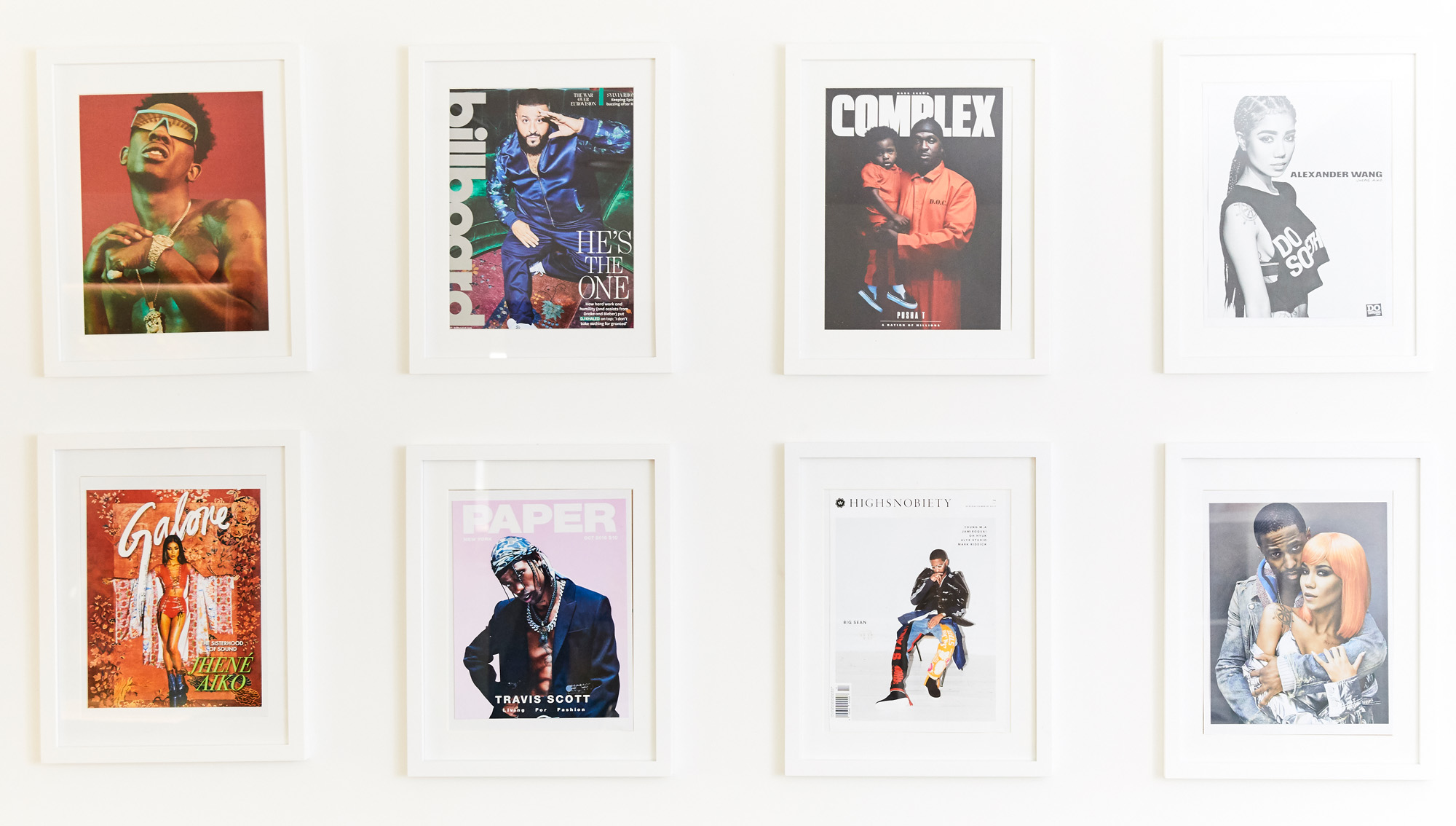
Brook helped put Travis Scott together with Saint Laurent for a project involving vinyl specialist 12on12 and Flaunt. Scott already had a relationship with the fashion house. The collaboration gave that connection a new form, through a curated record associated with Scott and Saint Laurent’s creative director, Anthony Vaccarello.
The release arrived at Colette in Paris in December 2017, during the store’s final days. There were 500 copies. Scott performed in the shop and signed records; the event brought the music, the object and the fashion audience into one room. It was an unusually literal example of a record having a setting.
For Brook, the attraction of a partnership lies partly in whether it reveals something credible about the client. A luxury name alone cannot supply that. Scott’s existing relationship with Saint Laurent mattered. So did an audience interested in owning something tangible from an artist whose music it could already hear whenever it liked. The fit had to survive a little scrutiny.
One collaboration, several ways in
2017 vinyl release
When the phone call changes the assignment
In February 2019, a call from attorney Dina LaPolt presented Brook with a very different problem. Her client 21 Savage had been detained by immigration authorities. It was Super Bowl Sunday. By the game’s second quarter, she had brought immigration advocates and social-justice organizers into a discussion about a coordinated response.
The #Free21Savage coalition involved people with expertise far beyond entertainment publicity. Brook helped mobilize them while the story was moving quickly and Grammy week was approaching. The campaign used public statements, artwork and organizing to direct attention toward the immigration issues surrounding his detention.
A coalition is a revealing test of a communications business. The participants have their own responsibilities and constituencies. Attention must be connected to expertise. Brook’s role depended on relationships, speed and an ability to get different organizations working toward a common immediate objective. The familiar tools of her working day were being used under very different pressure.
The following May, FYI announced a dedicated social-impact division. It gave a formal structure to work already taking place around its clients. Brook had built a company accustomed to bringing people together for releases and partnerships. The same company was making room for campaigns whose objectives reached beyond a purchase.
“I’ve always been an activist.”
Tammy Brook, 2021
What happens after people pay attention?
21 Savage’s Bank Account initiative supplied another answer. His interest in financial literacy became a program for young people, including education about money and access to bank accounts. The subject was specific enough to be useful. A student learning about saving has a different relationship to a campaign from a fan simply viewing an announcement.
Education appears elsewhere in FYI’s work. DJ Khaled’s collaboration with Get Schooled included a Snapchat college tour that reached more than 20 campuses. Jhené Aiko’s Penny’s Pen campaign focused on literacy. French Montana worked on the We Are The Dream initiative around immigration and DACA. These projects gave different artists different reasons to speak, rather than requiring everyone to deliver an interchangeable message.
Brook has described her family history as part of her interest in human rights: she is the daughter of Israeli immigrants and the granddaughter of Holocaust survivors. In discussing her work with French Montana, she has also emphasized the significance of an Israeli and an Arab working together. The relationship itself could carry an argument about cooperation.
That is a more personal ambition than collecting another logo for an agency presentation. She has spoken about wanting to create unity through the platforms available to her clients. There is still practical work beneath that aspiration: identify the issue, find partners who understand it, and make participation possible. A moving statement needs somewhere to go once it leaves the screen.
The suitcase has a strategy, too
Brook’s advice about dressing for work is notably attentive to logistics. In a 2017 essay, she recommended studying the day’s schedule before choosing an outfit, allowing for the audience and the possibility of going straight from meetings to an evening engagement. Layers, spare flats and a sufficiently large bag all had their place.
She also suggested photographing outfits before a trip. The point was to make decisions before the morning rush and avoid packing too much. Someone who spends her professional life considering how people appear in public had applied the same advance planning to her own suitcase. Fashion could be expressive without becoming a daily administrative emergency.
Her smaller working habits are similarly concrete. In 2020, she said she recorded notes on her phone throughout the day. She named The Go-Giver as a book that had influenced her thinking about business and supporting people. Asking mentors for guidance had been a turning point. These are modest details, which makes them useful: a note can preserve an idea long enough for a conversation to follow.
There is an appealing complication in the phone’s role. It stores the notes and keeps the relationships close, but she has also described putting it away to concentrate on an important task. Even the device that makes a communications career possible sometimes needs to be removed from the meeting.
Outside work, she has described arranging flowers, visiting contemporary art exhibitions and cooking Mediterranean food. Those interests make a quieter companion to the client launches and crowded events. Her 2018 description of home life included time with friends around a fire pit. The person arranging a partnership between several businesses also enjoys arranging stems in a vase, an undertaking with rather fewer conference calls.
Still crossing the court
In 2018, the business relaunched as FYI Brand Group with five divisions. The name reflected a widening set of assignments. In 2026, Brook appeared on Billboard’s Sports & Music Power Players list, recognition that fits the territory she has spent years working across.
Her agency highlights a partnership between Mike WiLL Made-It and NBA on ESPN that put original music into a promotional campaign, with a debut on the jumbotron before a Lakers game. Its more recent sports portfolio includes Metro Boomin’s 2024 NBA Finals campaign and work connecting musicians to baseball, football and wrestling. The arena now offers several kinds of stage.
FYI’s current social-impact portfolio also includes reading rooms associated with Westbrook and financial-literacy programming involving 21 Savage, Leading By Example and Wealthy Habits. The names connect back to earlier chapters of Brook’s career. The assignments continue to change around them.
Return to the toiletry bag. Brook’s useful observation was that an ordinary habit could open a conversation worth having. Years of publicity, partnerships and organizing have given her more people to call when she spots one. The interesting part still begins before the call, with the detail someone else might have walked past.
Keep following the connections
Profiles, conversations & projects