Tamaz Georgadze once had an unusually literal job in the movement of money: he carried the paperwork. Colleagues in Germany wanted savings accounts in Georgia, where euro and dollar deposits offered attractive rates. Georgadze helped with identity checks and transported documents between the countries. A banking inconvenience had acquired a human courier. The future co-founder of Raisin was getting a close look at the distance between a good offer and an account someone could actually open.
It was around the financial crisis of 2008. In his consulting work, he could see banks becoming eager for retail deposits as wholesale funding dried up. In private, he could see savers willing to go abroad for a better return. Each side wanted something the other had. Between them sat forms, borders and a great deal of bother.
There is a modest pleasure in this origin. Nobody needed to invent a new desire. People already wanted more interest on their money. Banks already needed funding. Georgadze had encountered a practical obstruction, and he had the professional background to recognise its commercial shape. The courier service would eventually become software. The irritation would become a company.
His story also complicates the usual account of a founder leaving a career behind. Much of what he would need came from that career: knowledge of banks, comfort with negotiation, and an understanding that a financial institution does not become a partner merely because somebody has made a persuasive slide. The work before Raisin would travel with him.
A teenager with an economics degree
Georgadze is from Kutaisi, in western Georgia. His education ran ahead of the usual timetable: he finished high school at 12 and completed studies in international economics at Tbilisi State University at 15. These are startling ages to set beside qualifications that most people acquire considerably later. Yet the more interesting detail is what followed those early accomplishments.
In 1994 and 1995 he worked in the Georgian president’s Foreign Relations Department. Gela Charkviani was a mentor during that brief period. One task involved drafting correspondence in the name of Eduard Shevardnadze; George H. W. Bush even replied. Most teenagers discover the peculiar difficulties of writing to adults. Georgadze was learning them on presidential stationery.
He arrived in Germany at 16 to learn the language and pursue academic work. His qualifications include a doctorate in agricultural economics and an honours law degree from the University of Giessen. His later board biography also records a doctorate in economics from Tbilisi. Economics and law would both have practical uses in a business whose central promise depended on crossing jurisdictions.
His banking education continued at McKinsey. Over roughly a decade, he advised institutions across countries including Germany, Switzerland, Georgia and Vietnam, becoming a partner in 2009. Deposits, investment products, strategy and operations were part of his work. The view was international, but the problems were often local: how a particular bank acquired customers, funded itself and organised its business.
The basement came with cake
The decision to start a business had a less formal setting. On a holiday in the Georgian mountains around 2007 or 2008, Michael Stephan told Georgadze he wanted to build a company and asked whether he was interested. They explored ideas after the trip. The savings proposition attracted encouraging reactions from friends and early backers.
Stephan, Frank Freund and Georgadze became Raisin’s founding trio. The company was established in late 2012; the platform went live in 2013. Those dates mark different kinds of work. Incorporating a business is one event. Getting a cross-border financial service ready for customers requires technology, legal arrangements and patient conversations with regulators.
Their first workplace was the basement of Stephan’s grandmother in Munich. Office rents were expensive, and they preferred to put money into the business. Reception on the phone was poor. Fresh cake arrived reliably. It was an imperfect telecommunications strategy with an excellent catering department.
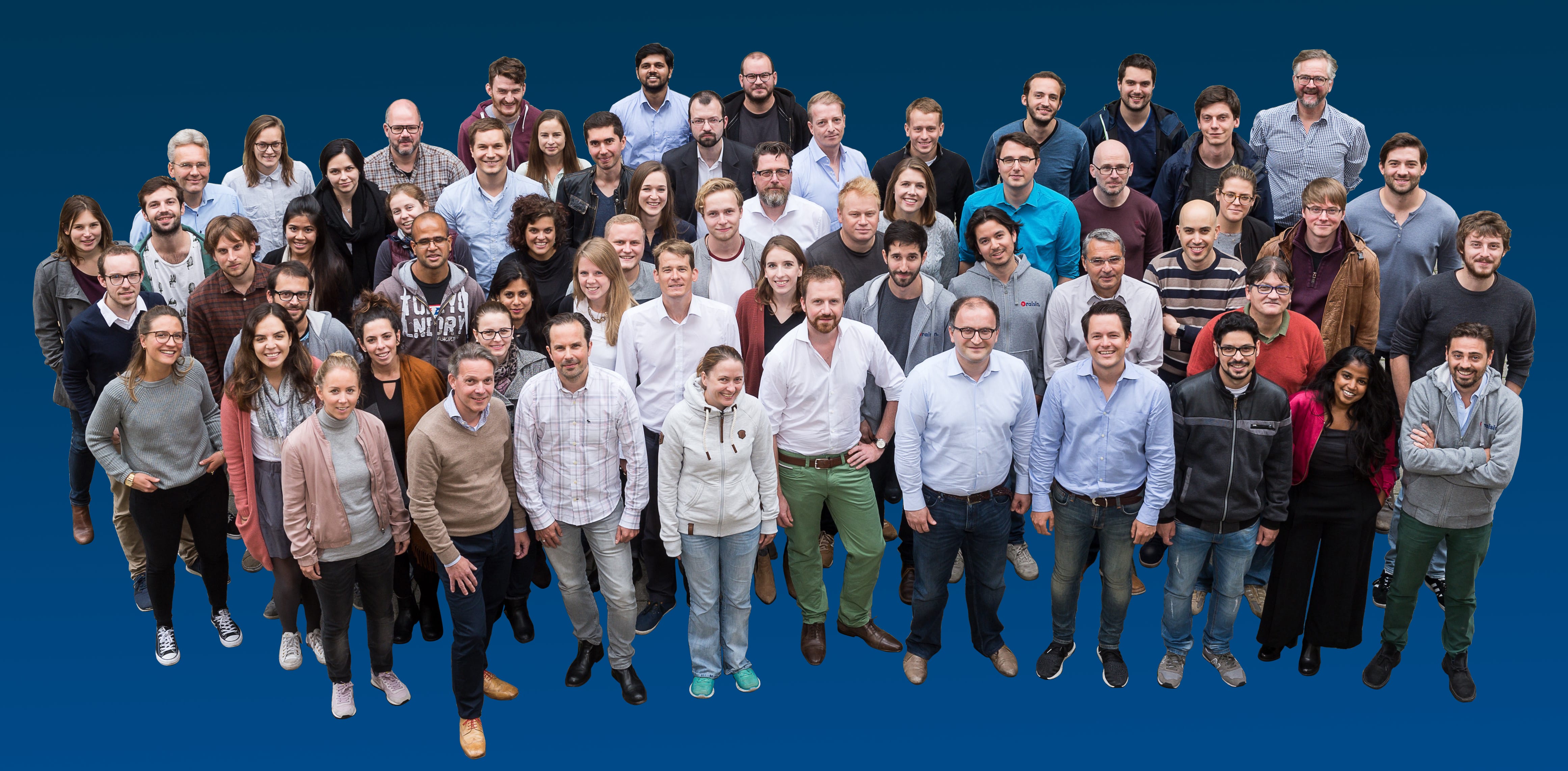
Berlin followed, first with meetings in Georgadze’s apartment, then with sublet office space on Zehdenicker Strasse. A company devoted to reducing inconvenience began with quite ordinary inconveniences of its own. The basement detail matters because it puts the professional credentials in proportion. Three former consultants still had to decide where to sit, what to call the business and how to make the first version work.
Convince the first bank
For a saver, Raisin’s proposition was straightforward: use one online interface to reach deposit offers from multiple banks. The German platform became known as WeltSparen. For a participating bank, the attraction was access to deposits through a shared distribution system. Georgadze’s job included acquiring bank partners and developing the business across markets.
The first bank was the difficult one. Before there was evidence that the marketplace worked, joining it meant taking a decision about an unfamiliar company and an unproven channel. Georgadze later described how referrals became more helpful once the model had demonstrated results. A working relationship could do something a presentation could not: offer another institution a reason to believe.
His background helps explain that emphasis on relationships. Raisin needed deposit-taking banks to supply its offering. Larger organisations could bring more complicated decision processes, making persuasion a matter of working through an institution rather than winning over a single person. The polished interface was only the visible end of the arrangement.
The name contained a small joke. “Raisin” suggested raising interest and raising funds; in French it also means grape. Georgadze connected that association to his Georgian background and its grape culture. For a business dealing in rates, documentation and bank integrations, a name with a little fruit in it seems a reasonable concession to pleasure.
A company too large to huddle
Growth gave Georgadze another organisational problem. In a small team, people can gather in the morning and understand what everybody is doing. As the company expands, that informal connection becomes harder to maintain. During a 2020 discussion of Raisin’s culture, he described leadership standards and quarterly objectives as ways to keep teams connected to the company’s direction.
He also described an annual training budget that employees could decide how to use. The reasoning acknowledged an awkward fact: helping people learn makes them more attractive to other employers. He believed it also strengthened their attachment to Raisin. A company asking people to remain curious had to give them something worth being curious about.
His advice to hire people better than the founders is a useful test for an executive. Hiring someone impressive in the abstract is easy enough; handing them responsibility is where the ego gets involved. Georgadze paired that idea with feedback, including reviews of senior management, and founders sitting near their teams.
He has been willing to identify slower decisions, too. Looking back in an earlier interview, he said he would have hired technology talent more quickly and improved the core product faster. He also regretted pursuing too many small initiatives. Those admissions make his management philosophy more tangible: curiosity needs room, but a growing company must choose where it spends its attention.
“hire people who are better than we are”Tamaz Georgadze, 2020
The rival becomes part of the story
In 2021, Raisin merged with Deposit Solutions, the Hamburg business behind the competing Zinspilot platform. The combined company was called Raisin DS. Georgadze and Deposit Solutions founder Tim Sievers had spent years building rival organisations; now their businesses would share a future. The transaction brought together consumer marketplaces and infrastructure for banks.
Mergers can make a growth chart look wonderfully decisive. They also turn the executive’s task into something more complicated than extending an existing team. People, systems and commercial relationships have to operate together. Georgadze’s earlier interest in deliberate culture had become relevant on a larger canvas. The question of how a company holds together was no longer confined to hiring.
A €60 million Series E followed in March 2023, with new investors including M&G’s Catalyst and participation from existing investors such as Goldman Sachs. Raisin reported €38 billion in customer assets at the time and said it had been profitable for half a year. The money was intended to improve access and processes and accelerate expansion, including in the United States.
By June 2025, Raisin reported more than €75 billion in assets on its platform and over €4 billion in cumulative returns generated for savers. It also announced a single international brand, with WeltSparen becoming Raisin in Germany and Austria. The separate names that had accompanied expansion were giving way to one name customers could recognise across markets.
Still taking borders personally
In 2026, Italy joined Raisin’s markets. The company used its cycling partnership to introduce the brand during the Giro d’Italia, with a Team Picnic PostNL Raisin identity for the race. A savings marketplace in the peloton is an unexpected meeting of interests. Both, however, involve people paying close attention to relatively small differences over a long distance.
An interview published that August brought Georgadze back to the starting problem. Europe, he argued, remained a collection of national financial markets with different languages and infrastructure. His ambitions had grown with the company, but he still described its purpose in terms of people struggling to open foreign accounts and banks needing a practical way to reach them.
Berlin remained important to him. He said more than half of Raisin’s workforce of over 800 people was based there and called for stronger support for the city’s fintech sector. His public role also extends to bank governance, including non-executive positions at Bank of Georgia, Lion Finance Group and Ameriabank. The relationships with established banking continue alongside his entrepreneurial work.
What distinguishes this career is the persistence of an ordinary question: why should reaching a useful savings account involve so much effort? It survived the move from a courier’s paperwork to a basement, from a startup to a merger, and from several local brands to one international business. Georgadze keeps returning to the gap between an offer and someone’s ability to use it. There are still borders inside that gap. He has made a career of finding the doors.