A former college roommate telephoned Scott Dorey with a proposition: he was leaving to build a payments business. Dorey knew the caller, respected his judgment and agreed to look at the plan. Before there was a discussion about checkout technology, there was an older piece of infrastructure. They already trusted each other.
“There’s got to be something to this,” Dorey recalled thinking. It is a pleasantly unceremonious beginning for a business concerned with moving money. An old acquaintance had an idea, and Dorey thought it deserved a hearing. He brought a working knowledge of finance to the conversation; his friend brought a proposal. The business plan and technology came next.
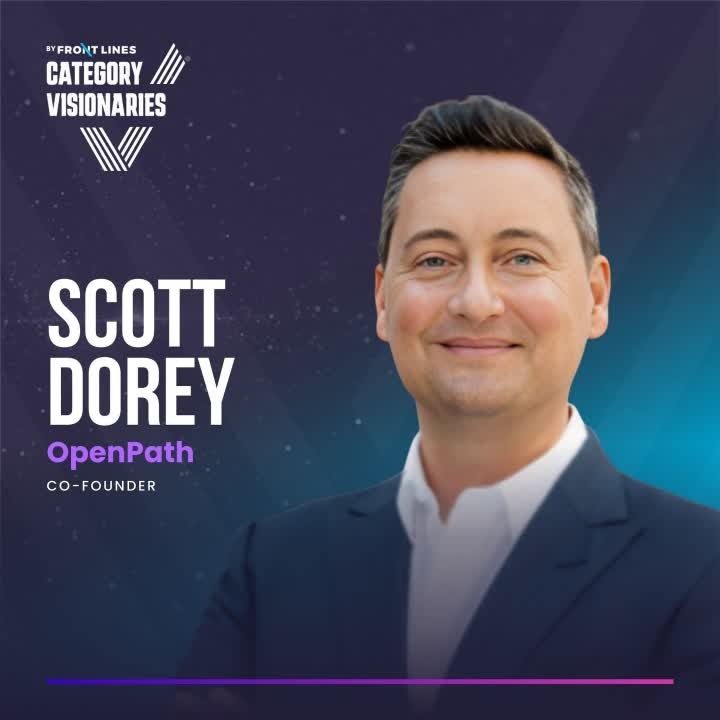
Today he is OpenPath’s co-founder, chairman and CEO. The company works behind online checkout, coordinating the payment systems a merchant uses. His own route there runs through corporate law, investment banking and investment management. Follow those occupations in order and the changes look considerable. Follow the transaction itself and the distance begins to shrink.
A lawyer learns the price of a promise
Dorey holds an undergraduate degree from Laurier and a law degree from King’s College London. At Paul, Weiss, Rifkind, Wharton & Garrison in New York, he worked as a corporate lawyer focused on global mergers and acquisitions. He subsequently joined Lehman Brothers, working in New York and London.
His banking responsibilities included technology and communications/media mergers and acquisitions, relationship management and principal transactions. He also served as a senior adviser in the office of Lehman’s chairman and vice chairman. Those roles put agreements, capital and the people responsible for both in the same working day.
A lawyer examining an acquisition and a merchant examining a payment inhabit different scales of commerce. Each still has to care about what happens after someone says yes. A customer’s willingness to buy is useful; a completed payment is useful in a more immediately spendable way. That distinction gives Dorey’s otherwise varied résumé a readable thread.
It would be too neat to turn every earlier job into preparation for OpenPath. Careers are allowed to wander. What the sequence establishes is experience with several sides of a transaction: the agreement, the financing, the investment decision and, eventually, the systems that process a purchase.
- LawPaul Weiss
Global M&A - BankingLehman Brothers
New York + London - InvestingAsian equities
West1 - PaymentsOpenPath
Routing + recovery
An investor takes a seat at checkout
Dorey founded an Asian equities fund in 2010 and served as its chairman and co-chief executive. West1, which he chairs, became another vehicle for investment. Its stated interests have included technology, natural resources and real estate. This is a broader brief than a single software category.
On February 15, 2018, West1 announced an investment in OpenPath. The amount was undisclosed. The announcement described an Irvine-based payments company serving thousands of customers internationally and said its management would retain a significant stake. Joseph Watkins, OpenPath’s chief operating officer, welcomed the capital as support for expansion.
For Dorey, the investment fitted West1’s interest in technology businesses changing established markets. It also joined two roles often treated separately in business biographies: the person supplying capital and the person taking responsibility for a company. OpenPath appears in his career as both an investment relationship and an executive commitment.
There is something appropriately practical about the company’s chosen territory. A checkout page can be exquisitely designed and still fail at the point of payment. The photograph, product description and shopping basket have done their work. The remaining machinery must decide how to handle the transaction. Glamour has usually left the room by then. Revenue has yet to enter it.
Three signatures, one proposed shortcut
In May 2023, OpenPath joined Innovative Payment Solutions and eFinityPay in announcing IPSIPay Express. The proposed business would initially concentrate on online gaming and entertainment merchants. Its offer included real-time consumer-to-merchant payments, with the aim of reducing processing costs and the problems surrounding chargebacks.
The division of responsibilities was explicit. OpenPath would bring access to existing and future merchant customers. eFinityPay would handle payment technology and market to its own merchant network. IPSI would contribute banking contacts and potential capital. The proposal depended on several organisations doing different jobs, rather than one company claiming to possess every necessary ingredient.
The operating agreement, executed in June 2023 and effective from April 28, named Dorey as the initial chairman of the venture’s board and its chief executive. William Corbett represented IPSI; Franklin Levy represented eFinityPay. The arrangement put Dorey inside the governance of the proposed payment business as well as its commercial story.
That is a consequential distinction. A partnership announcement offers a public intention. An operating agreement allocates authority and obligations. Dorey’s earlier career had involved transactions on paper; here, his own name was among the people assigned to make one work. A signed document is an excellent beginning. Commerce remains stubborn about requiring the next step.
When the promised route did not open
The later outcome belongs beside that ambition. By March 2026, IPSI described IPSIPay Express as dormant. Its annual report said the venture had not launched and had produced no revenue or cash distributions for IPSI. The filing also described the venture as no longer viable.
IPSI had contributed $1 million to or on behalf of the venture. That contribution was the partner’s investment in IPSIPay Express. It should not become an OpenPath fundraising figure through the simple expedient of appearing in the same paragraph. Keeping the companies separate also keeps the outcome intelligible.
The record supports a limited, clear conclusion: this particular joint venture did not fulfil its launch plans. It does not establish a verdict on every activity at OpenPath. For Dorey, it is a chapter with an outcome, rather than an ambition permanently preserved in the present tense. A business profile has room for the idea and what followed it.
A customer can agree to buy before a payment system agrees to finish.
The commercial problem behind OpenPath
The sale that almost got away
A different partnership addressed another part of the payment problem. On March 25, 2025, FlexFactor and OpenPath announced an integration for merchants using WooCommerce, Adobe Commerce, BigCommerce or Shopify. Its purpose was to recover eligible transactions that traditional payment systems had declined.
The companies advertised recovery of up to 30 percent of declines. That is a ceiling in a commercial claim, rather than a result promised to every merchant. The distinction matters because a declined transaction can have different causes. The integration’s commercial purpose was to identify recoverable business while the customer was still trying to complete the purchase.
Dorey’s comments accompanying the announcement focused on merchant access: OpenPath’s processor connections and ecommerce integrations would make FlexFactor’s recovery service available within the systems those merchants already used. The connection was part of the proposition. Having a tool somewhere in the market and having it available at the relevant moment are different practical conditions.
Advertised recovery of declined transactions through the FlexFactor integration. Actual merchant results vary.
Imagine an ordinary purchase interrupted just before completion. The retailer has already attracted the shopper and persuaded them to order. Recovering an eligible payment would preserve work already done. It is a modest-sounding business problem with a direct commercial consequence, and it explains why Dorey’s work can concern very small moments inside very large volumes of commerce.
On July 9, 2026, Spreedly added OpenPath gateway support. The supported operations included purchases, authorizations, captures, refunds and transaction retries. Apple Pay and Google Pay were excluded from that particular integration at launch. The detail is useful: a payment connection has a defined set of capabilities, however broad the language surrounding the industry.
For a company that coordinates payment providers, becoming available through another payment platform is a concrete development. It gives OpenPath another place in a merchant’s possible setup. It also offers a more useful measure of progress than an adjective: a developer can identify the connection and examine exactly which operations it supports.
A life beyond the payment window
Dorey’s personal page places him in Vancouver and lists interests in modern art, travel, skiing and surfing. The list is brief, but it permits a little air into a biography otherwise crowded with transactions. Someone can spend a working day considering financial systems and still prefer, when the opportunity arises, a slope or a wave.
His affiliations have extended beyond commercial companies. They include the Institute of International Education, the organisation associated with the Fulbright programme and Scholar Rescue Fund, as well as corporate boards including Inter-Citic Resources and Largo Resources. Alongside his work across North America, London and Asian markets, these connections give the career a geographical breadth that a checkout screen conceals.
The roommate’s telephone call remains a useful place to begin. It captures a decision before the titles accumulated around it: Dorey knew someone whose judgment he respected and agreed to examine an opportunity. The subsequent work acquired agreements, partners, software and outcomes. Across those changes, his subject has remained recognisably human. People agree to do business. Then somebody has to see it through.