therapeutics
(16)
The Biotech Fund That Likes the Awkward Middle
Agent Capital invests where molecules, milestones and money collide. Its small team backs healthcare companies across the development curve, then stays close enough to help science become a financeable business.
City Therapeutics
City Therapeutics is a Cambridge, Massachusetts biotechnology company engineering the next generation of RNA interference (RNAi) medicines. Founded by pioneers of the RNAi field, including former Alnylam CEO John Maraganore and Nobel-adjacent academic scientists, the company designs novel siRNA trigger molecules and targeting ligands intended to make RNAi drugs more potent, more specific, and able to reach tissues beyond the liver. Launched in October 2024 with a $135M Series A and backed by a further $99.5M Series B in 2026, City is advancing a pipeline led by CITY-FXI for thromboembolic disease and CITY-RBP4 for Stargardt disease, alongside research collaborations with Biogen and Bausch + Lomb.
Flagship Pioneering
Flagship Pioneering is a Cambridge, Massachusetts life-sciences enterprise that invents, builds, and funds companies rather than merely investing in them. Founded in 1999 by Noubar Afeyan, the firm runs a systematic 'venture creation' engine - generating scientific hypotheses in-house, prototyping them in its own labs, and spinning validated concepts into independent operating companies in human health and sustainability. Its portfolio has produced more than 100 ventures, including Moderna, and it directs roughly $14 billion in capital.

Mendra
Mendra is an AI-native biopharmaceutical company based in San Francisco that acquires, develops, and commercializes therapies for rare and ultra-rare diseases with high unmet need. Founded in 2025 and launched publicly in January 2026 with an $82 million Series A, the company is run by veterans of BioMarin, Palantir, and other rare disease programs. Rather than discovering compounds from scratch, Mendra systematically scans, scores, and acquires shelved or under-resourced rare disease assets from academia, small biotechs, and big pharma, then uses AI to accelerate patient identification, clinical trial enrollment, and global market access.

Integrated Biosciences
Integrated Biosciences is a Redwood City biotech founded in 2022 that fuses optogenetics, chemistry, and AI to discover small-molecule drugs for age-related diseases. Its optogenetic screening platform uses light to control cellular biology at millisecond and micron scale, generating clean data to train an explainable-AI drug-discovery engine. The company has published in Nature - including a new structural class of antibiotics - and raised $17.2M in seed funding led by Sutter Hill Ventures.

Unravel Biosciences
Unravel Biosciences is a clinical-stage therapeutics company spun out of Harvard's Wyss Institute that starts with a patient's RNA rather than a drug target. Its BioNAV probabilistic network model of human health screens 40,000-plus compounds in silico - reporting roughly 200x the hit rate of conventional screens - to find existing molecules that can push a disease back toward health. The company validates predictions in engineered whole-organism models (including CRISPR-edited tadpoles) and then in patients, aiming to bring effective, lower-cost therapies to rare and overlooked diseases. Its lead asset, RVL-001 (a proprietary formulation of vorinostat), holds FDA Orphan Drug Designation for Rett syndrome and has entered clinical studies.

Abalone Bio
Abalone Bio is an Emeryville-based preclinical biotech building target-activating antibodies for diseases other drugs can't reach. Its FAST platform pairs engineered yeast cells with AI/ML to screen ~100 million antibodies per experiment for functional activity, not just binding, with an initial focus on G-protein coupled receptors (GPCRs) and metabolic disease.
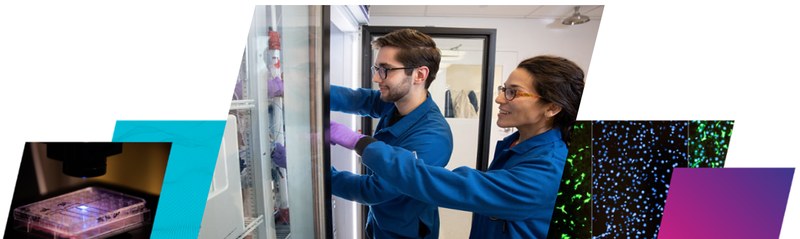
Aera Therapeutics
Aera Therapeutics is a Cambridge, Massachusetts biotech founded on a discovery from CRISPR pioneer Feng Zhang: human proteins that can self-assemble into capsid-like shells and ferry genetic cargo into cells. The company is building delivery platforms - protein nanoparticles, targeted lipid nanoparticles, and antibody-oligonucleotide conjugates - to solve the field's most stubborn problem: getting genetic medicines to the right tissue. Launched publicly in 2023 with $193M and led by Alnylam veteran Akin Akinc, Aera is betting that delivery, not the drug itself, is the bottleneck holding back the next generation of genetic medicine.

AltPep
AltPep is a Seattle biotech company spun out of the University of Washington that is building both diagnostic tests and disease-modifying drugs for amyloid diseases such as Alzheimer's and Parkinson's. Its work is anchored on the alpha-sheet, a non-standard protein structure discovered by founder and CEO Valerie Daggett, which forms in the toxic soluble oligomers that appear at the earliest, pre-symptomatic stages of disease. AltPep's SOBA blood test aims to flag those toxic oligomers years before symptoms, while its SOBIN peptide therapeutics are designed to neutralize them.

Circle Pharma, Inc.
Circle Pharma is a South San Francisco biotechnology company building intrinsically cell-permeable, orally available macrocycle therapeutics to hit cancer targets long considered undruggable. Spun out of UCSF and UC Santa Cruz in 2012, it pairs structure-based design, AI/ML, physics-based simulation, and advanced synthetic chemistry in its proprietary MXMO platform. Its lead program, CID-078, is a first-in-class oral cyclin A/B RxL inhibitor now in a Phase 1 trial for advanced solid tumors. The company has raised more than $200 million in total funding, including a $90 million Series D in 2024.
Gate Bioscience
Gate Bioscience is a Brisbane, California biotech building a brand-new class of medicines it calls Molecular Gates: oral small molecules that stop disease-causing proteins from ever leaving the cell. Instead of chasing proteins after they are secreted into the body, Gate's drugs bind Sec61, the single channel every one of the roughly 4,000 human secreted and membrane proteins must pass through, and selectively block a target protein so the cell degrades it. Founded in 2021 and emerged from stealth in 2023 with $60M, the company has raised about $135M total and is pushing its lead programs toward IND-enabling studies and Phase 1 trials.

Moonwalk Biosciences
Moonwalk Biosciences is a San Francisco Bay Area biotech building precision epigenetic medicines. Co-founded by former Illumina CTO Alex Aravanis and CRISPR pioneer Feng Zhang, the company pairs whole-genome, single-cell epigenome mapping with AI-guided 'read-and-write' epigenetic editing tools that reprogram cells to a healthy state without cutting or altering the underlying DNA. Launched out of stealth in January 2024 with $57 million in seed and Series A funding, Moonwalk aims to file its first IND within a few years.
Prellis Biologics
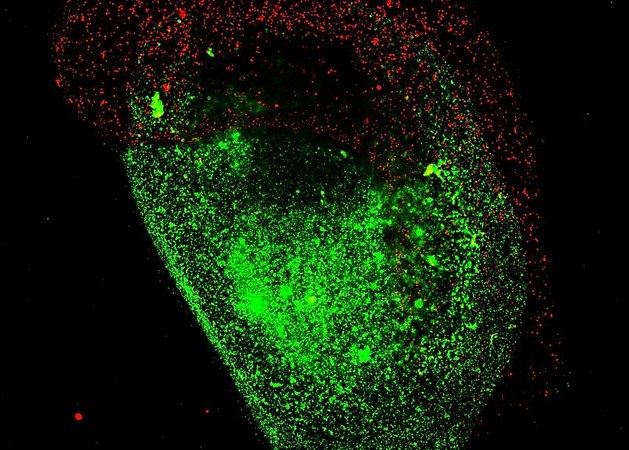
Prellis Biologics is a Berkeley, California biotech that 3D-prints human lymph node organoids to grow real human antibodies in a dish. Its EXIS platform uses holographic two-photon laser bioprinting plus AI to recreate the human immune response in vitro, discovering fully human antibody therapeutics faster and cheaper than animal-based methods, including against difficult targets like GPCRs where mouse models fail.

Gero
Gero is a Singapore- and Palo Alto-based biotech company applying physics-informed AI to longitudinal human health data to find the root causes of aging and develop therapies for age-related diseases. Co-founded by physicist Peter Fedichev and entrepreneur Maxim Kholin, Gero has built a foundational model of human health trained on 100M+ medical records, and partners with major pharma including Pfizer and Chugai.
BigHat Biosciences
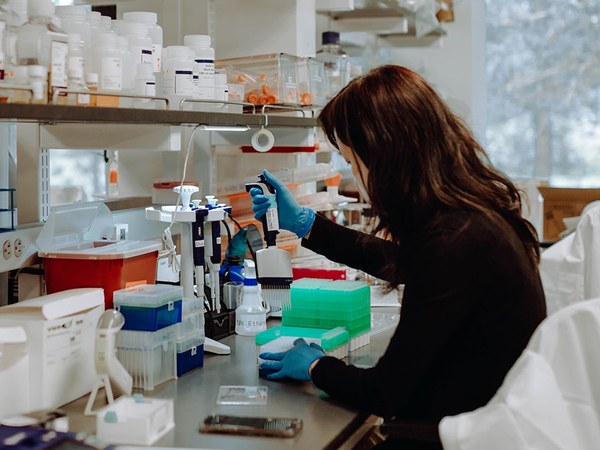
BigHat Biosciences is a San Mateo biotech using machine learning and a high-speed wet lab to design safer, more effective therapeutic antibodies. Its Milliner platform iterates between in-silico design and physical molecules in days, optimizing biologics across binding, stability, immunogenicity and developability for partners like Merck and Johnson & Johnson.
Mammoth Biosciences
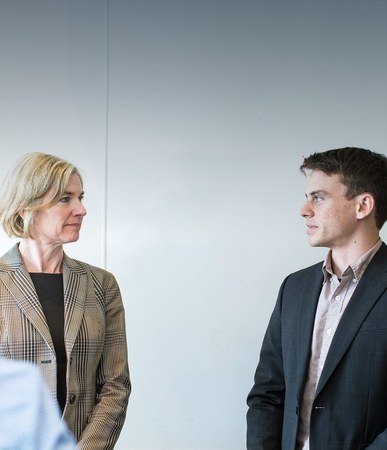
Mammoth Biosciences is a Brisbane, California biotechnology company co-founded by Nobel laureate Jennifer Doudna that develops ultracompact CRISPR systems for both in vivo gene-editing therapeutics and rapid molecular diagnostics. Its proprietary toolbox of small Cas enzymes (including Cas14 and CasΦ) powers therapeutic partnerships with Regeneron, Vertex and Bayer, while the DETECTR platform brings CRISPR-based disease detection out of the central lab.