Aera Therapeutics exits stealth with $193M Founded on Feng Zhang's 2021 Science paper CEO Akin Akinc - 2 decades at Alnylam Mission: solve genetic medicine's delivery problem 300 Technology Square, Cambridge MA PNP · tLNP · AOC delivery platforms Backed by ARCH · GV · Lux Capital · F-Prime Aera Therapeutics exits stealth with $193M Founded on Feng Zhang's 2021 Science paper CEO Akin Akinc - 2 decades at Alnylam Mission: solve genetic medicine's delivery problem 300 Technology Square, Cambridge MA PNP · tLNP · AOC delivery platforms Backed by ARCH · GV · Lux Capital · F-Prime
Company Profile · Genetic Medicine

Aera
Therapeutics

The medicine is ready. The roads are not. Aera is building the vehicles that carry genetic medicine to the cells that need it.

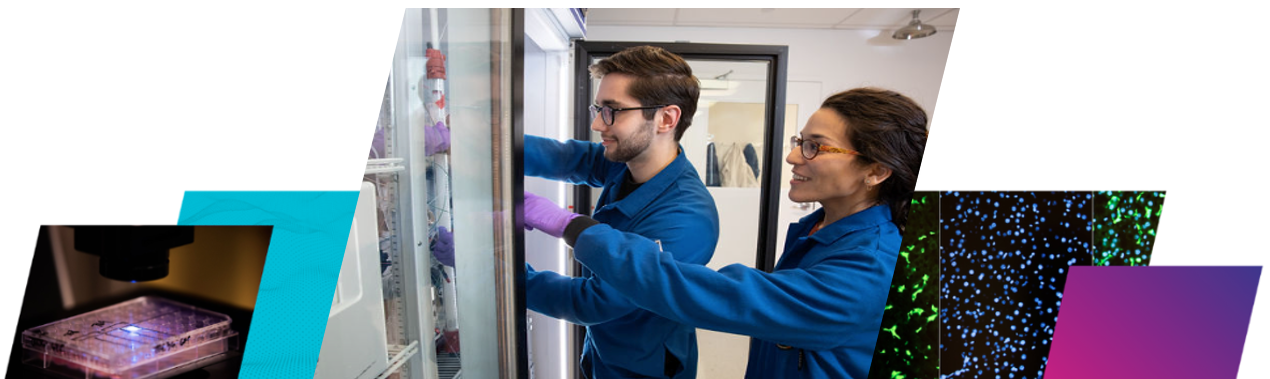
Scientists at work in an Aera Therapeutics laboratory

A lab where the cargo is genetic and the hard part is the last mile. Aera scientists at the bench in Cambridge, Massachusetts.

$193M
Series A + B
2021
Founded
~87
Employees
3
Delivery Platforms
Where they stand

A biotech that decided the hardest problem was worth the whole company.

In a lab off Technology Square in Cambridge, a scientist loads genetic cargo into a microscopic shell and waits to see where it lands. The cargo is not the hard part. Researchers have spent two decades learning to edit genes, silence them, and rewrite them. The hard part - the part that keeps the whole field smaller than it should be - is getting the cargo to the right tissue without it scattering everywhere else.

Aera Therapeutics exists for exactly that bench, that moment, that problem.

Most biotechs are organized around a molecule. Aera is organized around a question: once you have the medicine, how do you actually deliver it? It is an unglamorous question. It is also, by the company's own reckoning, the bottleneck standing between genetic medicine and most of the human body.

"New therapeutic modalities have exploded. But the pace of advancement of delivery technologies has not kept up."

— Akin Akinc, CEO, Aera Therapeutics
The problem they saw

Genetic medicine had a destination problem.

The first generation of genetic medicines reached two places reliably: the liver, and the eye. Both are generous hosts - the liver because lipid nanoparticles drain there naturally, the eye because you can inject straight into it. Everywhere else, the field kept hitting the same wall. A medicine that cannot reach the muscle, the brain, or the immune cell is, for practical purposes, a medicine for a much smaller list of diseases.

This is the quiet asterisk on every breathless gene-therapy headline. The science of what to do to a cell raced ahead. The science of how to get there lagged behind. Viral vectors trigger immune responses and can't always be re-dosed. Lipid nanoparticles love the liver and struggle to leave it. The toolbox was real, but it was short.

Aera's founders looked at that gap and saw something most people miss: the bottleneck was not a footnote to fix later. It was the main event.

"We're a long way from reaching the full potential. We need more strategies and approaches - and that's what Aera's all about."

— Akin Akinc, CEO

Translation from biotech: the drug works in the dish. Getting it past the front door is the part nobody put on the brochure.

The founders' bet

The delivery truck was hiding in our own DNA.

The spark came from a 2021 paper in Science by Feng Zhang - the Broad Institute scientist better known as one of the architects of CRISPR. Zhang's lab found that certain endogenous human proteins, descended from ancient retroelements buried in our genome, can self-assemble into capsid-like shells. Shells that can package nucleic acids. Shells that can hand that cargo to a cell.

In other words, evolution had already built a delivery system. It was sitting in the human genome, waiting for someone to notice. Zhang noticed. The bet Aera made was that you could engineer those proteins into programmable, low-immunogenicity vehicles for genetic medicine - a delivery platform sourced from human biology rather than borrowed from a virus.

To run the bet, the founders recruited Akin Akinc, who had spent nearly twenty years at Alnylam, the company that turned RNA interference from a Nobel-winning curiosity into approved drugs. Around him assembled a board and founding group that reads like an Alnylam reunion - John Maraganore, Bob Nelsen, Josh Wolfe, and the venture firms ARCH, GV, Lux Capital, and F-Prime. They put $193 million behind the idea before there was a single product to point to.

"I realized this was an exciting opportunity I could not pass up."

— Akin Akinc, on leaving Alnylam to lead Aera

$193 million for a company with no drug yet. Investors weren't buying a pill - they were buying the roads.

The road so far

From a paper to a platform company.

2021

The proof-of-concept

Feng Zhang's lab publishes in Science: endogenous human proteins can self-assemble and shuttle nucleic acid cargo. The seed of a company.

2021

Aera founded

Built quietly around the protein-nanoparticle discovery by Zhang and a founding group of Alnylam and Broad veterans.

2022

Akin Akinc takes the helm

The Alnylam oncology veteran joins as CEO to turn a delivery discovery into a drug-development engine.

2023

Out of stealth, $193M in hand

Aera launches publicly with combined Series A and B financing co-led by ARCH, GV, and Lux Capital.

2025

A multi-modal toolbox

Aera broadens beyond protein nanoparticles to targeted lipid nanoparticles and antibody-oligonucleotide conjugates - more roads, more destinations.

The product

Three ways to make the last mile.

Aera started with one idea - protein nanoparticles - and then did something that looks obvious in hindsight and is rare in practice: it refused to marry a single technology. If the mission is delivery, you don't pick one vehicle and defend it forever. You assemble a fleet.

Founding Platform

Protein Nanoparticles

Endogenous human proteins, derived from retroelements, that self-assemble into capsid-like shells to package and deliver genetic cargo. The platform that started the company.

Tissue Targeting

Targeted Lipid Nanoparticles

Engineered tLNPs designed to steer genetic payloads beyond the liver toward specific tissues - the workhorse of genetic medicine, sharpened.

Precision Conjugates

Antibody-Oligo Conjugates

AOCs pair antibodies with oligonucleotide payloads, using the antibody as an address label to direct medicine to a chosen cell type.

One company, three delivery trucks. The payload - siRNA, mRNA, ASO, a gene editor - rides in whichever one fits the destination.

The proof

Conviction, measured in dollars and pedigree.

A pre-clinical platform company can't show you a Phase 3 chart. What it can show you is who decided to believe it, and how much they put down. On that scorecard, Aera is unusually well-capitalized for its stage - the kind of raise reserved for teams investors have watched ship real drugs before.

Aera, by the numbers
Funding · team · platforms at launch
Total raised
$193M
Series A + B
Combined launch round
Employees
~87
Delivery platforms
3

Sources: company launch announcement (Feb 2023), Crunchbase, public filings. Bars scaled for illustration.

The backers - ARCH, GV, Lux Capital, F-Prime - are the same names that bankrolled the RNAi revolution. They are betting on the people as much as the proteins.

— On Aera's $193M launch syndicate
A

Akin Akinc, Ph.D.

CEO · ex-Alnylam (~20 yrs)

F

Feng Zhang, Ph.D.

Scientific Founder · Broad · CRISPR pioneer

J

John Maraganore

Board Chair · founding CEO of Alnylam

B

Bill Querbes, Ph.D.

Chief Scientific Officer

The org chart looks like an Alnylam class reunion. That's not an accident - it's the thesis.

The mission

Harnessing the power of genetic medicines - by fixing how they travel.

Aera's stated mission is plain enough to fit on a wall: harness next-generation delivery technologies and precision payloads to develop transformative genetic medicines. Underneath the tidy sentence is a sharper claim. The company believes that whoever solves delivery doesn't just make better versions of existing drugs - they unlock entire categories of disease that the field has been unable to touch.

That's the logic of a platform. A new delivery vehicle isn't one product; it's a key that fits many locks. Reach the muscle and you open one set of diseases. Reach immune cells and you open another. Aera is building keys, not pills.

"That's been a limitation on the broad applications of genetic medicines."

— Akin Akinc, on why delivery is the whole game
Why it matters tomorrow

Back at the bench.

Return to that lab off Technology Square. The scientist loads the cargo, sends it in, and watches. For most of the last decade, that experiment had a predictable disappointment built into it - the medicine would go where it always goes, which was rarely where you wanted.

Aera's wager is that the disappointment is optional. If delivery is a problem you can engineer your way through - with proteins from our own genome, with smarter lipids, with antibodies as address labels - then the map of treatable disease gets redrawn. Not because anyone invented a new gene editor, but because someone finally built better roads for the ones we already have.

The cargo was never the hard part. Aera is the company that decided to spend itself on the rest.

Whether the protein nanoparticles, the lipid particles, or the conjugates carry the day is still being written in those experiments. But the premise is no longer fringe: in genetic medicine, getting there is the breakthrough. Aera is one of the few companies built entirely around that idea - and that, for a field that spent years treating delivery as someone else's job, is a notable thing to bet a company on.
Share Aera Therapeutics

Find Aera

Links, channels & further reading.

Video interviews and product demos: search "Aera Therapeutics" on YouTube for founder talks and Feng Zhang's Broad Institute lectures on protein-based delivery. (No official Aera channel confirmed at publication.)