stanford-biodesign
(10)
Holly Rockweiler Built a Company Around the Problem Everyone Else Called a Niche
She left a comfortable research career to put the patient back in the room. Twelve years, dozens of patents and one pivotal trial later, Holly Rockweiler's method is still disarmingly simple: listen first, then build.

Stacie Arechavala
Stacie Arechavala is a biomedical engineer and the cofounder and CEO of Selera Medical (YC W24), a San Francisco medical device startup she started in 2023 with Kevin Bui after the two met as fellows at Stanford Biodesign. She trained at the University of Miami and Duke, developed cardiovascular devices at Medtronic, and built low-cost devices for underserved communities before turning her attention to heart failure care. Her guiding line: innovation can change the world, but design is what makes it happen.

Selera Medical
Selera Medical is a Y Combinator-backed (W24) medical device startup building MILO - minimally invasive lymphatic offloading - a one-time, catheter-based procedure that treats fluid overload in chronic heart failure. Instead of a lifelong drug regimen, Selera taps the body's lymphatic system to drain trapped fluid from the interstitial space, aiming to break the cycle of repeat hospitalizations that defines late-stage heart failure. Founded in 2023 by CEO Stacie Arechavala and CTO Kevin Bui, both former Stanford Biodesign fellows.

Shreya Mehta
Shreya Mehta is the President and CEO of Zenflow, a South San Francisco medical device company she co-founded in 2014 out of the Stanford Biodesign Innovation Fellowship. A biomedical engineer and former FDA reviewer, she spent a decade building the Zenflow Spring System, a minimally invasive, reversible implant that props open the urethra to relieve symptoms of benign prostatic hyperplasia (BPH). She started as CTO before stepping into the CEO seat, closed a $24M Series C in November 2024, and helped guide the company to FDA approval.
InterVene, Inc.
InterVene, Inc. is a Redwood City, California vascular medical device company building catheter-based tools for severe venous disease. Born out of Stanford Biodesign, it first pioneered BlueLeaf, a non-implantable system that forms new vein valves from a patient's own tissue, then pivoted its lead product to Recana, an FDA-cleared thrombectomy catheter system that clears venous in-stent restenosis and native-vessel obstructions - a stubborn problem that leaves stented patients with debilitating complications and few good options.

Vynca
Vynca is a healthcare company focused on serious illness and end-of-life care. Founded in 2013 out of Stanford Biodesign, it began as advance care planning software that put patients' end-of-life wishes into the electronic health record, then expanded into hands-on clinical services. Today it combines home-based and virtual palliative care, care navigation, and enhanced care management with technology, partnering with health plans and providers to keep seriously ill patients comfortable, out of the hospital, and cared for on their own terms.

Zenflow, Inc.
Zenflow is a South San Francisco medical device company that built the Spring, a small nitinol coil implanted through a flexible cystoscope to prop open the urethra and relieve the symptoms of an enlarged prostate (benign prostatic hyperplasia). Spun out of Stanford's Biodesign program in 2014, the company won FDA approval in December 2025 for a first-line interventional therapy that requires no catheter afterward, preserves sexual function, and can be reversed. It has raised roughly $85 million across multiple rounds and ran the multinational BREEZE pivotal trial to get there.
Fletcher Wilson
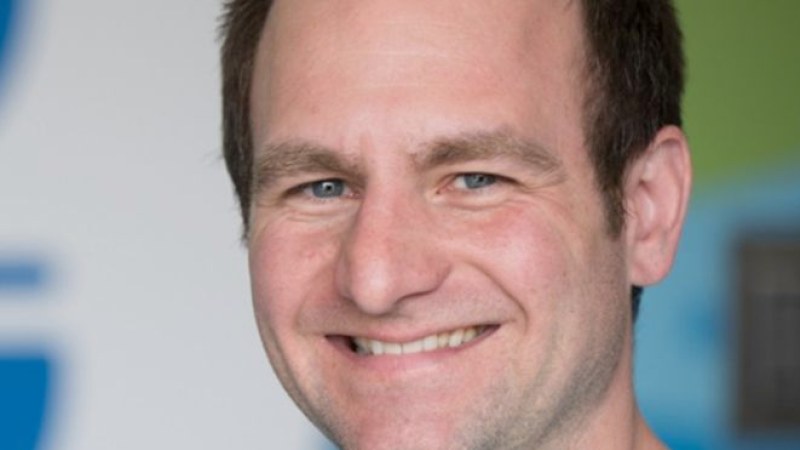
Fletcher Wilson is the co-founder and CEO of Throne Labs, the company behind the largest network of connected public restrooms in the United States. A mechanical engineer trained at Penn and Stanford, he spent nearly a decade building InterVene, a medical-device startup, before turning his attention in 2020 to a problem hiding in plain sight: the disappearance of clean, accessible public bathrooms. Throne's solar-powered, sensor-equipped units deploy in under two hours, are free to use, and have logged more than a million uses across 20-plus cities. In October 2025 the company raised an initial $15 million Series B led by Brentwood Associates.
Mike Carusi
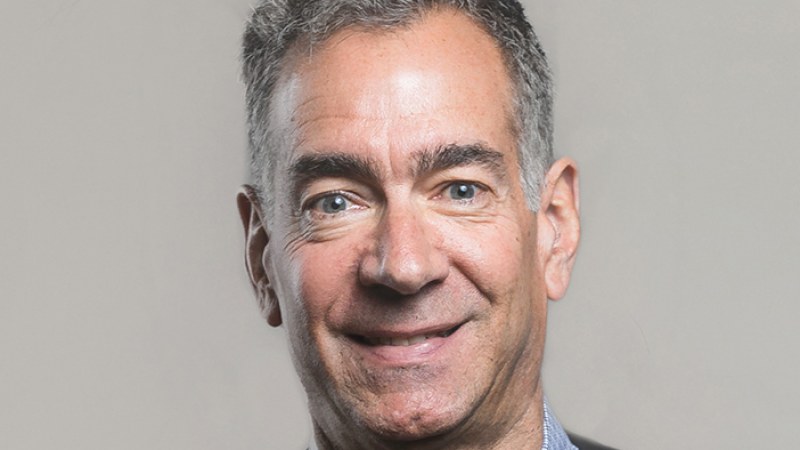
Mike Carusi is a General Partner at Lightstone Ventures, a leading life sciences venture capital firm based in Portola Valley, California, with $847 million in assets under management. With a career spanning over three decades in healthcare investing, Carusi has built a reputation as one of the most active early-stage investors in biotech and medical devices, appearing on the Forbes Midas List for top technology and life science investors. He co-founded Lightstone Ventures in 2014 after years at Advanced Technology Ventures (ATV), and has overseen landmark exits including Plexxikon (acquired by Daiichi Sankyo for ~$1 billion), Ardian (acquired by Medtronic for $800 million), Ra Medical Systems (acquired by UCB for $2.3 billion), and dozens more. He teaches healthcare venture capital at Dartmouth Tuck and is a faculty member of the Stanford Biodesign Emerging Entrepreneurs Forum.

Brian Fahey
Brian Fahey is a serial medtech entrepreneur who co-founded Adona Medical, a clinical-stage company developing an adjustable interatrial shunt with integrated bi-atrial pressure sensors for heart failure management. A Duke-trained biomedical engineer and Stanford Biodesign alumnus, Fahey previously co-founded Niveus Medical, which delivered over 10,000 ICU rehabilitation treatments before being acquired by Stryker in 2017. At Adona, he guided the company through $95.5M in total funding including a $33.5M Series C in 2024, and oversaw the initiation of first-in-human clinical trials before stepping down as CEO in December 2025.