optical-computing
(7)
Neurophos
Neurophos is an Austin-based photonics startup building an Optical Processing Unit (OPU) that uses light instead of electrons to run AI inference. Spun out of Duke University and the Metacept incubator, the company packs more than a million micron-scale metamaterial optical modulators - roughly 10,000x smaller than conventional photonic elements - onto a single chip to perform the matrix-vector multiplication at the heart of large AI models. It positions the OPU as an energy-efficient, drop-in alternative to GPUs for data-center inference, and raised a $110M Series A led by Gates Frontier in January 2026.
S2 Corporation
S2 Corporation is a Bozeman, Montana photonics company that reads the radio spectrum the way a hologram stores an image - all at once. Its core technology, spatial-spectral (S2) holography, uses a cooled, sugar-cube-sized crystal doped with rare-earth atoms as an optical computer that captures and processes radio frequencies across enormous instantaneous bandwidths (0.03 to 110 GHz). Packaged as the Extreme Bandwidth Analyzer and Correlator (EBAC), the technology serves electronic warfare, signals intelligence, RF spectrum monitoring, emitter geolocation, and data mining for U.S. defense and intelligence customers including DARPA and IARPA.

Kris Merkel
Kris Merkel is the President and CEO of S2 Corporation, a Bozeman, Montana deep-tech firm turning rare-earth-doped crystals into an optical computer that watches the entire radio spectrum at once. A physicist by training and a patient operator by temperament, he has spent more than two decades pulling a niche piece of laboratory physics, spatial-spectral holography, out of Montana State University and into the hands of the U.S. Department of Defense, DARPA, and the intelligence community.

Arago
Arago is a Paris and Palo Alto deeptech startup building a photonic AI accelerator that uses light instead of electrons to run AI workloads, targeting 10x lower energy consumption than today's leading GPUs at equivalent performance and cost while staying compatible with PyTorch and standard hardware ecosystems.

Yichen Shen
Yichen Shen is the founder and CEO of Lightelligence, an MIT spinout building computers that run on light instead of electricity. A physicist who earned his PhD at MIT in 2016, Shen co-authored a landmark 2017 Nature Photonics paper showing that deep-learning math could be done with interfering photons, then turned the idea into chips. His company has shipped photonic processors (PACE), the first optical network-on-chip (Hummingbird), and optical interconnects (Photowave), and in 2026 became the first AI photonic-computing company to go public.
Lightmatter
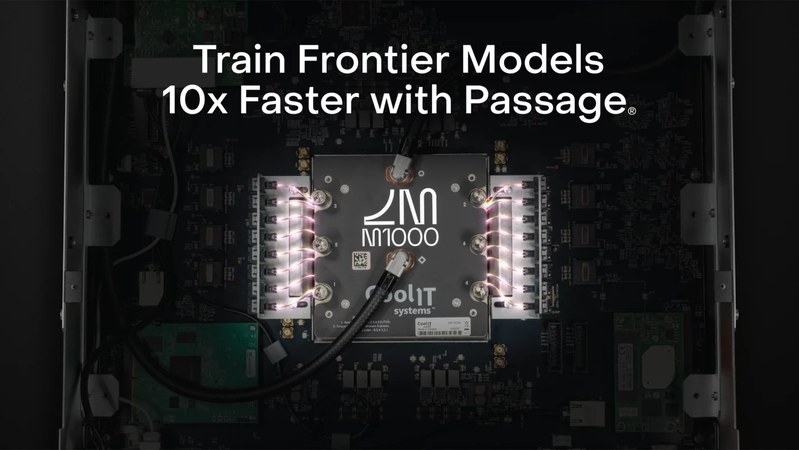
Lightmatter is building a photonic supercomputer. The Mountain View company uses light, not electrons, to move data between AI chips - tackling the bandwidth and energy wall that's about to crash into the next generation of data centers. Its Passage interconnect and Envise processor aim to connect millions of chips at the speed of light.

Nicolas Muller
Nicolas Muller is the co-founder and CEO of Arago, a Paris-based deep-tech startup building a photonic AI accelerator called JEF that uses light instead of transistors to perform AI inference at 10x lower energy than leading GPUs. Coming from a physics and machine learning background - including an ML degree from MIT - Muller co-founded Arago in 2024 alongside Eliott Sarrey and Ambroise Müller. The company raised an oversubscribed $26M seed round in July 2025 backed by Earlybird, Protagonist, Visionaries Tomorrow, and angels from Apple, Datadog, Hugging Face and Arm. Arago's approach - top-down from inference efficiency requirements, not bottom-up from optics research - delivered a working prototype in under 12 months.