oncology
(160)
Cadence and the people missing from the spreadsheet
A healthcare research firm built its edge by reaching people conventional panels struggled to find. Its next challenge is making years of accumulated research easier to use.
Vir Biotechnology’s Second Act Comes With a Mask
After COVID antibodies and a failed flu trial, Vir is betting on hepatitis delta and cancer drugs designed to switch on inside tumors. Its comeback has partners and cash. The decisive clinical tests are still ahead.
Invenra Built an Antibody Factory. Then One of Its Molecules Reached Humans.
The Madison biotech spent years making two-target antibodies easier to build, screen and manufacture. Now a partner-discovered molecule is in a Phase 1 trial - and the operating lesson may be more reusable than the science.

Incyclix Bio Is Betting One Precise Brake Can Stop Cancer's Second Escape Route
A 13-person North Carolina biotech licensed an overlooked CDK2 program, narrowed the patient target and pushed one oral drug into the clinic. Early data offer a reason to keep going - and a useful blueprint for building around a precise scientific thesis rather than a sprawling pipeline.
The Cancer Drug Isn’t Broken. Navrogen Thinks the Tumor Is Blocking the Signal
A tiny Pennsylvania biotech is betting that some antibody therapies fail for a surprisingly fixable reason: tumors throw molecular sand in the gears. Its answer is to redesign the antibody - or remove the sand.
The Buyers' Club Keeping Cancer Clinics Independent
How a group-buying network built by former pharma executives quietly became the largest independent community-oncology network in the country - and why staying small and independent is the whole point.

The Biotech Betting That Cancer Drugs Fail Because Nobody Looked at the Proteins
80% of cancer compounds that reach clinical trials fail. Yatiri Bio thinks the problem is that drug developers have been reading the wrong molecules - and it built a proteomics platform to prove it.
Inside the Atlanta Startup Rewiring How Cancer Gets Decided
OncoLens turned the tumor board - medicine's oldest committee - into AI-backed software now running inside 225-plus cancer centers. It started with a daughter watching her father get conflicting advice.
The Biotech Fund That Likes the Awkward Middle
Agent Capital invests where molecules, milestones and money collide. Its small team backs healthcare companies across the development curve, then stays close enough to help science become a financeable business.
Novartis Cut Away an Empire to Bet on Five Ways of Making Medicine
The Swiss giant spent years shedding businesses until only innovative medicines remained. Now its growth depends on turning five scientific platforms into treatments that health systems will pay for - and patients can actually reach.
The 176-Year-Old Startup That Sells Science by the Milligram
It began as a candy-flavored worm medicine in a Brooklyn brick house. Today Pfizer is racing to replace its Covid windfall with cancer drugs and weight-loss pills before the patents run out.
The 245-Year-Old Drugmaker Betting Its Next Act on Six Big Swings
Takeda began as a medicine shop in Osaka in 1781. Now a new CEO must turn a sprawling global portfolio, a $30 billion-plus revenue base and six late-stage programs into the company’s next generation of growth.
Moderna Designed Its COVID Vaccine in Two Days. The Hard Part Took Ten Years.
The Cambridge biotech turned messenger RNA from a lab curiosity into a platform for printing medicines from genetic code - vaccines, cancer shots, and rare-disease drugs that share one factory and swap out the instructions.
HCA Healthcare Built a Hospital Network Big Enough to Learn From Itself
The Nashville company turned a 1968 experiment in shared hospital resources into a vast care network. Its real edge is what happens when local medicine, centralized operations and 47 million annual patient encounters begin teaching one another.

GSK
After spinning off toothpaste and painkillers, GSK placed a sharper bet on the immune system. Its next chapter is being written in vaccine vials, long-acting HIV medicine and a newly enlarged cancer pipeline.
Kyowa Kirin, Inc. - U.S.
A Japanese fermentation lineage became a U.S. rare-disease business by following biology that larger markets often overlook. Now Kyowa Kirin is testing whether patient-scale focus can coexist with manufacturing-scale ambition.
Johnson & Johnson
It stopped making the Band-Aid. What is left is a $94-billion bet that the future of Johnson & Johnson is written on a prescription pad and a robotic arm.
Legend Biotech
Legend Biotech turned an experiment from a room the size of a freight elevator into a medicine used to treat more than 10,000 people. Now it must prove that one demanding, personalized therapy can become a platform for the next generation of cancer care.
Evolent
The company betting that the most expensive corner of American medicine - cancer, cardiology, and back surgery - can be run better when the people paying for care and the doctors delivering it are finally pulling in the same direction.
Eli Lilly and Company
The company that mass-produced insulin now runs on a molecule that helps people lose weight. Inside the 150-year-old Indianapolis drugmaker that became a trillion-dollar bet on metabolism.
Sanofi
The 53-year-old French drugmaker is narrowing its bets to immunology, vaccines and a faster pipeline. The wager is that better biology, selective dealmaking and factory-scale AI can turn scientific focus into repeatable growth.
Merck
KEYTRUDA made Merck an oncology powerhouse. Now the 135-year-old drugmaker is spending, partnering and inventing its way toward a future that cannot depend on one medicine.
Sun Pharma
Sun Pharma became India’s largest drugmaker by mastering generics. Now a portfolio of skin, eye and cancer medicines - and an audacious pending Organon deal - is changing what the company wants to be.
Genmab
A Danish antibody specialist turned one licensed molecule into a multibillion-dollar royalty engine. Now Genmab is spending that advantage on a harder act: becoming the company that carries more of its own cancer medicines from lab bench to patient.
Arcus Biosciences
Arcus built a biotech around a deceptively practical idea: own the pieces of a drug combination before trying to assemble it. After a major TIGIT setback, its next chapter now rests on a kidney-cancer pill, a pancreatic-cancer trial and a careful expansion into inflammation.
Arcellx
Arcellx rebuilt a crucial part of CAR-T therapy with a compact synthetic binder. Its lead treatment is now under FDA review - and the company behind it has become part of Gilead's Kite.
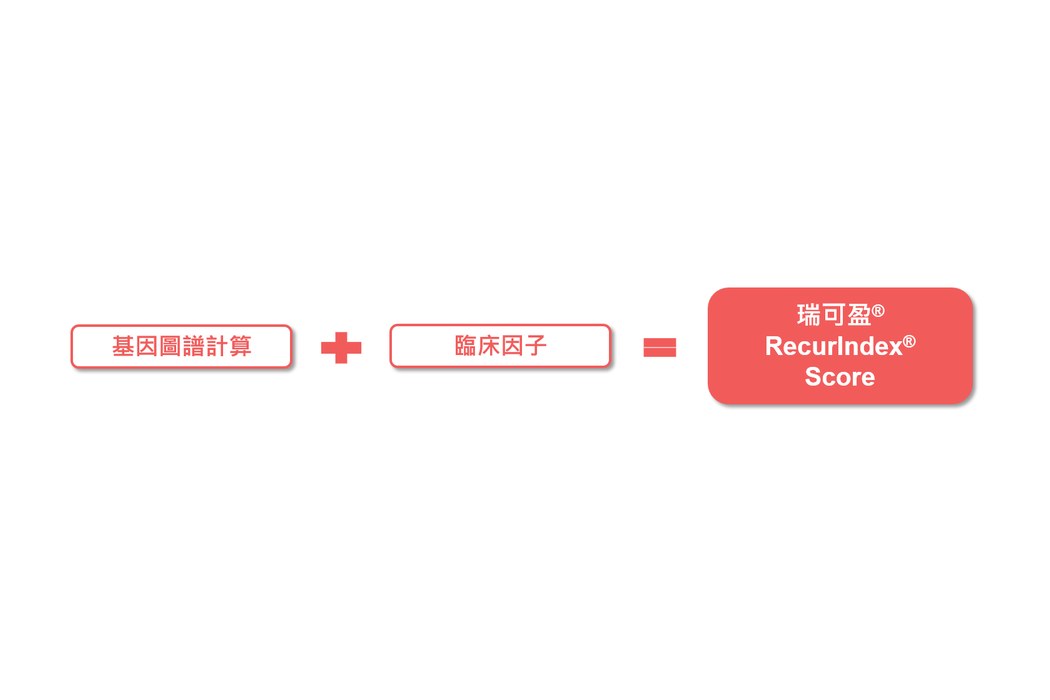
Amwise Diagnostic PTE. LTD.
Amwise Diagnostic is a Singapore- and Taipei-based cancer genomics company behind RecurIndex, a multi-gene test built specifically on the genomes of Asian breast cancer patients. It reads a tumor's genetic profile alongside clinical factors to estimate the five-year risk of local recurrence and distant metastasis, helping physicians and patients decide whether chemotherapy or radiotherapy is actually needed - and helping many avoid treatment they don't.
Actithera
Actithera is a radiopharmaceutical biotech developing next-generation radioligand therapies (RLTs) for cancer. Founded in 2021 by medicinal chemist Andreas Goutopoulos and based in Cambridge, Massachusetts and Oslo, Norway, the company uses a proprietary, chemistry-led platform to design covalent small-molecule radioligands that lodge inside tumors, deliver targeted radiation, and clear quickly from healthy tissue. Its isotope-agnostic approach is engineered to match the residence time of a drug in a tumor to the half-life of long-lived radionuclides, with a lead program targeting Fibroblast Activation Protein (FAP). Actithera raised an oversubscribed $75.5M Series A in July 2025.
Alpha-9 Oncology
Alpha-9 Oncology is a clinical-stage radiopharmaceutical company engineering bespoke, tumor-targeting molecules that deliver alpha- and beta-emitting isotopes directly to cancer cells while sparing healthy tissue. Spun out of the University of British Columbia and BC Cancer in 2019 and now headquartered in Boston with research operations in Vancouver, the company iteratively optimizes each part of a radiopharmaceutical - binder, linker, chelator and radioisotope - to build a pipeline of paired imaging and therapy candidates. Backed by $258M in total funding, including a $175M Series C in 2024, Alpha-9 aims to expand precision radiotherapy across validated oncology targets.
Ankyra Therapeutics
Ankyra Therapeutics is a clinical-stage Boston biotech developing anchored immunotherapy - a platform that physically tethers potent immune-modulating drugs to aluminum hydroxide so they stay concentrated inside a tumor rather than spreading through the body. Its lead candidate, tolododekin alfa (ANK-101), anchors the powerful cytokine IL-12 in the tumor microenvironment, aiming to unlock IL-12's anti-tumor activity while avoiding the systemic toxicity that has historically limited it. Founded in 2019 out of MIT science and led by CEO Howard L. Kaufman, the company is running Phase 1/1b trials in advanced solid tumors, including combinations with immune checkpoint inhibitors.