omnichannel
(28)
Your Contact Center Is Quietly Asking to Be Replaced
The warning signs rarely arrive as one spectacular failure. They show up as extra tabs, stalled AI pilots, spreadsheet reporting and channels that still cannot carry a customer's context.

Your Contact Center Is Telling You to Leave
The loudest warning signs are not missing features. They are the daily workarounds that reveal a platform built for another era—and a bolt-on architecture that cannot keep up.

How to Leave Cisco or Avaya Without Dropping a Call
A contact center migration does not need a heart-stopping cutover. This four-phase playbook moves queues, channels and business units in controlled waves while service stays live.

The Contact Center Migration Checklist Nobody Can Skip
The dangerous parts of a contact center move are rarely hidden in the new platform. They are hiding in the old one—inside forgotten integrations, inherited routing rules and promises nobody thought to write down.

Your Customer Journey Has a Back Office
The message a customer sees is only the last inch of a sprawling enterprise stack. Eight vendors reveal where engagement ends, regulated communication begins and workflow holds the whole thing together.

The Software Turf War Behind Every Bill, Alert and Offer
Eight companies - from Crawford Technologies and Oracle to Lob, Bird and Iterable - quietly wire up every statement, alert and offer your bank, insurer and favorite app sends you. Here is the map of a market climbing toward $3.3 billion.

The Companies Behind Every Bill, Text and Contract You Get
Apryse, Conga, Compart, Sefas, ISIS Papyrus, Plumsail, Customer.io and Bird rarely appear on a customer's screen by name. Together they run the plumbing that turns raw data into the statements, reminders and messages that land in your inbox every day.

Inside Customer Communications Management's Quiet Gold Rush
Every bill, statement and policy letter you receive runs through software almost nobody talks about. OpenText, Broadridge, Doxee and Cincom are racing to own it - and the market is heading past $5 billion.

The Invisible Software Behind Every Bill You Actually Read
CleverTap, Doxim, Broadridge, Customer.io and a handful of rivals fight over the same quiet job - turning your bank statements, app pings and renewal notices into something you open. Here is how the customer communications business actually works.

GhostDraft Turns Insurance Paperwork Into Two-Day Work
Born in 1984 as one of the first document composition engines, GhostDraft now runs the whole insurance communications lifecycle for 150+ carriers - letting business teams ship compliant policies, claims and letters without waiting on IT.

The Quiet Software War Over Every Bill You Receive
Doxim, Intense Technologies, Infobip and Templafy don't make headlines, but they quietly decide how your bank, insurer and phone company talk to you - and the market for that plumbing is racing past $2 billion.

The Chat Box in the Corner Is Now a $2 Billion Fight
Front, Text, respond.io, JivoChat and a handful of rivals turned the little live-chat widget into a real software business. Now AI agents are racing to answer before a human ever reads the message.

DelightChat Wants Your WhatsApp Inbox to Actually Make Money
Built by two Shopify plugin veterans, DelightChat is the omnichannel helpdesk trying to out-simple Chatwoot, Crisp and tawk.to for D2C brands who live inside WhatsApp.

LiveHelpNow Built a Chat Empire From a Basement, One Refund at a Time
Michael Kansky arrived from Ukraine in 1997 with two years of college and a knack for code. Two decades later his bootstrapped live chat company quietly serves thousands of businesses - and never took a dollar of venture money.

Chative Is Betting Your Next Sale Starts In The DMs
The Da Nang-built messaging platform grew out of a chatbot tool called BotStar. Now it wants to be the one inbox where AI and human agents close sales across Facebook, Instagram, WhatsApp and Shopify.

Chative Wants Your Whole Inbox In One Yellow Bubble
The Singapore-built messaging platform folds Facebook, Instagram, Shopify and website chat into a single inbox, then points an AI agent at it - starting free for three seats.
Live Chat Software Stopped Waiting for a Human to Reply
From a free chat bubble in Scottsdale to a public company in New York and a $62.5 million bet out of Kuala Lumpur, four companies are chasing the same job - answer the customer - and AI is quietly rewriting who does the answering.
SleekFlow Wants Your Inbox to Close the Sale, Not Freshworks
The Singapore- and Hong Kong-based conversational commerce startup turned WhatsApp threads into a checkout counter. Now, backed by Tiger Global and Atinum, it is betting AI agents can sell and support in the same breath the incumbents keep separate.

SleekFlow Turned the Chat Box Into a Checkout Counter
A Singapore-based startup bet that customers would rather buy over WhatsApp than fill out a web form. Five years and 5,000 businesses later, that bet is paying off across Asia and the Gulf.

SleekFlow Wants Revenue, tawk.to Wants Everyone
Two customer-chat platforms, two opposite bets. One sells AI that turns conversations into sales; the other gives live chat away to millions of businesses and charges a dollar an hour for help.
Rocket.Chat Wires HubSpot Straight Into the Chat Window
The open-source messaging platform's HubSpot CRM app pipes leads, deals and support tickets into the conversation - so sales and support teams stop tab-hopping between the CRM and the chat where the customer actually is.

Four Contact Center Platforms, One Confusing Choice in 2026
NICE, UJET, Kustomer and XCALLY all promise to fix your customer service. They come at it from four very different places - and the gap between them says a lot about where support software is heading.

Odigo Wants Europe's Call Centers to Stay in Europe
For nearly 40 years Odigo has quietly run the phone lines behind Air France, DHL and Allianz. Now the French CCaaS firm is betting that Europe's biggest brands would rather keep customer data on a sovereign cloud than hand it to Silicon Valley.

Teaching an AI Agent When to Stop Trying
Most AI agent failures are not comprehension failures, they are escalation failures. The design question worth asking is what triggers a handoff, and what context travels with it.

The Mobile SDK Is the Product Nobody Bothered to Rank
For an app-first business, the mobile SDK isn't a feature of your support stack — it is your support stack. So we ranked the ones that matter: UJET, Zendesk, Intercom, and Salesforce.
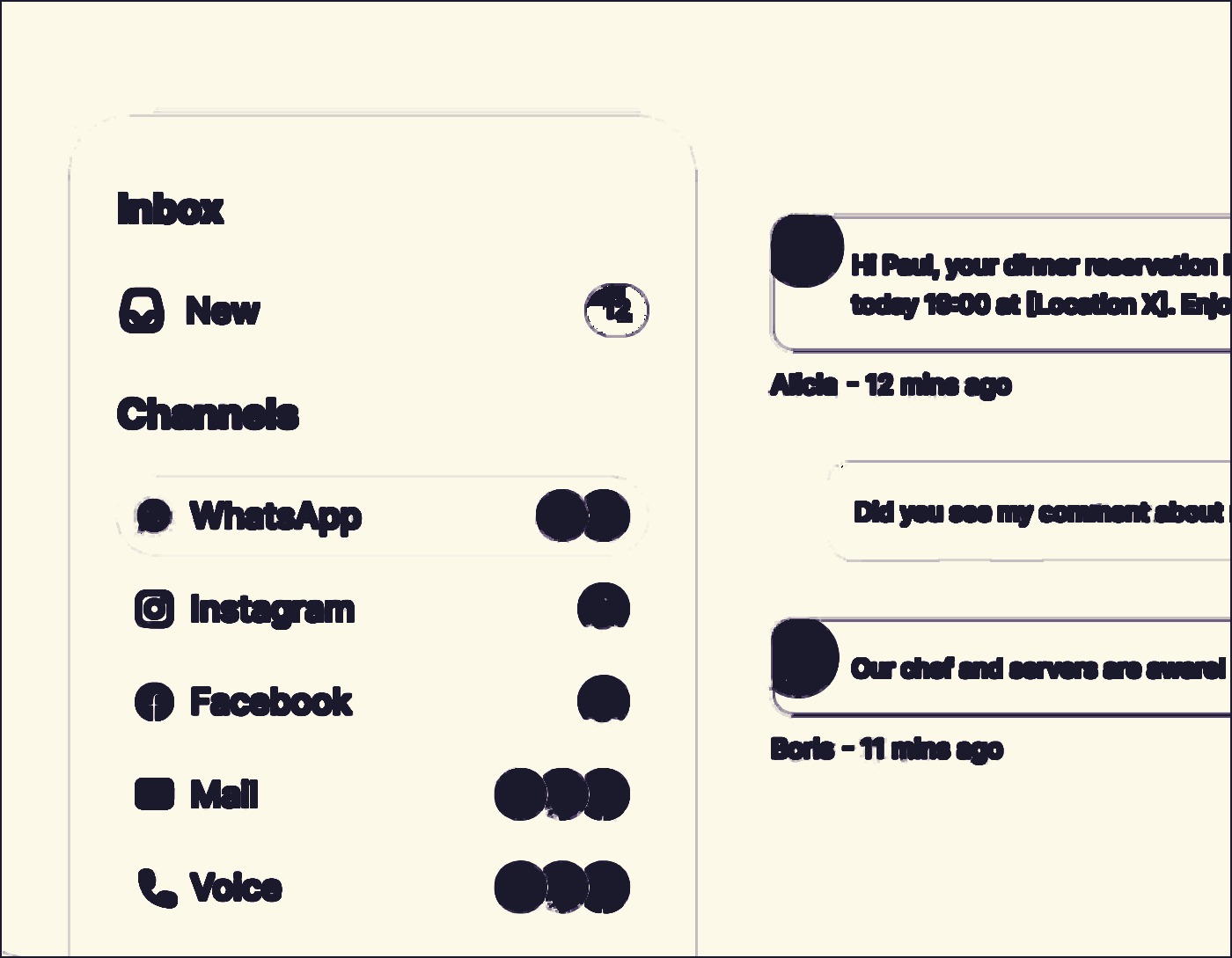
Trengo Bet the Company on WhatsApp Beating Email
The Utrecht startup pulled a dozen messaging channels into one inbox and raised $36 million on a simple hunch - that customers would rather text a business than email it. Now its AI is chasing the 84% of questions nobody wants to answer twice.

Zoho won't buy Trengo - it wired into it instead
The bootstrapped giant that famously refuses to acquire found a quieter way to work with a Dutch omnichannel upstart: an open API, a shared inbox, and a customer record that finally lives in one place.

Why Trengo Keeps Picking Fights With a $1.7B Unicorn
Front raised more than $200 million and a unicorn valuation on the promise of a shared inbox. Trengo, bootstrapped out of Utrecht, decided the future was WhatsApp - and started aiming straight at it.