minimally-invasive-surgery
(19)
How VYRSA Turned One Tiny Joint Into a $75 Million Bet
VYRSA built a three-product answer to a stubborn source of back pain, won FDA clearance for a stranger kind of implant, and sold to Nevro before its third birthday. The playbook is compact: license hard science, simplify the procedure, and let a bigger sales force carry it.
Medtronic
Medtronic began by repairing hospital electronics in a Minneapolis garage. Seventy-seven years later, its devices sit inside bodies, beside beds, and at the center of a high-stakes contest to make medicine less invasive, more measurable, and easier to scale.
NDR Medical Technology
NDR Medical Technology is a Singapore-based deep-tech company building AI-empowered interventional robotics for minimally invasive, image-guided surgery. Its Automated Needle Targeting (ANT) platform combines hardware and software to plan and align percutaneous needle placement with roughly ±1mm accuracy using a hospital's existing imaging equipment. Its flagship ANT-X robot received U.S. FDA 510(k) clearance in 2023 as the first automated device to aid kidney access for percutaneous nephrolithotomy, while ANT-C brings AI CT-based lesion targeting to procedures across the lung, liver, kidney and spine.
NousQ Pte Ltd
NousQ is a Singapore-based medical technology company founded in 2021 by ENT surgeon Dr Lynne Lim and engineer Gan Chee Wee. Its flagship product, CLiKX, is a handheld, robotic and sensor-controlled applicator that performs ventilation ear tube insertion with a single click. The device is designed to move ear tube surgery out of the operating theatre and general anesthesia setting into the outpatient clinic, cutting cost, wait times and trauma for the more than one million children who undergo the procedure worldwide each year.

3NT Medical
3NT Medical is an Israeli medical device company building a family of sterile, single-use endoscopes purpose-built for ear, nose, and throat (ENT) surgeons. Its two FDA-cleared, CE-marked products - the Colibri Micro ENT Scope for otology and the Peregrine Drivable ENT Scope for the sinuses - are designed to reach narrow anatomy that rigid reusable scopes struggle to see, while removing the cross-contamination and reprocessing burden of multi-use devices. Founded in 2012 by brothers Ehud and Eran Bendory and backed by Japanese optics maker Hoya, the company operates from Rosh Ha'ayin, Israel, with U.S. operations in Short Hills, New Jersey.

Angio8
Angio8 (Shenzhen Tonglu Technology, 通甪科技) is a medical robotics company building a surgical robot and treatment platform for minimally invasive vascular interventional procedures. Its system lets physicians remotely manipulate catheters and guidewires with force feedback, aiming to make interventional surgery safer, more precise, and less reliant on repeated radiation exposure for the operating team. Founded in 2021 and based in Shenzhen's Bao'an District, the company is led by co-founder and CEO Yunfei (Richard) Cao and is backed by investors including Oriental Fortune Capital, Kangyu Capital and Ruiqian Capital.
CurvaFix, Inc.
CurvaFix, Inc. is a Bellevue, Washington medical device company that developed the CurvaFix IM Implant - the first new intramedullary technology for pelvic trauma in three decades. Its curved, steerable rodscrew follows the natural shape of the pelvis, enabling strong internal fixation through a single small incision. The device is designed to reduce pain, support early weight-bearing, and speed recovery for patients with high- and low-energy pelvic fractures, including the growing population of elderly patients with fragility fractures of the pelvis.

DuraStat
DuraStat is an Austin, Texas medical device company that makes a purpose-built surgical instrument for repairing tears in the dura - the membrane surrounding the brain and spinal cord. Its handheld device automates suture passage so surgeons can create precise, watertight closures to prevent cerebrospinal fluid (CSF) leaks, even through the limited access typical of spine and neurosurgical procedures. Invented by practicing spine surgeons, DuraStat and its companion fascial-closure device TissueStat are stocked in surgical facilities across all 50 U.S. states, and in late 2024 the company entered an exclusive U.S. commercial partnership with Medtronic.

EchoPixel, Inc.
EchoPixel is a Silicon Valley medical visualization company that turns ordinary CT, MRI and ultrasound scans into life-size, interactive 4D holograms of a patient's own anatomy. Its FDA-cleared True3D platform and Holographic Therapy Guidance (HTG) let surgeons and interventional cardiologists reach in and manipulate a digital twin of a heart or organ - no headset or glasses required - to plan and guide complex, minimally invasive procedures.

Theator
Theator is a surgical intelligence company that turns raw operating-room video into structured, actionable data. Using proprietary computer vision and AI, its platform analyzes minimally invasive procedures in real time - identifying surgical steps, flagging safety milestones, and generating operative reports by the time the surgeon leaves the OR. Founded by Dr. Tamir Wolf and Dotan Asselmann, Theator aims to reduce variability in surgical care and is deployed at academic medical centers including Mayo Clinic and UHealth Miami, having analyzed more than 600,000 procedures.

Image Navigation
Image Navigation is a US-headquartered, Jerusalem-developed medical device company that builds IGI (Image Guided Implantology), a real-time surgical navigation and robotics system for dental implant surgery. It turns a pre-operative CT scan into a live 3D map of a patient's anatomy, tracks the drill with sub-millimeter accuracy, and adds a robotic autostop that shuts the drill off the instant it strays from the planned path - giving dentists the safety of robotics without a rigid robotic arm.
Myra Vision
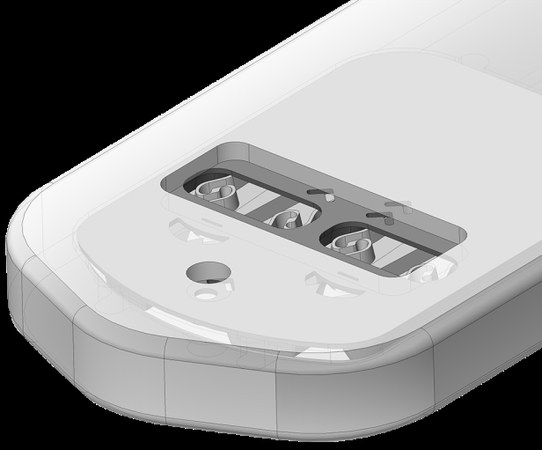
Myra Vision is a Campbell, California medical device company developing the Calibreye Titratable Glaucoma Therapy Surgical System - a next-generation aqueous shunt with adjustable outflow channels that let surgeons fine-tune intraocular pressure in glaucoma patients non-invasively in the clinic, long after the implant goes in.

COR Medical Ventures
COR Medical Ventures is a San Diego-area medical device development company that acts as the center of rotation for medtech innovation. Through three branches - consulting services, a venture studio, and distribution services - it partners with surgeon-inventors and corporations to take orthopedic, spine, and other devices from clinical idea to FDA clearance and market launch. Founded by engineer Ben Arnold, the firm has stood up a portfolio of more than a dozen independent companies spanning robotics, wearables, spinal fusion, and soft-tissue fixation.
Capstan Medical
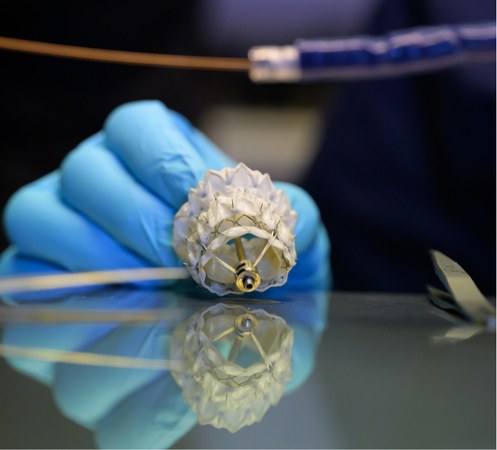
Capstan Medical is a Santa Cruz, California medical device company building a robotic, catheter-based platform to repair and replace heart valves through minimally invasive procedures. By merging surgical robotics, catheter-based delivery, and next-generation implants, the company aims to bring structural heart intervention - starting with mitral and tricuspid valve regurgitation - to patients who are too sick or too high-risk for open-heart surgery. Founded in 2020 and led by CEO Maggie Nixon, Capstan has raised more than $140 million and completed its first robot-assisted transcatheter mitral valve replacements in humans.

Siesta Medical, Inc.
Siesta Medical, Inc. is a privately held medical device company in Los Gatos, California that builds minimally invasive implants and instruments to treat obstructive sleep apnea (OSA). Its flagship AIRLIFT procedure - performed with the FDA-cleared Encore System and the Revolution Suture Passer - lets ear, nose and throat surgeons pull the hyoid bone and tongue base forward to keep the airway open during sleep. The knotless, fully adjustable approach takes roughly 30 minutes, works regardless of a patient's anatomy, BMI or apnea severity, and has been used in more than 2,000 patients.

Sound Blade Medical Inc.
Sound Blade Medical is a Halifax-based medical device company building a handheld, ultrasound-guided histotripsy device - a tool that uses focused sound waves to mechanically liquify and destroy targeted tissue from outside the body, with no incision, no heat, and no radiation. Spun out of research at Dalhousie University and Nova Scotia Health, the company is led by veteran medtech executive Neil Barman and inventor Jeremy Brown, and closed an oversubscribed US$16.5M Series A in January 2025 to push the technology toward the clinic.
XCath Robotics
XCath Robotics is a Houston-based medical robotics company building next-generation endovascular robotic systems and steerable smart guidewires to treat stroke, brain aneurysms and other neurovascular conditions. Its flagship Iris system is the only endovascular robot in development capable of intracranial navigation, and the company is racing toward a clinical telerobot that could let a specialist perform a brain-clot removal on a patient hundreds of miles away.
Tenon Medical, Inc.
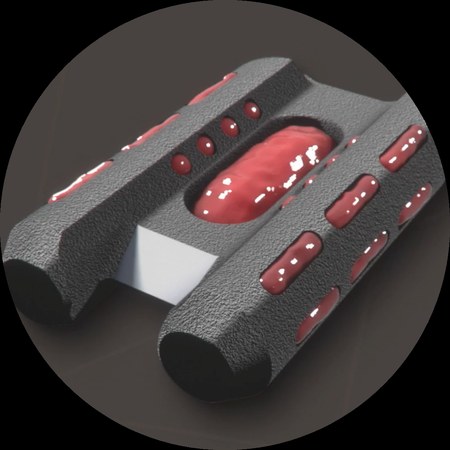
Tenon Medical is a Los Gatos, California medical device company that built the Catamaran SI Joint Fusion System, a patented, less-invasive way to fuse the sacroiliac joint with a single titanium implant placed along an inferior-posterior trajectory. Founded in 2012 and public on the Nasdaq since 2022 (TNON), Tenon targets the often-overlooked SI joint, a frequent and hard-to-diagnose source of chronic lower-back pain. In 2025 it expanded into a multi-product sacro-pelvic platform by acquiring the SiVantage SImmetry technology portfolio.
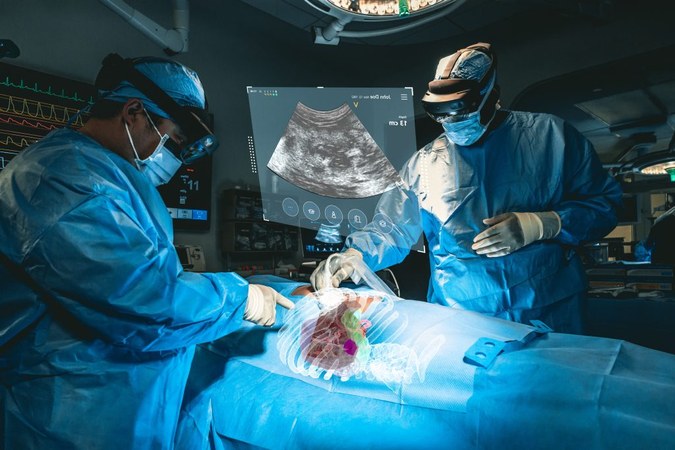
MediView XR, Inc.
MediView XR is a Cleveland, Ohio med-tech company building augmented-reality 'X-ray vision' for surgeons. Founded in 2017 on Cleveland Clinic intellectual property, MediView's FDA-cleared XR90 platform and OmnifyXR Interventional Suite let clinicians see a patient's 3D anatomy - bone, tissue, organs, and vasculature - holographically projected through the skin during minimally invasive, ultrasound-guided procedures. Backed by GE HealthCare, Mayo Clinic, and Cleveland Clinic, the company raised a $24M Series A in October 2025.