A small team in Silicon Valley is building a glaucoma implant the size of a contact lens - and the audacious idea that it should be adjustable for the rest of a patient's life.
Inside a low-slung building on Dell Avenue in Campbell, California, twenty-seven people are arguing about a millimeter. They are debating, again, how much aqueous humor a human eye should be allowed to drain on a Tuesday afternoon - and how much that answer should be allowed to change by Friday.
This is not the kind of question that scales like software. There is no toggle in a settings menu, no A/B test, no growth loop. There is a person, a slit lamp, and a piece of silicone the size of an eyelash. Myra Vision's wager is that the millimeter matters, that the millimeter is the whole game, and that nobody before them ever built a knob to turn it.
The company spun out of Shifamed in 2019, the Silicon Valley medtech hub founded by Amr Salahieh - the same hub that produced Sadra Medical, the cardiology business Boston Scientific eventually bought. Robert Chang, a serial founder with six previous device startups behind him, took the CEO seat. It was his first foray into the eye. He has said the move was less about ophthalmology being interesting and more about ophthalmology being stuck.
Glaucoma is the world's leading cause of irreversible blindness. The disease is essentially a plumbing failure inside the eye - fluid builds up, pressure rises, the optic nerve gives way. The standard playbook is eye drops, then laser, then surgery, then more surgery. Surgeons can place an aqueous shunt, a tiny tube that lets fluid out. The problem is that once it is in, it is in. You cannot dial the flow up. You cannot dial it down. You can re-operate, which nobody enjoys, least of all the cornea.
Myra Vision's answer is called Calibreye. It is a 0.30 mm-thick implant made of two materials cardiology has trusted for decades: medical-grade silicone and nitinol, the shape-memory alloy that holds your relative's coronary stent open. Calibreye has multiple outflow channels. Each one can be opened or closed by a non-invasive in-office procedure, performed in the clinic, without re-entering the eye. The surgeon can titrate. The patient can come back in a year and titrate again.
That is the difference. Most glaucoma devices are committed at implantation. Calibreye is committed to being uncommitted.
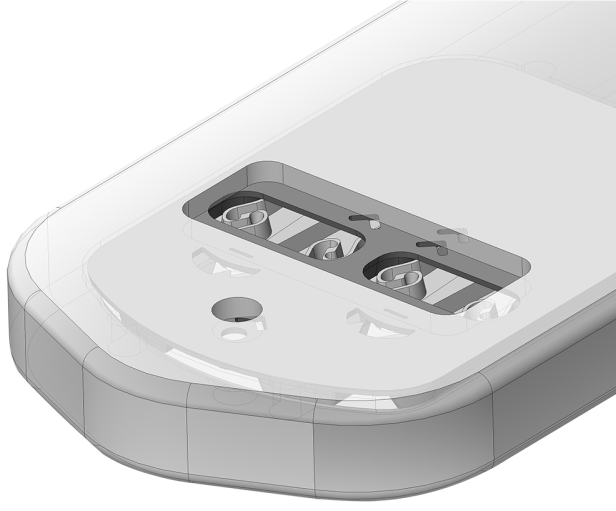
Conformal to the eye's curvature. Implanted using the familiar delivery techniques surgeons already practice. No new operating room workflow to learn from scratch.
Independent adjustable channels mean a clinician can open more drainage if pressure creeps up, or close some down if a patient over-drains. It happens in a clinic room, not an OR.
Both have multi-decade safety records in implanted medical devices. The novelty is not the chemistry. The novelty is the geometry.
Not yet approved for sale. The ADAPT trial began enrolling US patients in January 2026, following FDA IDE clearance the prior August.
Medical device companies do not get to ship a minimum viable product on a Wednesday. Myra Vision has raised $50.4 million across three rounds, each one tied to a specific clinical milestone. The cap table is unusually quiet for a Silicon Valley startup - no SoftBank, no Tiger - and that is intentional. Cormorant Asset Management led the most recent round. The Capital Partnership and PA MedTech VC Fund stayed in. Shifamed angels have backed every round.
Engineer by training, founder by habit. Myra Vision is his seventh device startup in thirty years and his first in ophthalmology. Previously co-founded Ample Medical and MVRx, served as CTO at Sadra Medical before Boston Scientific bought it.
Founder of Shifamed and one of the most productive medical device entrepreneurs of his generation. Has now incubated more than a dozen companies, several of which have been acquired by strategics.
The Campbell office houses the entire operation - engineering, regulatory, clinical, and quality - in a single room of cubicles arranged, of all things, like the spokes of an iris.
Glaucoma surgery is a real market with real incumbents. Glaukos built a public company around the iStent. AbbVie owns the XEN Gel Stent. Alcon shipped the Hydrus Microstent. Sight Sciences plays in canaloplasty. Traditional tube shunts come from Johnson & Johnson and New World Medical. None of them are adjustable after implantation, which is the negative space Myra Vision is trying to fill.
The implant is 0.30 mm thick - about three sheets of paper stacked.
Nitinol, the alloy in Calibreye, also holds your relative's cardiac stent open.
Robert Chang has launched seven device startups. This is his first in ophthalmology.
The company was originally called Myra Medical. The rename happened around Series A, quietly.
Outflow adjustment happens with a clinic laser. No incision. No OR. The patient drives home.
It is still Tuesday afternoon in Campbell. The twenty-seven people are still arguing about the millimeter. The difference is that, a year from now, that argument might end with a surgeon in Tampa adjusting a patient's intraocular pressure in a clinic chair, on a Friday, without a single incision. The whole point of Myra Vision is that the millimeter never settles. And neither does the team that builds the knob to turn it.