marine-technology
(7)
Bernardo Herzer learned propane at sea. Then he brought it ashore.
A broken marine engine, a green-painted Culver City workshop and a stubborn question: what if small machines did not need gasoline at all?

Brunswick Corporation
Brunswick began with a billiard table in 1845. Today, its engines, electronics, boats and clubs form an unusually complete marine ecosystem - a bet that the future of boating belongs to whoever makes the whole experience easier.

Mitch Lee
Mitch Lee is the co-founder and CEO of Arc, the Los Angeles marine-technology company trying to make everything that floats electric. A Bay Area kid raised on the California Delta, he trained as a mechanical engineer at Northwestern, analyzed Apache helicopter rotor blades at Boeing, then spent years in software - founding Penny, which was acquired by Credit Karma - before reuniting with his old Boeing and Northwestern classmate Ryan Cook, a former SpaceX lead engineer, to build electric boats in 2021. Arc has raised more than $150 million, ships its Arc Sport wake boat and Arc Coast center console from a 150,000-square-foot LA factory, and in 2026 pushed into commercial and defense propulsion with a $50M Series C and a $160M tugboat contract for the Port of Los Angeles.
Blue Ocean Gear
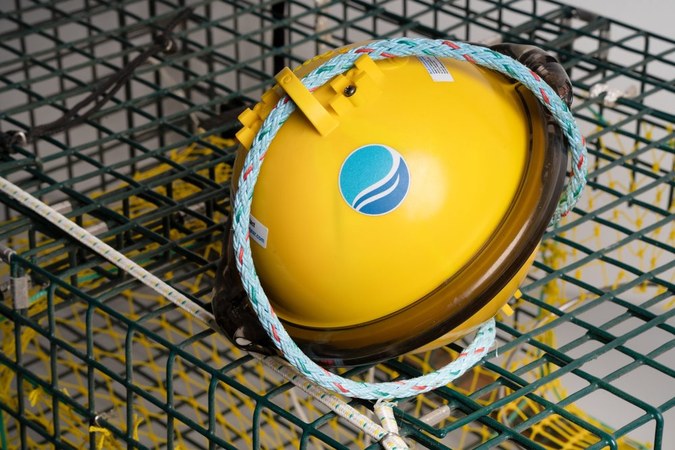
Blue Ocean Gear builds Smart Buoys - rugged, connected buoys that track the real-time location and movement of fishing and aquaculture gear deployed at sea. Using dual-band satellite and radio links feeding a cloud platform and mobile app, the company helps commercial fishers find lost gear faster, spot problems early, cut fuel-burning search time, and reduce 'ghost gear' that fouls the ocean. Founded in 2015 and based in Sausalito, California, it serves wild-capture fisheries, aquaculture farms, and research institutions from New England to the South Pacific.

Kortney Opshaug
Kortney Opshaug is an aerospace-engineer-turned-ocean-entrepreneur and the CEO and founder of Blue Ocean Gear, a Sausalito-based startup whose orange-and-yellow Smart Buoys put GPS and sensors on fishing gear so commercial fishers can track, recover, and learn from equipment that would otherwise drift off as 'ghost gear.' With a Stanford PhD in aerospace and two MIT degrees in aeronautics, she spent years on docks listening to fishermen before designing hardware tough enough for the open ocean. Her buoys now ride the waters off Alaska, Nova Scotia, and the Caribbean, backed by NOAA SBIR funding and a Series A round, turning a tool for finding lost traps into a real-time data platform for a more sustainable ocean economy.
Arc
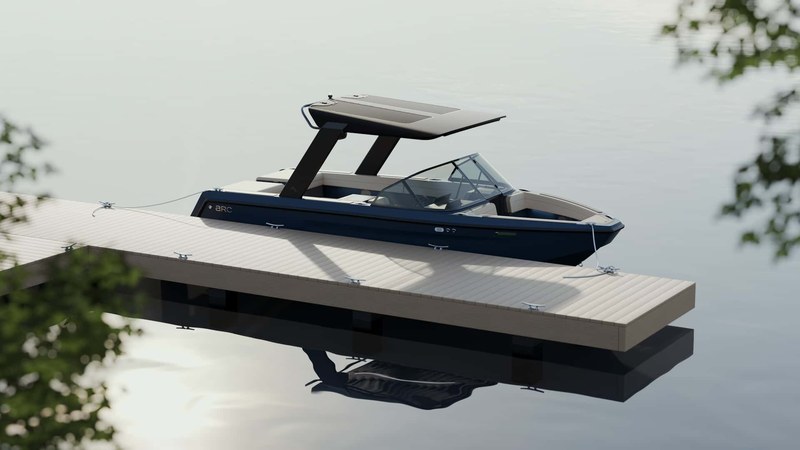
Arc is a Los Angeles electric boat company building battery-powered watercraft from the ground up - software, motors, battery packs and hulls - rather than retrofitting gas boats. Founded in 2021 by veterans of SpaceX, Rivian and Tesla, Arc started with the high-end Arc One, found its commercial footing with the Arc Sport electric wake boat and the Arc Coast center console, and is now extending its propulsion stack into commercial and defense vessels including electric and hybrid tugboats. The pitch: quiet, fume-free, low-maintenance boats with the torque and software experience of an EV.
Apeiron Labs
Apeiron Labs is a Cambridge, Massachusetts deep-tech company building the Tensor platform - large, low-cost networks of small autonomous underwater vehicles that persistently measure the upper 400 meters of the ocean. By making subsurface ocean data cheap and continuous instead of episodic and expensive, Apeiron sells real-time ocean intelligence as a service to defense, climate, offshore energy, aquaculture, and maritime customers. The company raised a $9.5M Series A in February 2026 and says it has already cut the cost of ocean data roughly 100-fold, with a goal of 1,000-fold.