640,000 metric tons of fishing gear vanish into the ocean every yearBlue Ocean Gear Smart Buoys cut gear loss by up to 90%Series A: $4.2M raised in May 2023Backed by NOAA SBIR, Conservation International & Signia Venture PartnersDeployments from New England to the South PacificSome customers save up to 8 hours of searching a day640,000 metric tons of fishing gear vanish into the ocean every yearBlue Ocean Gear Smart Buoys cut gear loss by up to 90%Series A: $4.2M raised in May 2023Backed by NOAA SBIR, Conservation International & Signia Venture PartnersDeployments from New England to the South PacificSome customers save up to 8 hours of searching a day
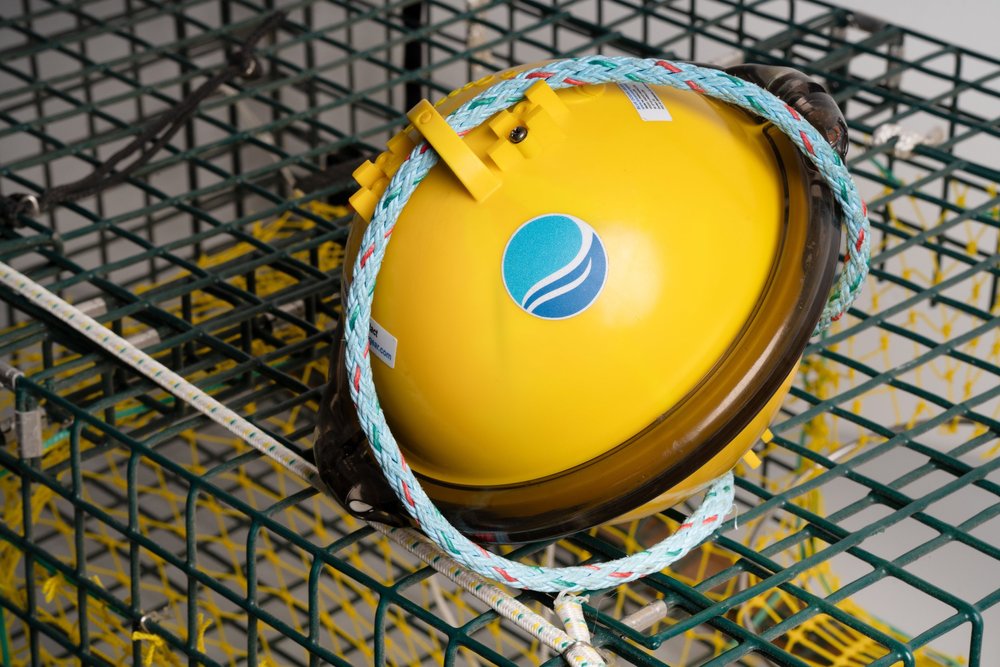
Fig. 1 - The Farallon Smart Buoy. Small enough to nap inside a crab pot, stubborn enough to argue with the North Pacific.
Company Profile / Ocean Tech
Blue Ocean Gear.
The fishing buoy got a brain, a satellite uplink, and a job: never lose the gear again.
Founded 2015Sausalito, CA~9 people$6.5M raisedSmart Buoys
01 - Dispatch from the deck
A trap goes quiet. A phone lights up.
Somewhere off the coast of Alaska, a string of crab pots is drifting where it shouldn't be. No one on the boat saw it happen. The current did its quiet work overnight. But a small orange buoy clipped to the gear noticed, and it has already said so - bouncing a message off a satellite, into a cloud database, onto a fisher's phone before the coffee is cold. The gear is not lost. It is just a dot on a map, asking to be collected.
That dot is the entire business of Blue Ocean Gear, a nine-person company in Sausalito, California that decided the humble fishing buoy had been coasting on its reputation for a few centuries too long. Their version - the Farallon Smart Buoy - reports its location, its movement, and the conditions around it, in something close to real time. The fisher stops guessing. The ocean stops collecting.
Real time tracking for your deployed gear. Find gear faster, identify problems early, save time - fish smarter.
- Blue Ocean Gear, on the front page
02 - The problem they saw
The ocean is quietly eating the fishing industry's homework.
Here is a number that does not get a press conference: an estimated 640,000 metric tons of fishing gear are lost in the ocean every year. Traps, lines, nets - gone. It keeps fishing long after it's abandoned, a phenomenon with the unfairly poetic name of ghost gear. Lost gear accounts for as much as half of all marine plastic pollution, and it has been called the most harmful form of plastic debris to marine wildlife.
For the fisher, the loss is also a line item. Replacing gear is expensive. Hunting for drifting gear means hours - sometimes days - of burning diesel in widening circles, hoping to spot a buoy the size of a basketball in an ocean that does not care. It is, to put it gently, an inefficient way to run a business. The industry had simply decided this was the cost of going to sea.
Lost gear was treated like weather - unfortunate, unavoidable, somebody else's problem. Blue Ocean Gear disagreed on all three counts.
Blue Ocean Gear was founded in 2015 by Kortney Opshaug, who serves as CEO. The wager was deceptively simple: every other valuable asset on Earth - trucks, containers, pallets, scooters - had already been wrapped in connectivity and put on a dashboard. Gear sitting on the seafloor, worth real money and capable of real harm, had not. The bet was that fishers would happily trade guesswork for a live map, if someone built hardware tough enough to survive the trade.
"Tough enough" is doing heavy lifting in that sentence. A buoy that works in a lab and dies in a 20-foot Arctic swell is a paperweight. So the harder, less glamorous bet was on the engineering: a device small enough to stash inside a crab or lobster pot, durable enough to be bounced off a steel deck, and frugal enough with power to keep talking to a satellite for an entire season.
Anyone can build a buoy that floats. The trick is building one that survives the people who use it.
- The unglamorous half of the bet
04 - The product
A hard plastic float with opinions.
The flagship is the Farallon Smart Buoy - named, fittingly, after the rugged islands off the California coast. It is a depth-rated, ruggedized hard-plastic buoy that transmits via Iridium satellite and radio. Clip it to your gear, drop it, and it reports where the gear is, whether it is moving, and what the local conditions look like. When the gear strays outside its intended area, the buoy raises its hand.
Behind the float sits the part that makes it a company rather than a gadget: a dual-band satellite-and-radio link feeding a cloud platform, with mobile and web dashboards. It maps hot spots from historical data so fishers can dodge vessel conflicts and ugly conditions. It is, in plain terms, asset tracking - the boring miracle that reshaped logistics on land - finally pointed at the bottom of the sea.
Live location, movement alerts, and hot-spot mapping from historical data.
Whale-Safe / Ropeless
A buoy and lift-bag system co-developed to cut whale entanglement risk.
FAD Monitoring
Tracks offshore Fish Aggregating Devices, easing pressure on coral reefs.
Fig. 2 - Four ways to keep tabs on something you can't see. The buoy does the floating; the software does the worrying.
05 - The log book
Ten years, several oceans.
2015
The company launches
Kortney Opshaug founds Blue Ocean Gear in the Bay Area to give deployed fishing gear a voice.
2020
NOAA comes aboard
NOAA's SBIR program begins backing multiple phases of Smart Buoy development.
2021
Conservation International invests
CI Ventures provides growth financing to scale production and build out the buoy network.
2022
Whale-safe testing & a Phase I grant
A $149,478 NOAA Phase I award funds a more ruggedized design; ropeless gear is tested with Crab Raft, Inc.
2023
Series A + Phase II
A $4.2M Series A closes in May; a $648,918 NOAA Phase II grant targets fisheries in Alaska and the Gulf of Mexico.
06 - The proof
The numbers fishers actually feel.
Mission statements are cheap. Saved fuel is not. Blue Ocean Gear says it helps some of the most gear-intensive fisheries reduce gear loss rates by up to 90%, and that customers report cutting up to eight hours of daily searching. For a vessel burning roughly 20 gallons of fuel an hour, that is a meaningful pile of diesel - and carbon - that never gets spent circling the water.
What a Smart Buoy buys you
// reported customer outcomes - figures are company-stated, approximate
Gear loss reductionup to 90%
Daily search time cut (of an ~8hr hunt)up to 100%
Marine plastic that is lost gear~50%
640k
TONS GEAR LOST / YEAR
8 hrs
SEARCH SAVED / DAY
90%
LESS GEAR LOSS
$6.5M
TOTAL RAISED
Fig. 3 - A chart where the good news and the bad news share a y-axis. The orange bar is the company's pitch; the brown bar is the reason it exists.
Then there is the company it keeps. NOAA has funded the buoy through multiple SBIR phases. Conservation International put money in. Blue Ocean Gear is a member of the Global Ghost Gear Initiative, has worked with Fisheries and Oceans Canada, and partnered with Crab Raft, Inc. on whale-safe gear field-tested along the Maine coast in a tour the company cheerfully called the "Ropeless Roadshow." For a nine-person team, that is a lot of institutional faith.
NOAA backed it. Conservation International invested in it. Fishers actually use it. Three audiences that rarely agree on anything.
- The proof, stacked
07 - The mission
Stewardship that happens to pencil out.
Plenty of ocean ventures lead with the whale and bury the business model. Blue Ocean Gear runs it the other way around. The mission - promote ocean stewardship, protect marine ecosystems, support fishing communities - is real, but it rides on a product fishers buy because it saves them money. Less lost gear is less ghost gear. Less searching is less fuel. The conservation win is a byproduct of the commercial one, which is exactly why it might last.
That positioning shows up in the markets: wild-capture fisheries, offshore aquaculture farms, research institutions, FADs that give local fishers access to pelagic fish while easing pressure on coral reefs. From New England to the South Pacific, the pitch is identical - know where your gear is, and almost everything else improves.
The greenest thing about the buoy is that fishers want it for entirely selfish reasons.
- Where mission meets margin
08 - Why it matters tomorrow
Back to that drifting string of pots.
As fisheries face tighter regulation - whale-safe rules, ropeless mandates, gear-marking requirements - "we lost it, sorry" stops being an acceptable answer. Connected gear stops being a luxury and starts looking like the cost of staying licensed. The companies that figure out how to watch their gear, prove it, and recover it will have a quiet advantage. Blue Ocean Gear has a roughly ten-year head start on the watching.
So return to Alaska, to the string of crab pots that drifted overnight. In the old version of this story, the fisher wakes up, learns nothing, burns a day of fuel hunting, and maybe goes home with empty hands and a smaller margin. In the new one, the buoy already sent the message. The dot is on the map. The gear comes home, the diesel stays in the tank, and the ocean keeps one less ghost. Same boat, same current, same buoy - except this buoy talks.
The trap still goes quiet. The difference is that now, somebody hears it.
Profile compiled from public sources - figures are company-stated and approximate.
Blue Ocean Gear, Inc. · Sausalito, California · info@blueoceangear.com