low-earth-orbit
(8)
Dispatch
Dispatch is a San Francisco hard-tech startup building the return leg of the space economy. Founded by ex-Astranis engineers, it develops refurbishable reentry vehicles and uncrewed, autonomous space stations so that pharmaceutical, semiconductor, and biotech companies can manufacture ultra-high-value materials in microgravity and bring them home affordably. Its first vehicle, Spark 1, targets a demonstration flight in 2027, and the team has already tested a full-scale Mach 20+ heat shield built roughly 100x cheaper than incumbents.

Reditus Space
Reditus Space is an Atlanta-based aerospace startup building reusable spacecraft that carry payloads to low Earth orbit and return them safely to the ground. Its first vehicle, ENOS, is a free-flying reentry capsule designed to host commercial and research payloads for roughly two months in microgravity before splashing down for recovery and reuse. Founded in 2024 by Georgia Tech aerospace engineers Stef Crum and Will Sherman, the company sells 'microgravity as a service' and routine 'downmass' - the return of materials from orbit - to pharmaceutical, semiconductor, biotech, and defense customers.

Oligo Space
Oligo Space is a Hawthorne, California startup building an AI-first stack for designing and manufacturing payload-centered spacecraft. Its software engine, Zenith, turns raw mission requirements into flight-ready ESPA-class spacecraft using generative design, constraint solving and physics-based optimization - compressing work that once took teams of specialists months into a process that runs in minutes and manufactures in under eight months. Founded in 2024 by MIT AeroAstro graduate and former NASA JPL engineer Jacob Rodriguez, the company plans to fly its first spacecraft, Chimera-1, aboard SpaceX's Transporter-15 mission in 2026.
Aetherflux
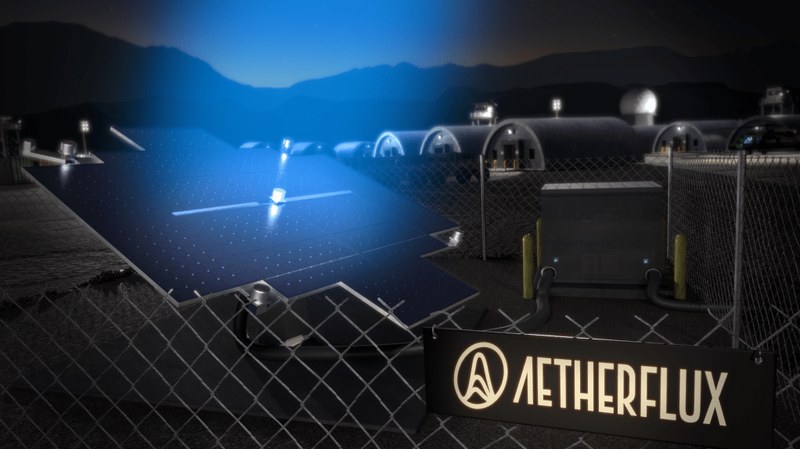
Aetherflux is a San Carlos, California space and energy startup founded in 2024 by Robinhood co-founder Baiju Bhatt. It is building a constellation of small low-earth-orbit satellites that collect sunlight in space and beam the energy back to compact ground stations on Earth using infrared lasers rather than the giant geostationary microwave platforms imagined by earlier space-solar concepts. Backed by a $50 million Series A and early defense funding, the company aims to deliver electricity to places the grid cannot reach, beginning with forward operating bases, remote research stations, and disaster zones, and planned a first in-orbit power-beaming demonstration for 2026.

Relativity Space
Relativity Space is an American aerospace company building rockets in a radically different way - by 3D printing the bulk of each vehicle with its proprietary Stargate metal printers and autonomous robotics. Founded in 2015, it became the first company to launch a largely 3D-printed rocket (Terran 1) in 2023, and is now focused on Terran R, a medium-to-heavy-lift, fully reusable launch vehicle aimed at the commercial and government markets. Under CEO Eric Schmidt, who took the helm in 2025, the company is also exploring orbital infrastructure for AI and high-performance computing.

Starcloud
Starcloud is a US deep-tech company building data centers in orbit. By placing GPU clusters in space, it taps near-continuous solar power and passive radiative cooling to run AI training and inference without the land, water, grid-permitting, and energy constraints that bottleneck data centers on Earth. In November 2025 its Starcloud-1 satellite became the first spacecraft to train a large language model in orbit using an Nvidia H100 GPU; its $170M Series A in March 2026 made it the fastest unicorn in Y Combinator history.

Varda Space Industries
Varda Space Industries builds spacecraft that manufacture materials in microgravity and bring them back to Earth inside autonomous reentry capsules. The El Segundo company is best known for crystallizing pharmaceuticals in orbit - it grew crystals of the HIV drug ritonavir on its first mission - and for selling its capsules as hypersonic test platforms to the U.S. government. With its W-series vehicles, Varda is trying to turn low Earth orbit into a working factory floor and a routine, high-cadence delivery service back to the planet's surface.

Xona Space Systems
Xona Space Systems is a Burlingame, California company building Pulsar, a commercial low-Earth-orbit constellation that delivers positioning, navigation, and timing (PNT) with centimeter-level accuracy, signals far stronger than legacy GPS, and built-in authentication to resist jamming and spoofing. Founded in 2019 by Stanford and SpaceX alumni, Xona aims to deploy roughly 258 satellites that work with existing devices through software updates, offering a resilient alternative and augmentation to government-run satellite navigation systems.