infrastructure
(2)
Laurence Allen
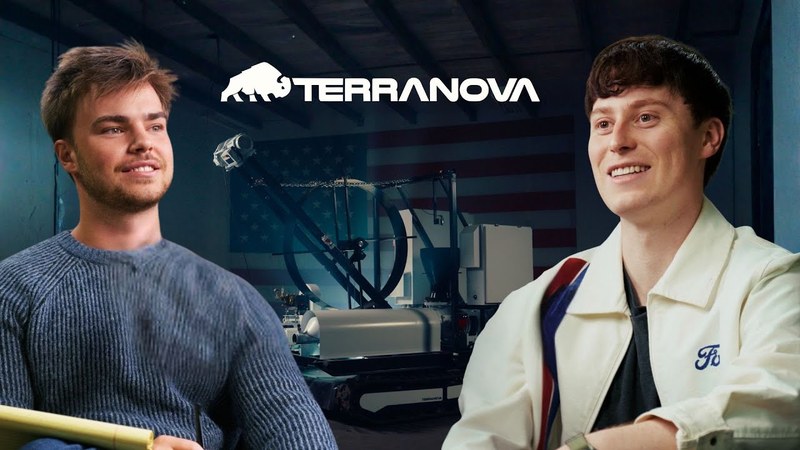
Laurence Allen, co-founder and CEO of Terranova, explains how his startup lifts land out of flood zones by injecting slurries of waste wood chips deep underground, an inexpensive, scalable alternative to seawalls, levees, and demolition. Drawing on a 1970s Venice mudjacking experiment and powered by autonomous robots and AI geology modeling, Terranova aims to be 'the anti-subsidence,' protecting whole communities and critical infrastructure. Allen also reflects on his formative internship at SpaceX, his maker upbringing, the intensity of deep-tech founding, and his vision for licensing the technology to contractors worldwide.
OpenAI's $122B Megaround Shows AI Funding Has Gone Nuclear
On March 31, 2026, OpenAI closed the largest private funding round in history — $122 billion in committed capital at a post-money valuation of $852 billion. Anchored by Amazon ($50B), Nvidia ($30B), and SoftBank ($30B), with continued participation from Microsoft and a sweeping syndicate of global institutions, the round dwarfs every prior private tech raise and cements OpenAI as the world's most valuable startup by a wide margin. The company is generating $2 billion in monthly revenue, counting 900 million weekly ChatGPT users, and is widely expected to pursue an IPO.