home-insurance
(12)
The 120-Year-Old Insurance Broker That Bet the Future on a Very Human Algorithm
Munn Insurance dragged a Newfoundland family brokerage from cod-liver-oil commerce into cloud software and online quotes. Its sharper idea was knowing where automation should stop.

FloLogic Bet $2,190 That Your House Should Know When to Turn Off Its Own Water
Cheap sensors tell you the floor is wet. FloLogic installs a bronze valve in the main line, watches every ounce, and can stop the water itself - a costly, stubborn bet that prevention belongs in the plumbing.

The $40,000 Bet That Turned Bilingual Insurance Into a 280-Office Machine
Ivan and Ania Herrera bought a name with no customers in the middle of a financial crisis. Their useful insight was less glamorous than disruption: speak the customer’s language, compare more carriers and turn the neighborhood agent into a repeatable franchise.
The Insurance Company That Started With a Bet on Farmers
A hunch about farmers in 1927 grew into a top-ten American insurer. Here is how American Family Insurance built a mutual empire on the promise to inspire, protect, and restore dreams.
Arbella Insurance Group
Arbella has built a billion-dollar regional insurer by staying close to home - backing more than 450 independent agents, learning New England's risks block by block, and treating community work as part of the operating model.

Farm Bureau Insurance of Tennessee
A company created because insurers would not cover Tennessee farm structures now protects more than two million homes, vehicles and small businesses. Its advantage is deliberately local: membership, agents and claims teams embedded across one state.
Erie Insurance Group
Erie grew from a business plan scribbled on a dime-store tablet into a Fortune 500 insurer. Its enduring advantage is surprisingly analog: a narrow map, local agents and the belief that service is part of the policy.

Mercury Insurance
Mercury built a nearly $6 billion insurance business by pairing disciplined underwriting with thousands of independent agents. Now it is adding apps, telematics and online service without abandoning the human network that still produces most of its premiums.
Progressive Insurance
Progressive became an insurance giant by doing something that sounds commercially reckless: making prices easier to compare. Behind Flo and the blue lettering sits a disciplined machine for pricing risk, distributing through both screens and independent agents, and turning insurance from a mystery into a shopping decision.
Allstate
Allstate began as insurance by mail from a Sears catalog. Ninety-five years later, it is rebuilding the Good Hands around apps, driving data and a distribution network designed to meet customers wherever they shop.

Eventual
Eventual is a New York-based climate fintech that helps American property owners escape the whiplash of rising home insurance costs. Its flagship product, the Premium Lock Guarantee, uses AI models trained on data from 20 million homes and 150,000 commercial properties to forecast how a property's insurance premiums will move over the next several years - and reimburses homeowners when their bills climb past that forecast. Sold through a network of more than 1,000 independent insurance agents and available in all 50 states, Eventual turns unpredictable, climate-driven premium spikes into a fixed, multi-year expectation. The company raised a $7.5 million seed round in July 2025 led by AlleyCorp and Upfront Ventures.
Stand
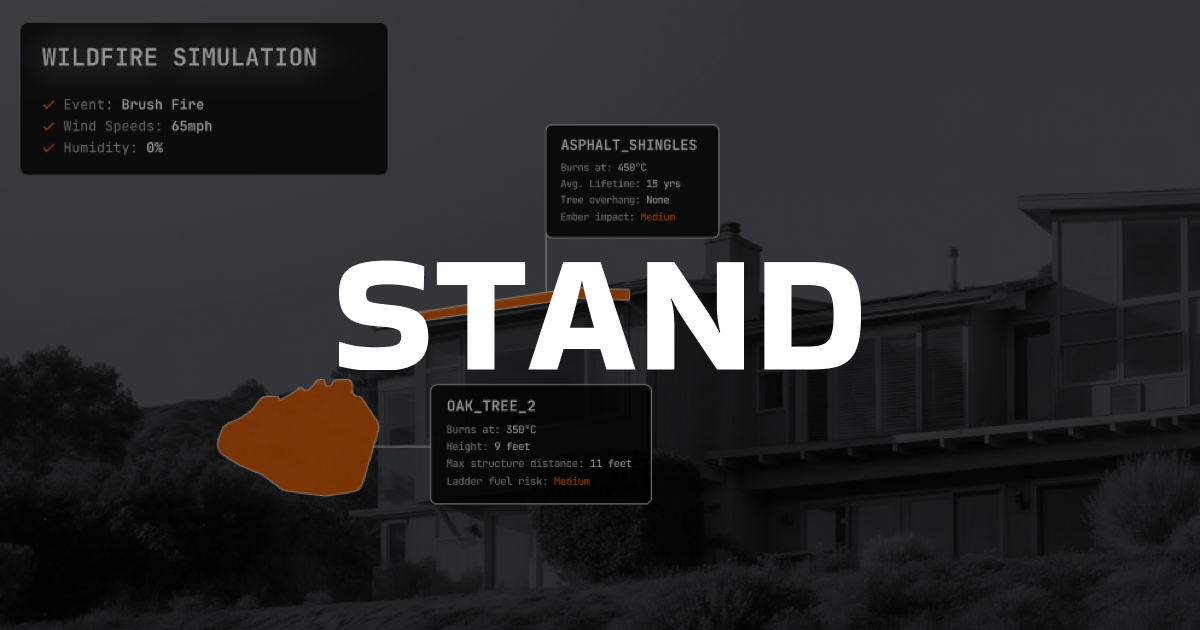
Stand is a San Francisco insurtech that uses physics-based simulation and AI to underwrite and insure homes in places most carriers have abandoned - the wildfire belt of California and the hurricane corridors of Florida. Instead of statistical averages, Stand builds a digital twin of each property and models how embers, wind, and water would actually attack it, pairing coverage with concrete mitigation upgrades.