Long before an insurance quote became a web form, Munn Insurance was adjacent to a business that could not have been more Newfoundland: cod liver oil. The company traces its beginnings to 1904, when a local merchant serving the fishing trade started arranging protection for its own commercial risks. In other words, Munn was its own first customer. Insurance eventually became the business, and the firm was formally established in 1949 - the same year Newfoundland joined Canada.
That origin matters because it explains the durable idea beneath the software. Munn does not manufacture insurance policies. It is an independent broker, a search-and-judgment layer between customers and the companies that assume their risk. A household, landlord, professional group, or business brings a messy bundle of facts. Munn shops among carriers, compares price and wording, recommends coverage, services the policy, and helps when a claim turns the fine print into a real argument.
Today the family-owned company operates in Newfoundland and Labrador and Nova Scotia. Public descriptions put it at roughly 80 employees, about 30,000 customers, and more than 40,000 policies. It sells home, auto, leisure, group, and commercial insurance. The scale is modest beside a national consolidator. That is exactly why its transformation is worth watching: Munn had enough history to carry baggage, but not enough payroll to solve every bottleneck with another person.
The Yellow Pages stopped ringing
The old distribution machine failed first. In 2015, C.J. Nolan described a shift away from radio and television toward search-engine marketing. The logic was blunt: customers were no longer opening the Yellow Pages. They were typing a problem into Google and expecting an answer immediately. Munn deployed Applied's Epic system, built online quote paths, and treated discoverability as an operating capability rather than a campaign.
The distribution switch
Phone-first quoting
Manual handoffs
One office-hour rhythm
Cloud brokerage system
Automated workflows
Omni-channel service
The trigger for the broader rebuild came with a generational handoff. C.J. Nolan and his brother Adam took over from their father, John, in 2013. Three years later, the company created a five-year plan called its 2020 Vision. The ordering was revealing: customer, people, results. It sounds like a conference-room slogan until you notice what followed - investment in cloud systems, rating tools, data and analytics, recruitment, training, and an in-house HR adviser, an unusual role for a brokerage of its size.
The product is choice, then advocacy
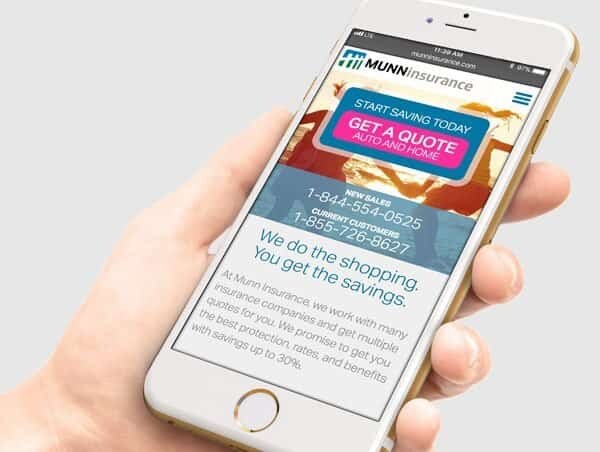
Munn's website looks like a catalogue of familiar policies, but the broker's actual product is the comparison. For home and auto customers, it pulls options from multiple insurers. For a business customer, Munn says it may compare as many as 20 markets. That matters because an insurer selling directly can only offer its own appetite, its own exclusions, and its own price. The independent broker can move sideways.
Home and property
Homes, condos, tenants, cabins, rentals, older attached houses, second residences, and optional water protection suited to a wet Atlantic climate.
Auto and leisure
Personal vehicles and recreational products, with online quoting, payment choices, and local help when a loss occurs.
Business risk
Property, liability, fleet, cyber, construction, environmental, and specialized placements for organizations that rarely fit a tidy form.
Affinity groups
Member programs for firefighters, nurse practitioners, chiropractors, educators, alumni, and other groups, combining potential discounts with assistance services.
The distinction becomes concrete with water. A standard home policy may cover a burst pipe while excluding water that arrives through a sewer, sump, storm, river, or melting snow. Munn's job is not merely to display a premium. It is to ask where the house sits, explain sewer-backup and overland-water endorsements, surface limits and exclusions, and find a carrier willing to cover the risk. A cheap quote with the wrong water wording is not a bargain in St. John's.
“We look at ourselves more as a kind of technology company that secures insurance coverage for our clients.”C.J. Nolan, CEO and president
What the makeover really cost
There is no public price tag for Munn's digital turn, and a neat software number would miss most of the bill anyway. The company changed acquisition, workflows, management systems, job design, and training. It adopted EpicCloud and Applied Rating products. It put data and analytics into personalization. It built automation around repetitive work. Then it paid the less visible cost: teaching an established organization to behave differently every day.
Systems + skills + patience. Digital transformation here was not a new homepage. It was a sequence of operating changes sustained across years, with people trained to trust new handoffs and managers willing to redesign old ones.
The company did not discover that human service had failed. It discovered that the machinery around it had. Paper-heavy processes, broadcast acquisition, and repetitive administration consumed attention that a regional broker should spend on advice. Automation became a way to reclaim that attention. In 2019, Applied Systems gave Munn its Pinnacle Award for the use of EpicCloud and rating tools. From 2022 through 2024, company and industry accounts record three consecutive Brokerage of the Year wins in the 10-to-100-staff category.
Awards are pleasant, but the useful evidence is the shape of the operation. A customer can begin online, move to a phone, and still reach a local person. A broker can use data to narrow the field without pretending an algorithm understands every old house, contracting job, or storage tank. Automation handles the predictable middle. Humans stay at the edges, where uncertainty and emotion live.
A workplace with popcorn - and pressure
Munn's culture pitch is unusually specific. Jeans are allowed every day. Popcorn appears on Fridays. There are impromptu barbecues, softball, family events, and, more recently, a summer cornhole tournament. In 2017 the company even described a staff wellness program in which 20 participants collectively lost more than 800 pounds. These details are amusing because insurance recruiting pages usually read as though fun has been reviewed by compliance.
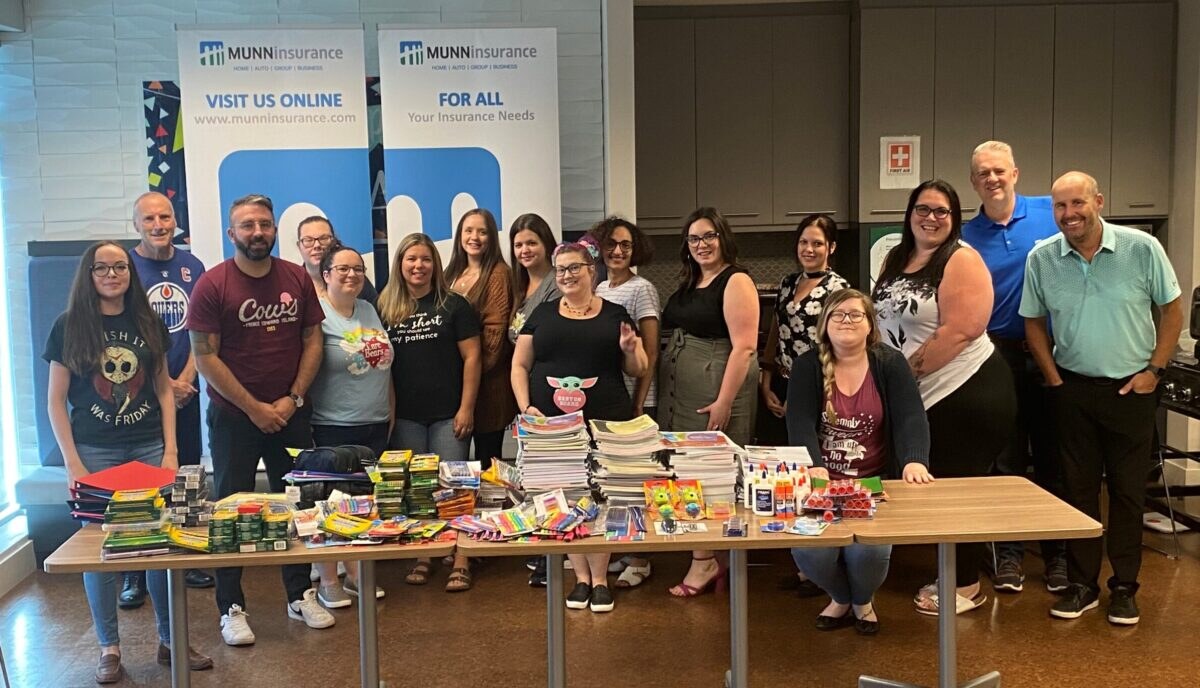
The harder part of the culture is less photogenic. Munn says it invests heavily in recruiting and training and supports professional development. Its careers material warns that the work is not easy and asks for a “blue collar roll-up the sleeves work ethic.” Employee reviews are limited and mixed enough to be useful: work-life balance receives relatively strong marks, while workload and advancement appear as recurring pressure points. That is a more believable picture than a bowl of popcorn alone.
Community partnerships also double as distribution. Munn became the preferred broker for the Newfoundland and Labrador Association of Fire Services, representing more than 6,000 firefighters, and created member programs for nurse practitioners and Chiropractors Nova Scotia. Participants may receive group discounts and assistance services; Munn earns access to a defined community with an existing layer of trust. It is customer acquisition disguised as a useful benefit - which is the best kind.
The five moves worth stealing
- Follow the customer's new doorway. Munn moved acquisition toward search and online quotes when directories and broadcast stopped matching buying behavior.
- Automate repetition, not judgment. Use software for data movement, comparisons, and routine handoffs; reserve people for exclusions, unusual risk, and claims.
- Turn supplier variety into a product. “We shop the market” only matters when the customer can see why one option fits better than another.
- Build trust through groups. Affinity partnerships create qualified demand, but only when the member benefit is specific and the service earns the endorsement.
- Modernize the operating system, not the costume. A digital form is cosmetic unless the workflow, training, incentives, and service behind it change too.
This playbook fits more than insurance. Accountants, mortgage brokers, clinics, law firms, and other regional service businesses face the same puzzle: customers want instant access, yet the expensive problem still requires context. The answer is not a chatbot painted over an old queue. It is a redesigned flow in which software clears the runway for a qualified person.
Where the model breaks
It fails when the broker lacks meaningful carrier choice, when automation hides exclusions instead of clarifying them, or when local service is only a slogan at claim time. It also struggles with customers who want one direct carrier, a single bundled ecosystem, or the absolute lowest premium regardless of advice. Scale helps comparisons; discipline makes them trustworthy.
The small fish test
C.J. Nolan once summarized the company's advantage in five words: “Sometimes, small fish swim faster.” The line works because it admits the constraint. Munn cannot outspend every national broker or carrier. It can decide faster, know Atlantic property and commercial risks more closely, and make the path between online convenience and a local advocate unusually short.
The next test is whether that hybrid holds as the firm grows. The company once spoke about doubling and entering new markets. Growth creates more data and carrier leverage, but it also adds handoffs - the very friction automation was meant to remove. Munn's best idea is therefore not any particular platform. It is a boundary: technology should make insurance easier to reach and easier to process, while a person remains accountable for explaining what the policy will actually do.
Insurance is a comparison problem until the basement fills with water, a contractor gets sued, or a car disappears. Then it becomes a trust problem. Munn's century-long route from merchant ledger to cloud workflow suggests those are not competing businesses. Done carefully, they are the same one.