hardware-software-co-design
(5)
S2C Builds the Chip Before the Chip
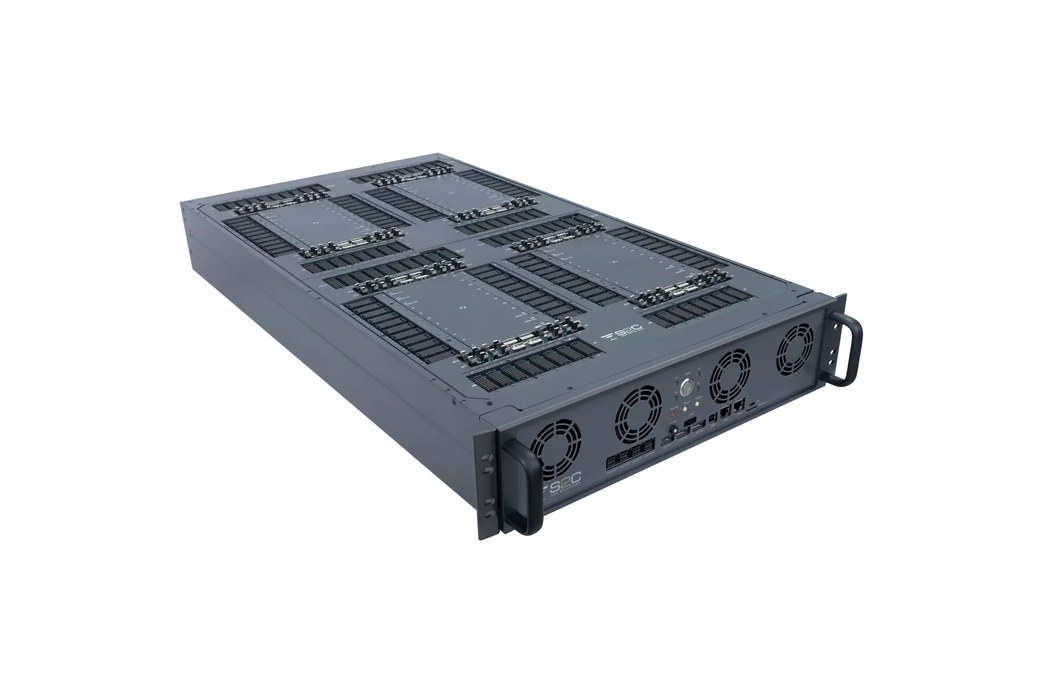
S2C sells a peculiar advantage to chip designers: months of usable reality before the silicon is real. Its boxes turn unfinished logic into something engineers can boot, probe, break, and improve.

Steve Tuck
Steve Tuck is the co-founder and CEO of Oxide Computer Company, a hardware-software startup building a rack-scale 'cloud computer' that brings hyperscaler-style elastic infrastructure to on-premises data centers. After nine years at Dell and roughly a decade at cloud provider Joyent, Tuck teamed with Bryan Cantrill and Jessie Frazelle in 2019 to co-design servers, networking, and software from the ground up. Under his leadership Oxide has shipped its first commercial racks and raised more than half a billion dollars, including a $200M Series C, to expand its take on enterprise cloud ownership.

Fabric Cryptography
Fabric Cryptography is a San Francisco hardware startup building the Verifiable Processing Unit (VPU) - a fully programmable custom-silicon chip with an instruction set designed specifically for advanced cryptography. Founded in 2021 by Michael Gao, Tina Ju, and Sagar Reddy, Fabric aims to do for cryptography what Nvidia did for AI: dramatically accelerate workloads like zero-knowledge proofs, fully homomorphic encryption, and multi-party computation compared with CPUs, GPUs, and fixed-function accelerators. The company has raised $39M total, including a $33M Series A in August 2024 co-led by Blockchain Capital and 1kx.
Oxide Computer Company
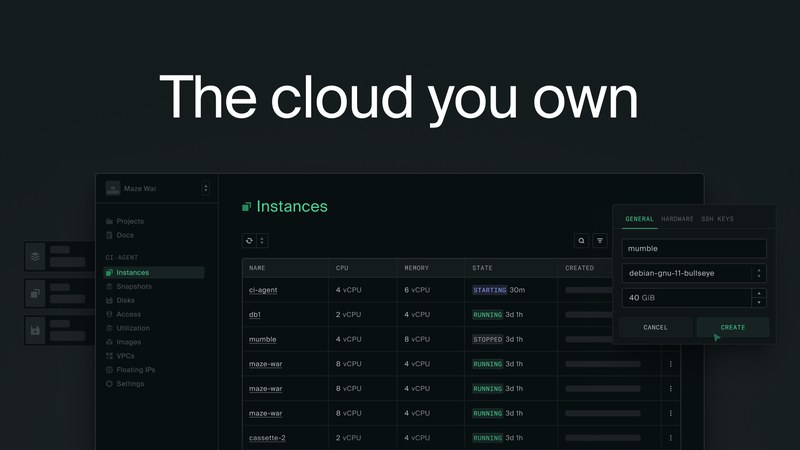
Oxide Computer Company builds the Oxide Cloud Computer, a rack-scale system that fuses purpose-built hardware with open-source software to give enterprises the elastic, API-driven experience of a public cloud inside their own data centers. Founded in 2019 by Joyent and Docker veterans, Oxide designs everything from the sheet metal, power distribution, and boot firmware up to the hypervisor and control plane, selling a single integrated rack rather than a pile of parts. It has raised over $577M, counts national labs and Fortune 1000 enterprises among customers, and is known for radical engineering transparency including a uniform company-wide salary.

Quadric
Quadric is a semiconductor IP company that licenses the Chimera family of general-purpose neural processing units (GPNPUs) - a single, fully C++ programmable processor core that runs machine learning inference alongside classic DSP and control code in one unified architecture. Founded in 2016 by three engineers who previously built bitcoin computing hardware, Quadric aims to fix the fragmentation of on-device AI silicon: instead of a fixed-function neural accelerator that breaks whenever a new model appears, its cores scale from 1 to 864 TOPS and can adopt new networks - including large language models up to 30 billion parameters - through a software port rather than a chip respin.