grid-scale-storage
(6)
Modo Energy
Modo Energy is a London-based data and analytics platform that helps investors, developers, lenders and traders value and finance battery storage and other electrification assets. It provides regulated benchmarks, transparent revenue forecasts, expert market research and an AI analyst, turning complex power-market data into investment-grade decisions across markets in Great Britain, Europe, the United States and Australia.

Quentin Scrimshire
Quentin 'Q' Scrimshire is the co-founder and CEO of Modo Energy, a London-based B2B SaaS platform that benchmarks and forecasts the performance of grid-scale battery energy storage assets. A Manchester-trained electrical engineer who cut his teeth on offshore wind and gas-fired plants at Centrica before running Kiwi Power's European storage business, he now leads a roughly 80-person team building what he describes as the 'benchmarking and valuation operating system for global electrification.' In December 2025 Modo closed a $33M Series B led by Molten Ventures.

XL Batteries
XL Batteries is a Marlborough, Massachusetts startup building an Organic Flow Battery for grid-scale, long-duration energy storage. Spun out of Columbia University chemistry research, the company uses proprietary organic molecules dissolved in pH-neutral water instead of vanadium in acid - producing a non-flammable, non-toxic, non-corrosive battery assembled from commodity pumps, tanks and tubes. The pitch: safe, scalable storage that can run for 10, 20, even 50 hours by simply enlarging the tanks, at costs targeted below lithium-ion for long durations.

Thomas Sisto
Thomas Sisto is the CEO and co-founder of XL Batteries, a Marlborough, Massachusetts startup commercializing water-based organic flow batteries for long-duration, grid-scale energy storage. A synthetic organic chemist by training, Sisto discovered the company's core molecule during a Columbia University postdoc - a compound he originally designed for solar cells that turned out to be extraordinarily stable in pH-neutral saltwater. He spun XL out of Columbia in 2019 and has since steered it from a lab curiosity to its first commercial pilot, betting that cheap, abundant organic chemicals can break China's grip on the battery supply chain.
Form Energy
Form Energy is an American energy-storage company building iron-air batteries that store electricity for 100 hours - multiple days - at roughly one-tenth the cost of lithium-ion. Founded in 2017 by a group of storage veterans, the company uses 'reversible rusting' of cheap, abundant iron to let renewable grids stay reliable through long stretches of low wind and sun. Its first high-volume factory, Form Factory 1, sits on the site of the former Weirton Steel mill in West Virginia, and its batteries are now being deployed with utilities including Great River Energy, Xcel Energy, Georgia Power and Dominion Energy.
Mateo Jaramillo
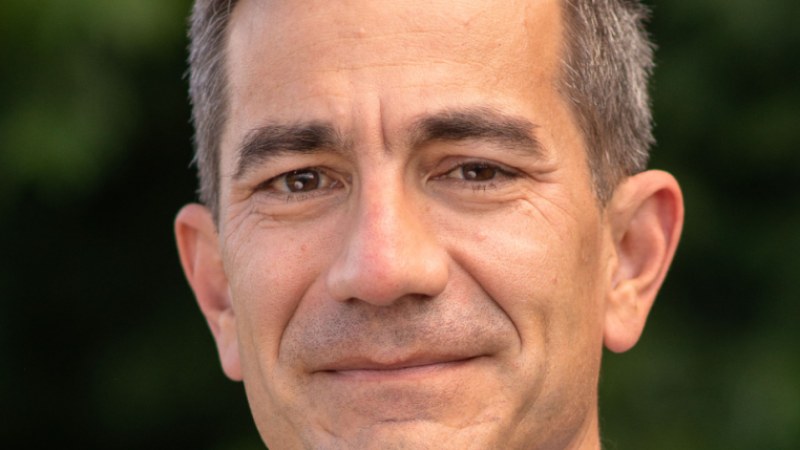
Mateo Jaramillo is the co-founder and CEO of Form Energy, a Somerville, Massachusetts company building 100-hour iron-air batteries that store electricity by rusting and un-rusting iron. After more than seven years at Tesla, where he started and ran the stationary storage business behind the Powerwall and Powerpack, he co-founded Form in 2017 on a contrarian bet: skip lithium, find a chemistry cheap enough to store power for days instead of hours. The company has raised over $1.3 billion, revived an abandoned West Virginia steel mill as its first factory, and signed a roughly $1 billion deal with Google for the world's largest battery system.